


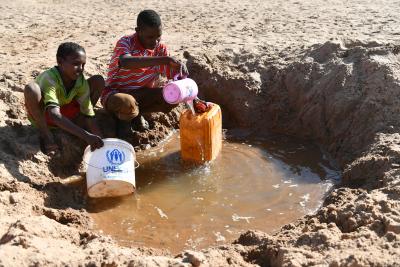
The UN relief agency has issued a plea for immediate help for hundreds of thousands of Somalis, especially in the northern areas, who are enduring worsening conditions due to a severe drought. In a recent report, the UN Office for the Coordination of Humanitarian Affairs highlighted the challenges faced by Somali households, including drought, flooding, reduced aid, and prolonged conflict. Approximately 250,000 individuals have been impacted by the severe drought, with coastal and remote communities bearing the brunt of the crisis.
Authorities are urgently seeking assistance as more than 570,000 individuals require water aid and 1.5 million need food support. The Somalia Humanitarian Fund has increased its aid to the famine-threatened Buurhakaba district in the Bay region, allocating 4.7 million US dollars, with an additional two-million-dollar reserve allocation. Malnutrition rates are on the rise, affecting over 400,730 children, including severe and moderate cases.
The UN agency also noted that reproductive health services and emergency obstetric care are severely limited, especially for nomadic groups. Drought has disrupted education, leading to the closure of over 820 schools. The World Food Program recently cautioned that emergency-level hunger now affects two million people in Somalia, double the figure from the previous year, indicating a significant escalation in food insecurity.
Current humanitarian food aid only reaches 450,000 individuals, leaving 76% of those in emergency-level hunger without support until August. Urgent funding is crucial to expand assistance and prevent further deterioration, according to the UN agency. Somalia continues to grapple with one of the world’s most severe malnutrition crises, with 1.9 million children suffering from acute malnutrition.
