


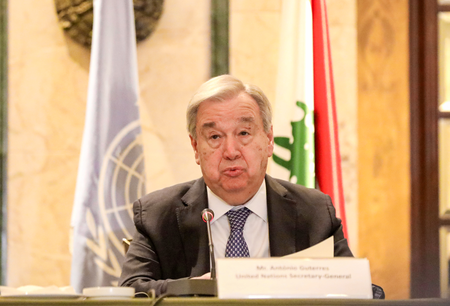
UN Secretary-General Antonio Guterres has cautioned that the world is facing an increased risk of mass atrocities due to escalating global conflicts, impunity, and advancements in technology. Guterres emphasized the importance of taking action promptly to prevent these warning signs from turning into tragedies. He highlighted the rise in violations of international law and a sense of impunity, stressing the critical nature of the Responsibility to Protect commitment in today’s world.
Guterres pointed out that in 2025, there were over 120 conflicts worldwide, which have become more prolonged, intricate, and interconnected. He expressed concerns about the role of technology in exacerbating these risks, citing the use of sophisticated weaponry like drones and the rapid spread of online hate speech and misinformation. The UN chief underscored the need for early detection and swift responses, as delays in addressing warning signs often lead to inadequate actions.
The UN Secretary-General recalled the commitment made by world leaders 21 years ago to shield populations from genocide, war crimes, ethnic cleansing, and crimes against humanity. He reiterated that states bear the primary responsibility to safeguard their citizens and emphasized the collective obligation of UN member states to intervene when national authorities fail to fulfill this duty. Guterres called for reinforcing the Responsibility to Protect norm to address the evolving challenges posed by instability and geopolitical risks in the present era.
Guterres highlighted the significance of upholding the Responsibility to Protect principle within the United Nations’ mission. He urged member states to participate in and enforce relevant international legal frameworks, such as the Convention on the Prevention and Punishment of the Crime of Genocide. The UN Secretary-General advocated for making atrocity prevention and population protection a universal and enduring practice worldwide to ensure a safer future for all.
