


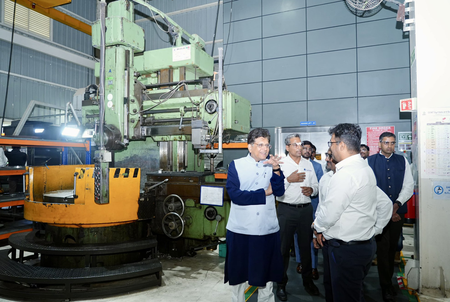
The Union Cabinet, led by Prime Minister Narendra Modi, has given the green light to the Bharat Audyogik Vikas Yojna (BHAVYA) with a budget of Rs 33,660 crore. This initiative aims to establish 100 plug-and-play industrial parks nationwide to boost economic growth and job creation. BHAVYA focuses on creating top-notch industrial infrastructure to enhance India’s manufacturing capabilities and drive economic progress.
Building upon the achievements of Industrial Smart Cities developed under the National Industrial Corridor Development Programme (NICDP), BHAVYA will be executed in collaboration with states and private sector partners. The scheme emphasizes deregulation and ease of doing business by streamlining approvals, implementing efficient single-window systems, and introducing investor-friendly reforms at the state level.
BHAVYA will offer plug-and-play industrial ecosystems, facilitating a swift transition from planning to production for industries. By providing pre-approved land, developed infrastructure, and integrated services, the scheme aims to lower entry barriers for investors significantly. Industrial parks spanning from 100 to 1,000 acres will be developed under this scheme, with financial support of up to Rs 1 crore per acre allocated for core infrastructure.
Additionally, BHAVYA will support external infrastructure up to 25% of the project cost to ensure seamless connectivity and integration with existing networks. The selection of projects will be through a challenge mode, focusing on high-quality, reform-oriented, and investment-ready proposals. These industrial parks will be designed as futuristic and sustainable ecosystems aligned with PM GatiShakti Principles to enhance multimodal connectivity and last-mile access efficiently.
The parks will prioritize green energy and sustainable resource utilization, featuring integrated underground utility corridors for efficient maintenance and uninterrupted industrial operations. BHAVYA is anticipated to create a significant number of jobs across manufacturing, logistics, and services sectors, catalyzing substantial investments and driving industrial growth nationwide. It is set to benefit various stakeholders, including manufacturing units, MSMEs, startups, global investors, workers, logistics providers, service sector enterprises, and local communities.
