


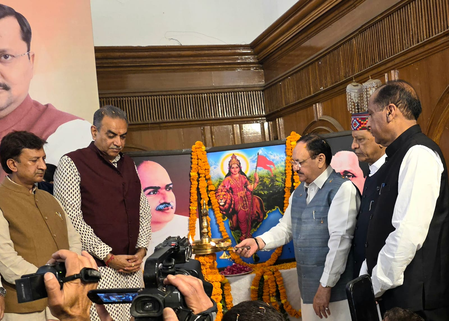
Union Health and Family Welfare Minister J.P. Nadda commended the 12-year tenure of the Narendra Modi-led Central government, hailing it as a significant period in India’s history. Nadda emphasized that these years have not just been about governance but have marked a transformative phase laying the groundwork for a developed India. Speaking at an event organized under the BJP’s campaign “12 Years of Trust, Development and Public Welfare,” Nadda highlighted Prime Minister Modi’s 4,399 days of service as a milestone that reflects the trust and aspirations of the nation’s 1.4 billion citizens.
Former Himachal Pradesh Health and Forest Minister Nadda underscored the shift in Indian politics brought about by Prime Minister Modi, transitioning from casteism, dynastic politics, and corruption to a focus on service, accountability, and good governance. Nadda credited Modi for instilling a sense of empowerment among citizens to speak out against corruption, fostering a government that listens to their voices. He also praised Modi’s inclusive approach encapsulated in the mantra “Sabka Saath, Sabka Vikas, Sabka Vishwas, Sabka Prayas” (together with all, development for all, trust of all, and efforts by all).
Nadda lauded the Modi government for fulfilling longstanding national aspirations, including the abrogation of Article 370 in Jammu and Kashmir, the construction of the Ram Temple in Ayodhya, the abolition of Triple Talaq, and the implementation of the Citizenship Amendment Act. He highlighted the government’s consecutive electoral victories and the significant presence of BJP and NDA in governing a majority of India’s population, reflecting public confidence in Modi’s leadership and welfare-driven policies.
Highlighting infrastructure achievements, Nadda pointed out the substantial progress made in railway electrification, national highways, tunnels, and rural road connectivity under the Modi government. He specifically noted the transformative impact on Himachal Pradesh’s development through investments in various sectors, including roads, healthcare, education, and infrastructure.
