


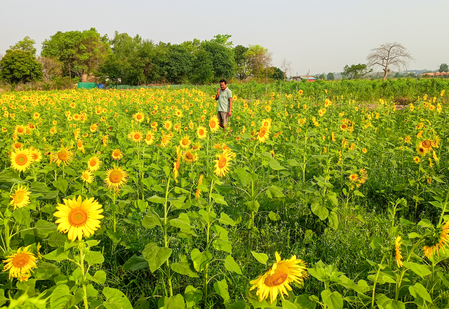
Union Agriculture and Farmers’ Welfare Minister Shivraj Singh Chouhan has sanctioned an extra outlay of Rs 4,886.46 crore for purchasing sunflower and gram at the minimum support price (MSP) to support farmers in Karnataka and Maharashtra. This decision aims to ensure fair and remunerative prices for sunflower farmers in Karnataka, protecting them from distress sales caused by unfavorable market conditions. Additionally, the move is expected to enhance farmers’ confidence and bring stability to the agricultural sector.
In response to a proposal from the Karnataka government, Chouhan has approved the procurement of 9,023 metric tonnes of sunflower under the Price Support Scheme (PSS) for the Rabi 2026 season, with a total MSP value exceeding Rs 69.66 crore. Similarly, a proposal from the Maharashtra government to increase the maximum procurement quantity of gram under the PSS to 8,19,882 metric tonnes for the Rabi 2025–26 season has been given the green light by the Union Minister. This decision, with a total MSP value exceeding Rs 4,816.80 crore, also includes an extension of the procurement period for gram in Maharashtra by 30 days, benefiting farmers who faced challenges in selling their produce within the initial deadline.
The government’s decisions are focused on shielding farmers from distress sales and ensuring they receive just compensation for their crops. By expanding procurement operations and extending timelines, the government aims to create a secure and predictable environment for agricultural producers. These measures are designed not only to offer financial relief to farmers but also to reinforce their trust in the procurement system and reduce their vulnerability to market fluctuations.
The steps taken by the Central government are geared towards strengthening the agricultural economy by providing price assurance and reducing farmers’ exposure to market uncertainties. The government emphasizes that guaranteeing remunerative prices for farmers is a top priority. Through the expansion of MSP operations and timely support, it seeks to enhance income stability for farmers and promote long-term sustainability in the agricultural sector. These decisions are anticipated to directly benefit farmers in Karnataka and Maharashtra while fostering a sense of trust and stability in the broader agricultural ecosystem.
