


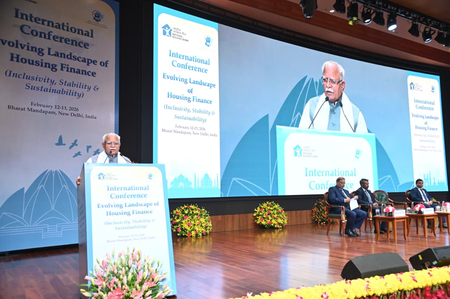
Union Minister Manohar Lal emphasized the need for robust urban infrastructure development using the Transit-Oriented Development (TOD) model to enhance housing accessibility and sustainability. He stressed the importance of collaboration among stakeholders to make housing finance more inclusive and affordable for all citizens. Lal also highlighted the significance of integrated urban planning, particularly in transport-linked housing development and innovative policy approaches.
Highlighting insights from a joint study by NITI Aayog and the Ministry of Housing and Urban Affairs, Lal noted that India’s urban population was estimated at 500 million in 2021 and is projected to exceed 850 million by 2050. This demographic shift is expected to escalate the demand for affordable housing nationwide. Lal urged financial institutions, including banks and housing finance companies, to work together and provide increased credit support to expand the housing inventory across the country.
Additionally, Lal proposed exploring novel solutions like a National Housing Exchange-like mechanism, supported by comprehensive housing data, to assist citizens in finding suitable homes near their workplaces. This approach aims to facilitate property exchanges that reduce commute times and benefit both parties. Lal reiterated Prime Minister Narendra Modi’s vision of ensuring every eligible citizen’s access to a dignified home, aligning with the government’s commitment to Housing for All.
The conference, as per the ministry, served as a platform for dialogue, knowledge sharing, and strategic partnerships, reaffirming India’s dedication to addressing challenges and opportunities in affordable housing and urban development. The Economic Survey 2025-26 highlighted the promise of India’s urban future, emphasizing the importance of economically dynamic, socially inclusive, environmentally sustainable, and institutionally capable cities. The survey suggested that future urban policies should prioritize system performance, integrating housing, mobility, sanitation, climate resilience, and finance to design livable, climate-ready cities supporting inclusion and long-term economic efficiency.
