


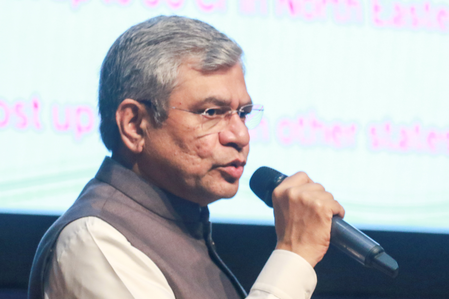
Union Railways Minister Ashwini Vaishnaw unveiled five new reforms under the ‘Reform Express’, bringing the total reforms for 2026 to nine. These reforms cover areas such as cargo, construction, and passenger convenience. India, a major salt producer and exporter, transports about 9.2 million tonnes of salt annually by railways, presenting a significant opportunity.
The modal share of railways in salt transportation varies, with industrial salt accounting for about 25% and salt for human consumption around 65%. A new stainless steel container system has been developed to address challenges in salt transportation, enhancing efficiency and reducing costs. The system allows direct loading at production sites and seamless multimodal movement.
In the automobile sector, railways transport about 24% of passenger vehicles, indicating a substantial reliance on road transport. To address design and operational constraints, special wagon designs have been introduced, offering flexibility to manufacturers. These designs are tailored for specific routes with high capacity, aiming to improve efficiency in automobile transportation.
Another reform focuses on enhancing construction quality in railway projects through seven major changes. These changes aim to strengthen project execution by ensuring transparency, integrity, and quality assurance. Additionally, measures have been introduced to improve passenger convenience, including revised ticket cancellation windows and digital boarding station changes for passengers’ flexibility.
