


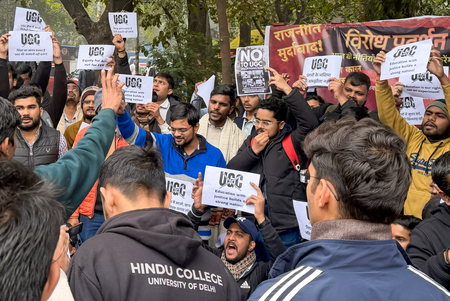
The University Grants Commission’s latest equity regulations have faced criticism for their vague definitions and punitive enforcement. The Supreme Court intervened by staying the regulations and emphasizing the importance of fairness and due process in promoting social justice. The controversy mainly revolves around the exclusion of the general category from protection against discrimination, raising concerns about the regulations’ one-sided approach.
The definition of “caste-based discrimination” in the regulations has been a focal point, as it excludes the general category, potentially creating an imbalance in addressing discrimination across caste lines. Instances of harassment and targeting on campuses, like at Jawaharlal Nehru University and Ashoka University, highlight the complexities of campus politics. Concerns about the misuse of stringent laws, especially in the absence of checks, have also been raised in light of recent incidents.
During a Supreme Court hearing, fears were expressed about false accusations under the SC/ST Act and the lack of safeguards for students. The regulations not only lack provisions to penalize false complaints but also raise questions about their timing and political implications. Education Minister Dharmendra Pradhan has reassured that the guidelines aim to combat caste-based discrimination, but lingering mistrust remains despite the Court’s intervention.
In a climate where law, identity, and politics intersect, ensuring the apolitical implementation of such regulations poses a challenge. The need for inclusive, balanced, and transparent equity measures is emphasized to prevent coercion and uphold justice in educational institutions.
