


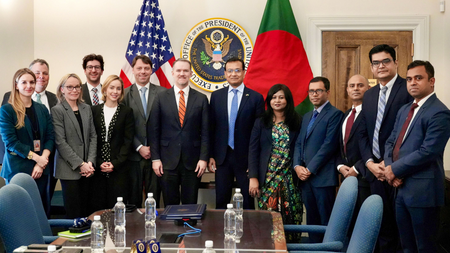
The trade deal between the US and Bangladesh has sparked comparisons to colonial economics, with concerns raised about the country’s increasing reliance on American cotton. While the agreement allows Bangladesh to export garments to the US duty-free, it mandates the use of US-imported cotton and fiber in production. This dependency on US agricultural policies and cotton supply chains could leave Bangladeshi factories and workers vulnerable to market fluctuations and policy changes.
The article highlights parallels between historical colonial trade dynamics and the current trade agreement, emphasizing how Bangladesh’s garment sector is becoming intertwined with US corporate interests. It points out that such agreements not only impact trade but also influence defense purchases, nudging Bangladesh towards procuring American defense systems and equipment. This shift towards American suppliers could have long-term implications on Bangladesh’s economy and sovereignty.
Moreover, the article warns against the potential consequences of Bangladesh’s procurement of expensive Boeing aircraft from the US. Despite the perceived benefits of acquiring advanced aviation technology, the country risks falling into a debt trap due to the high costs associated with these purchases. The reliance on American parts, maintenance, and training, coupled with loan repayments in foreign currency, could strain Bangladesh’s financial resources and lead to economic vulnerabilities.
