


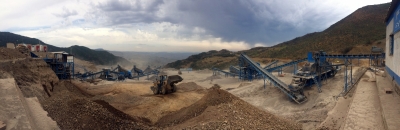
The US is increasing its investments in African infrastructure projects to offset China’s dominance in critical minerals like copper, cobalt, lithium, and rare earth elements. Chinese companies have established a strong presence in African mining, controlling various stages from exploration to export logistics. This integration has led to a significant dependency of African mineral production on Chinese-controlled value chains.
In response, the US is focusing on infrastructure development to enhance market access and operational influence in Africa. Initiatives include developing transportation corridors to offer alternative export routes for minerals, reducing reliance on Chinese logistics networks. Port modernization and logistics optimization efforts, such as the Lobito Corridor project, aim to boost capacity and cut transportation costs for mineral exports.
To provide competitive alternatives to Chinese financing, the US International Development Finance Corporation is offering loan guarantees and direct funding for infrastructure projects aligned with US strategic goals. Additionally, the US has prioritized mineral development for national security reasons, aiming to reduce dependency on Chinese processing operations.
China currently dominates downstream processing of critical minerals, controlling a significant portion of global refining and smelting capacities. African raw ore often needs processing in Chinese facilities to meet quality standards, with this processing stage capturing a substantial share of value creation. Chinese investments in transportation infrastructure further solidify their control over African mineral exports, creating long-term dependencies on Chinese processing facilities.
