


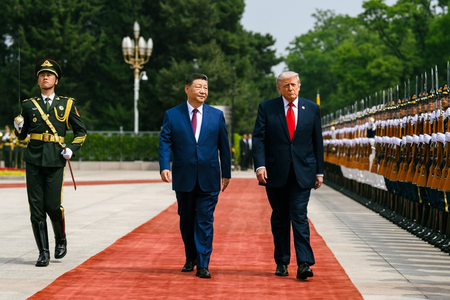
The recent summit between US President Donald Trump and Chinese President Xi Jinping, as analyzed by experts at the Council on Foreign Relations (CFR), emphasized symbolism rather than concrete outcomes. While the meeting helped ease tensions temporarily post last year’s trade disputes, it fell short in addressing deeper issues like Taiwan, technology controls, tariffs, rare earth minerals, and Iran. Rush Doshi from CFR highlighted that the summit aimed at prolonging a delicate truce to solidify China’s strategic position.
Heidi Crebo-Rediker, also from CFR, expressed concerns over China’s dominance in rare earth minerals, posing a threat to global industrial economies due to export restrictions. The summit, according to Zongyuan Zoe Liu, a CFR fellow, managed to reduce immediate escalation risks but did not resolve underlying economic tensions. The commitment by China to purchase American goods, including soybeans and aircraft, remains uncertain, casting doubts on the effectiveness of the trade agreements.
The issue of Taiwan emerged as a sensitive topic during the summit, with Beijing pushing for changes in US policy. Trump’s mention of a possible conversation with Taiwan’s President about arms sales added to the uncertainty. Discussions also revolved around technology and artificial intelligence, with concerns raised about potential US sales of advanced AI chips to China, which could significantly enhance Beijing’s computing capabilities. The summit took place amidst growing global apprehensions regarding US-China competition across various fronts.
