


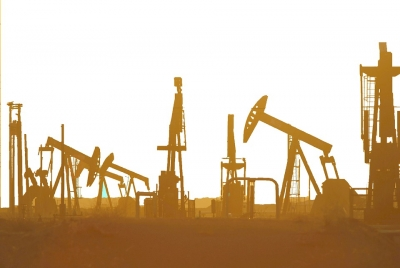
Any rise in oil production by US companies in Venezuela has the potential to lower international crude prices, benefiting countries like India. However, due to geopolitical uncertainties in the region, significant investments in the Latin American nation remain uncertain. India, unlike China, is not a major importer of Venezuelan crude due to its heavy and costly refining process, except for the Reliance refinery in Jamnagar.
India’s ONGC, through its subsidiary ONGC Videsh, holds a 40% stake in Venezuela’s San Cristobal Project. Additionally, OVL, Indian Oil Corporation, and Oil India have an 11% share in the Carabobo-1 field. A potential US control of Venezuela’s oil industry might result in the lifting of sanctions on Venezuelan crude sales.
This development could enable ONGC to recover its $500 million in unpaid dividends from the San Cristobal field, pending since 2014 when production ceased, turning the Indian oil major’s investment into an impaired asset. Venezuela’s oil production has declined significantly due to neglect and sanctions, necessitating substantial investments over several years to boost production levels.
Experts suggest that an annual investment of $8-9 billion from 2026 to 2040, in addition to ‘hold-flat’ capital requirements, could elevate Venezuelan crude oil production to 2 million barrels per day by 2032 and 3 million barrels per day by 2040. Global consultancy Rystad Energy estimates that around $30-35 billion of international capital needs to be committed in the next few years to make the 3 million barrels per day production scenario feasible.
In the late 1990s, the US imported nearly 2 million barrels of Venezuelan crude daily, accounting for over half of the country’s output. However, by the end of last year, US imports from Venezuela had drastically reduced to 135,000 barrels per day. Restoring Venezuela’s crude production to 3 million barrels per day would require a 16-year effort and investments totaling $185 billion, as per Rystad Energy’s data.
