


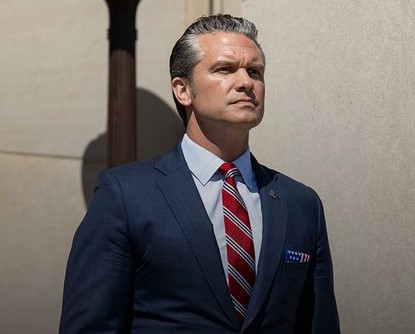
US Defence Secretary Pete Hegseth informed senators that Russia and China were aiding Iran as Tehran resumed attacks on commercial shipping, while the US increased military operations near the Strait of Hormuz. Hegseth made this disclosure during a Senate Appropriations Committee hearing on President Donald Trump’s request for $87.6 billion in supplemental funding, with a significant portion allocated for the military. Republican Senator John Hoeven inquired about the nature of assistance provided by Moscow and Beijing to Iran.
Hegseth confirmed that both countries were facilitating Iran’s activities to varying extents. However, he refrained from specifying the exact nature or extent of this support. General Dan Caine, the chairman of the Joint Chiefs of Staff, also chose not to discuss the intelligence publicly, emphasizing the importance of safeguarding sensitive information from adversaries. The revelation coincided with US forces conducting strikes on Iranian targets for the tenth consecutive evening in response to renewed attacks on commercial vessels.
The Defence Secretary highlighted that Iran had initially agreed not to target shipping but subsequently violated this agreement by attacking commercial vessels through its Islamic Revolutionary Guard Corps. He stated that the US had reinstated a blockade against Iran, characterizing it as highly effective, and had seized a ship within the Arabian Gulf. Hegseth further mentioned that American forces were actively disrupting Iran’s surveillance capabilities around the Strait of Hormuz to gain tactical advantages.
Additionally, Hegseth disclosed that the US had clandestinely moved between 400 million and 500 million barrels of oil past Iran under Project Freedom, with assistance from Gulf nations. He underscored the US’s longstanding control over traffic in the region. Despite these assertions, Democratic senators contested the narrative, pointing out Iran’s recent reduction in commercial traffic through the strait. Senator Jack Reed criticized the administration for failing to prevent disruptions to global energy supplies and expressed concerns about potential interventions by Russia and China in future conflicts.
