


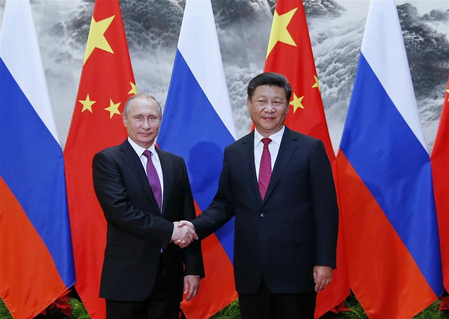
The United States is encountering a significant challenge in deterring two nuclear peers concurrently, as highlighted by senior defense officials during a House Armed Services strategic forces hearing. Robert Kadlec, the assistant secretary of defense for nuclear deterrence and chemical and biological defense, emphasized that the US strategy has reached a critical juncture. Kadlec pointed out that China’s rapid and opaque nuclear expansion, along with Russia’s possession of the world’s largest arsenal, poses a unique challenge for US defense strategy.
Kadlec stressed the importance of preparing for potential coordinated or opportunistic aggression across various theaters. He emphasized the need for a robust defense force capable of imposing unacceptable costs on both adversaries under any circumstances. Additionally, there were calls for full funding and potential acceleration of key defense assets like the Sentinel intercontinental ballistic missile and the Columbia-class submarine.
The hearing also shed light on the escalating concerns regarding space security. General Stephen Whiting, commander of US Space Command, expressed the critical dependence of American military operations on space systems and cautioned about the rapid advancements made by adversaries to challenge US space capabilities. Whiting highlighted China’s integration of space-enabled effects in its military and Russia’s efforts to disrupt US assets, including the potential placement of a nuclear weapon in orbit.
Marc Berkowitz, assistant secretary of defense for space policy, voiced support for President Donald Trump’s proposed “Golden Dome for America” as a comprehensive defense against catastrophic threats. Berkowitz emphasized the necessity of this defense system to protect the US homeland, citizens, critical infrastructure, and second-strike capability. However, the program faced criticism from Democrats who raised concerns about the strategic approach and the potential for escalating an arms race.
