


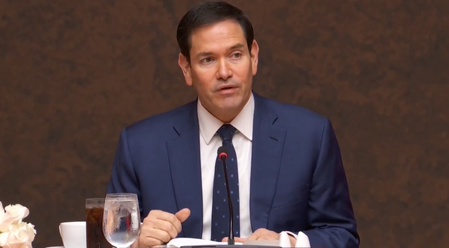
The United States organized a significant direct meeting between Israel and Lebanon, marking the first such interaction in over three decades. Secretary of State Marco Rubio, overseeing the talks, emphasized the historic nature of the event, aiming for more than just an immediate ceasefire. Rubio highlighted the broader goal of ending Hizballah’s influence in the region permanently.
The meeting, hosted at the State Department, involved senior US officials along with the ambassadors of Israel and Lebanon. This encounter, described as the first major high-level engagement between the two nations since 1993, was deemed productive. All parties agreed to commence direct negotiations at a time and place mutually agreed upon.
During the discussions, the United States expressed support for Lebanon’s efforts to curb Iran’s influence and restore its monopoly of force. Simultaneously, the US reiterated Israel’s right to defend itself against Hizballah’s attacks. Both nations committed to direct negotiations with the aim of achieving lasting peace and disarming non-state terror groups in Lebanon.
Lebanon emphasized the importance of implementing the November 2024 cessation of hostilities fully. It stressed territorial integrity, state sovereignty, and the need for a ceasefire to address the country’s humanitarian crisis. The talks, which took place in Washington, come amidst ongoing conflict in southern Lebanon, underscoring the delicate nature of the situation and the broader US-Iran ceasefire efforts.
Secretary Rubio expressed optimism that these talks could lay the groundwork for a lasting peace, enabling Israelis to live without fear and offering Lebanese citizens the future they deserve. The history of conflict between Israel and Lebanon, influenced by border disputes and the presence of Hizballah, has seen limited and temporary direct engagement efforts.
