


Senior American lawmakers, diplomats, and policy experts have highlighted that the US-India relationship is at a critical juncture. At the Capitol Hill Summit 2026, concerns were raised over trade tensions, visa restrictions, and strategic uncertainties. Despite these challenges, bipartisan support for enhanced defense, technology, and economic collaboration between the two largest democracies was reaffirmed.
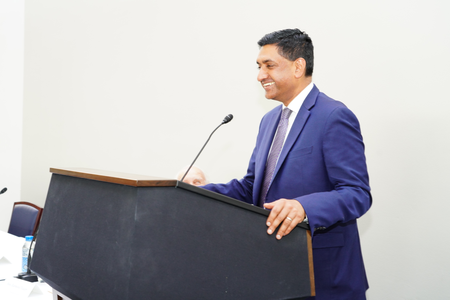
Republican Senator Steve Daines emphasized the significance of trust in the relationship, quoting former Secretary of State George Shultz. Indian American Congressman Ro Khanna stressed the importance of basing the partnership on democratic principles rather than narrow geopolitical interests. Congresswoman Deborah Ross underlined the pivotal role of educational exchanges in shaping future bilateral relations.
Former US Ambassador to India Richard Verma cautioned that recent tensions had exposed vulnerabilities in the relationship. However, he noted the remarkable growth in US-India ties over the past 25 years, with bilateral trade exceeding $200 billion and significant advancements in defense cooperation. Congressman Ami Bera highlighted the enduring strategic alignment between the two nations, urging a focus on long-term interests over temporary disagreements.
India’s Ambassador to the United States Vinay Mohan Kwatra reiterated the bipartisan support for the relationship in Washington, emphasizing shared values as the foundation of the partnership. Kwatra pointed to expanding cooperation in various sectors, including trade, semiconductors, defense, artificial intelligence, and critical minerals. The Indian American diaspora was recognized as a key pillar of the partnership, with India’s economic progress since 2014 driving closer ties with the US.
Former US Assistant Secretary of Commerce Ray Vickery called for renewed engagement between the two democracies, highlighting the need for closer cooperation in economic, commercial, and strategic realms. US-India Friendship Council chairman Swadesh Chatterjee reflected on the transformation in bilateral ties since the 1990s, citing the landmark US-India civil nuclear deal of 2008 as a significant milestone that ended India’s nuclear isolation.
