


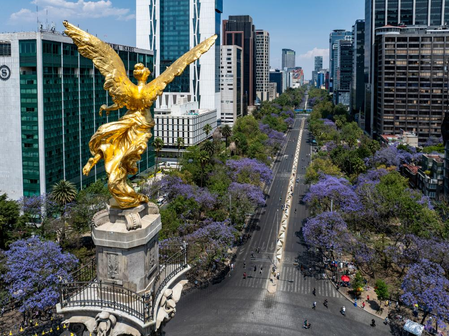
A joint US-India satellite mission has detected significant land subsidence in Mexico City, with parts of the area sinking by several centimetres monthly. The NISAR satellite’s early data, released by NASA and ISRO, highlights the city’s ongoing subsidence crisis and the effectiveness of space-based monitoring systems. Mexico City, home to nearly 20 million people, has been sinking for over a century due to groundwater extraction and urban development pressure on its lakebed foundation.
The latest NISAR findings, gathered between October 2025 and January 2026, show certain regions sinking by more than 2 centimetres per month. This advanced satellite’s radar system can see through cloud cover and vegetation, enabling the tracking of subtle surface changes regardless of weather conditions. NASA’s Craig Ferguson noted that NISAR’s capabilities will aid in monitoring land subsidence in challenging areas like coastal regions facing both subsidence and sea level rise.
The NISAR satellite, observing Earth’s surfaces every 12 days, uses a dual-frequency radar system to monitor various geophysical processes, including land subsidence and glacier shifts. Mexico City’s Angel of Independence monument serves as a visible indicator of the city’s long-term subsidence, requiring additional steps over time due to dropping land levels. The collaboration between the US and India on this mission, with NASA and ISRO’s key roles, marks a significant step in space exploration and monitoring efforts.
