


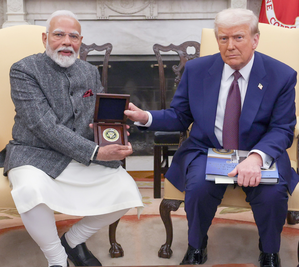
When US President Donald Trump confirmed the bilateral trade deal, reducing American tariffs on Indian goods from 25 to 18 per cent, reactions were mixed. An Interim Agreement was announced in a US-India Joint Statement, paving the way for broader trade negotiations. The breakthrough followed tense negotiations, with a call between PM Modi and President Trump preceding the announcement.
The market responded positively to the news, considering the US as India’s largest trade partner. However, there were concerns among the farming community. Despite doubts and suspicions, many view this deal as significant, potentially enhancing India’s competitive advantage and stabilizing US-India relations. India’s tariff position at 18 per cent is slightly better than that of ASEAN economies and neighboring countries like Pakistan and Bangladesh.
Under the US-India Interim Agreement, India will reduce tariffs on US industrial goods and various food and agricultural products. Sectors like textiles, footwear, and engineering goods are expected to benefit, although concerns exist regarding farm and milk-based products. The deal is seen as beneficial for MSMEs, entrepreneurs, skilled workers, and technology access.
Negotiators will now work on translating commitments into legally binding tariff schedules and resolving disputes. Lower reciprocal tariffs are expected to reduce the cost of Indian goods in the US market, benefiting labor-intensive sectors. The agreement also presents opportunities for small and medium enterprises to access US markets and global value chains. The deal is part of a broader economic alignment that could lead to technology transfers and investment in key sectors.
