


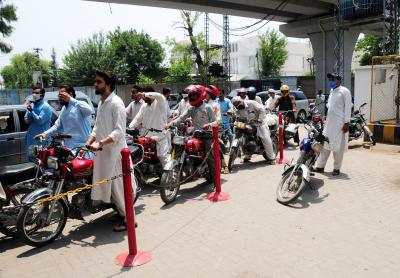
The conflict between the United States and Iran has led to a significant energy price shock in Pakistan. This has worsened the country’s economic struggles, marked by rising inflation, dwindling foreign exchange reserves, and a rapidly depreciating currency. Pakistan, described as one of South Asia’s most fragile states, is facing a structural blow to its economy due to this ongoing crisis.
The surge in Pakistan’s weekly petroleum import bill by 167 percent, from $300 million to $800 million, has been a direct consequence of the escalating tensions between the US and Iran. The closure of the Strait of Hormuz has pushed the benchmark Brent crude oil price above $112 per barrel, resulting in increased freight costs and insurance premiums to record levels.
The energy shock experienced by Pakistan is not confined to the petroleum sector but has broader implications across the country’s macroeconomy. This shock has triggered accelerating inflation, a deteriorating current account, depletion of foreign exchange reserves, currency devaluation, and logistical challenges at Karachi port.
Prime Minister Shehbaz Sharif publicly confirmed in April 2026 that Pakistan’s weekly petroleum import bill had surged from $300 million to $800 million, representing a substantial 167 percent increase. This surge translates to an additional annual burden of approximately $26 billion, almost matching the country’s entire merchandise export earnings for FY2025, which stood at $29.8 billion.
Pakistan’s heavy reliance on petroleum imports, primarily sourced from Gulf states, coupled with the absence of alternative supply routes and strategic reserves, intensifies its vulnerability to international oil price fluctuations. The lack of diversification in oil sourcing amplifies the impact of global price hikes on domestic fuel prices, transport expenses, electricity tariffs, and overall consumer prices. The IMF estimates that for every 10 percent increase in oil prices, Pakistan’s Consumer Price Index (CPI) rises by 0.4–0.6 percent, positioning the country among the most affected in South Asia.
