


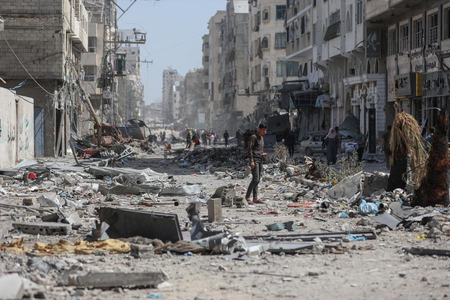
The United States has entered a new post-war political phase in Gaza by endorsing a technocratic administration and initiating the second stage of President Donald Trump’s conflict resolution strategy. This move aims to sideline both Hamas and the Palestinian Authority from governing the region. The new phase introduces the National Committee for the Administration of Gaza (NCAG) to oversee demilitarisation, governance, and reconstruction efforts.
US Special Envoy for Peace Missions, Steve Witkoff, announced the commencement of Phase Two, emphasizing the transition towards technocratic governance and reconstruction. The NCAG, a non-political body, was carefully chosen through consultations with regional mediators and Palestinian factions to focus on rebuilding Gaza and enhancing the lives of its residents. This marks a significant departure from the traditional governance by Hamas or the Palestinian Authority in Gaza.
The decision to advance to phase two was made alongside ongoing efforts to address unresolved hostage situations. Notably, all living hostages have been released, and efforts are underway to recover the remains of the remaining deceased hostage. The US administration expects Hamas to fulfill its remaining obligations under the agreement, warning of serious consequences if it fails to do so.
While acknowledging doubts about Hamas’ willingness to fully disarm due to its extensive military infrastructure, officials underscored the necessity of neutralizing terror capabilities for Gaza’s stability. Key objectives include dismantling terror infrastructure, removing heavy weapons, and averting future conflicts to facilitate sustainable reconstruction efforts and improve daily life in Gaza.
During phase one, significant humanitarian progress was achieved, with over 53,000 aid trucks entering Gaza post-ceasefire, delivery of two million pallets of goods, vaccination campaigns benefiting thousands of children, and extensive rubble clearance. Regional mediators, particularly Egypt, Turkey, and Qatar, were lauded for their mediation efforts that enabled progress thus far and are expected to continue playing a pivotal role in the plan’s implementation.
