


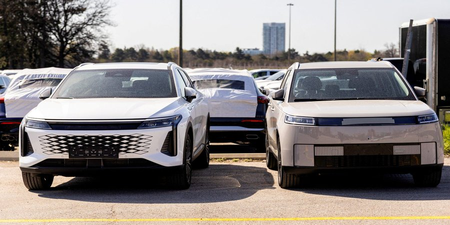
A senior US lawmaker has expressed worries about a Commerce Department decision permitting a foreign automaker closely tied to China to sell and produce connected vehicles in the US. Representative Debbie Dingell, a Michigan Democrat, cautioned that this move could expose sensitive data, weaken national security measures, and create loopholes in efforts to keep Chinese technology out of the American auto market. Dingell raised questions in a letter to Commerce Secretary Howard Lutnick regarding a recent authorization granted by the Office of Information and Communications Technology and Services (OICTS) despite security restrictions on connected vehicles.
Modern connected vehicles have the capability to gather and transmit vast amounts of sensitive information, such as geolocation data, driving patterns, and personal consumer details. Dingell highlighted that these systems could allow remote access to vehicle functions, posing risks of exploitation by adversaries for surveillance, intelligence gathering, or disruption of critical infrastructure. She argued that the authorization might pave the way for companies with significant ties to the People’s Republic of China (PRC) to access the US market, contrary to the connected vehicle rule’s purpose.
Dingell emphasized that concerns about Chinese companies operating under laws that could mandate cooperation with Beijing and its intelligence services cannot be easily mitigated through corporate restructuring or branding distinctions. She also warned that waiver and authorization processes could potentially undermine the effectiveness of the rule if exemptions are granted to China-linked companies. Dingell stressed that allowing entities tied to the PRC to operate in the US market through exemptions risks weakening the protections established by the rule.
Apart from security issues, Dingell pointed out that China’s automotive industry benefits from state support, unfair trade practices, and distorted market conditions, posing a threat to the long-term competitiveness of the US auto sector. She urged for a briefing from the Commerce Department on the rationale behind the authorization, its implications, and the criteria used to assess national security risks. Dingell sought clarity on whether similar authorizations could be extended to entities linked to foreign adversaries and how the department plans to prevent circumvention of restrictions through corporate affiliations or indirect ownership structures.
The global automotive industry is closely monitoring this issue as vehicles become more connected through software, sensors, and data networks. Concerns about data security, supply chains, and foreign influence have become central to policy discussions in major markets like the US and Europe.
