


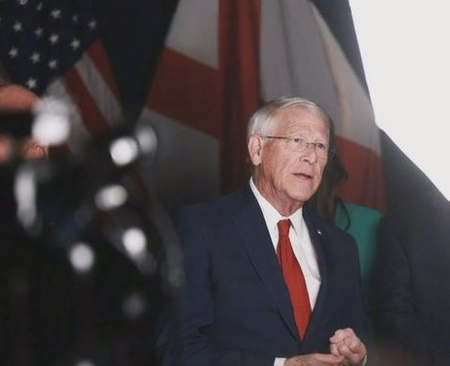
US lawmakers and military leaders have raised concerns about the increasing dangers posed by China, Russia, and other adversaries, emphasizing that space is becoming a crucial battleground in potential future conflicts. Senator Roger Wicker stressed the urgent need for the US to enhance its strategic capabilities to counter the advancements made by rival nations, particularly noting the significant progress in nuclear and space programs by Russia and China, as well as North Korea’s expansion of its missile arsenal.
General Stephen Whiting, the commander of US Space Command, highlighted that adversaries are developing technologies to disrupt US access to space, with China notably expanding its satellite fleet significantly. He informed lawmakers that China currently operates over 1300 active satellites, including more than 510 intelligence, surveillance, and reconnaissance satellites, enhancing its military capabilities across various domains.
Moreover, Admiral Richard Carroll, the head of US Strategic Command, emphasized the challenge of deterring multiple nuclear competitors simultaneously amidst rapid technological developments. He identified cyber threats, counter-space capabilities, and advanced missile systems as critical areas of concern. Carroll underscored the importance of modernizing the US nuclear triad to ensure the safety, security, and credibility of the nation’s nuclear forces.
During the Senate Armed Services Committee hearing, Senator Jack Reed expressed concerns about the lack of a formal structure between the US and Russia to regulate nuclear forces, raising fears of a potential unconstrained arms race. Reed also warned about China’s rapid military expansion, projecting that by 2030, China could reach a level of parity with the US and Russia, complicating deterrence strategies and alliance dynamics.
The discussions during the hearing highlighted the significant reliance of US military operations on space-based systems. General Whiting emphasized that the entire joint force’s operational readiness hinges on uninterrupted access to space-based assets for navigation, communication, and missile warning systems. He cautioned that any degradation of these capabilities would severely impact the Joint Force’s ability to operate effectively in a conflict scenario.
Lawmakers also addressed the escalating issue of orbital debris resulting from past anti-satellite tests conducted by China and Russia, which have left thousands of fragments in orbit. The US currently lacks the capability to remove such debris and relies on tracking and avoidance measures to mitigate potential risks associated with space debris.
