


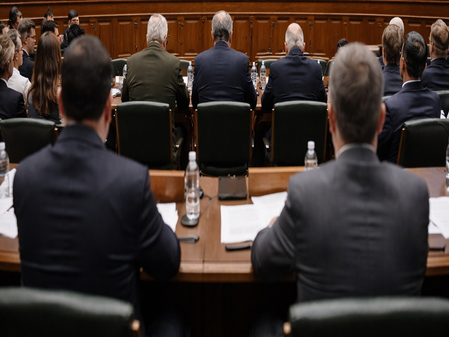
US lawmakers engaged in a debate over the involvement of allies in global security during a House Armed Services Committee hearing to assess the newly released National Defense Strategy. The discussion underscored disagreements between Republicans and Democrats regarding the extent to which allies should take on more responsibility for safeguarding their regions while the US concentrates on key strategic objectives.
Committee chairman Mike Rogers initiated the hearing by emphasizing the importance of the strategy in guiding US military planning and resource distribution. While acknowledging progress in areas like homeland defense and protecting US interests in the Western Hemisphere, Rogers expressed concerns about provisions in the strategy that assign greater security responsibilities to US allies. He cautioned against hastily pushing European allies to assume larger military roles, citing potential risks and a deterrence gap that Russia could exploit.
Democrats offered a critical perspective on the strategy, expressing apprehensions that it could weaken established alliances and hinder global cooperation. Ranking member Adam Smith raised issues about the strategy’s alignment with an “America First” framework and its potential impact on US commitments abroad. Smith highlighted perceived inconsistencies between the strategy and recent military actions, questioning the administration’s adherence to the strategy’s focus on avoiding prolonged conflicts.
During the hearing, Pentagon officials defended the strategy, asserting that it presents a pragmatic approach to global security given limited resources. Under Secretary of Defense for Policy Elbridge Colby emphasized that the strategy reflects President Donald Trump’s “America first, peace through strength” approach. Colby stressed the necessity for the US to focus its military capabilities on imminent threats and outlined key pillars of the strategy, including homeland defense, deterring China in the Indo-Pacific, and enhancing the US defense industrial base.
The strategy also emphasizes burden-sharing, advocating for allies and partners to play a more significant role in defending their respective regions. The objective is for allies to take primary responsibility for their conventional defense while preventing China from dominating the Indo-Pacific region. The National Defense Strategy serves as a foundational document for defense planning, informing decisions on military spending, force posture, and alliance structures, and guiding defense policy and the annual National Defense Authorization Act.
