


US lawmakers and officials have expressed concerns about the transition from the International Space Station (ISS) to commercial space platforms as China expands its presence in low Earth orbit. House Science Committee Chairman Brian Babin emphasized the significance of the ISS, calling it a remarkable achievement showcasing American space program ingenuity. He highlighted the station’s crucial role in supporting human spaceflight and research over the past 25 years.
Subcommittee Chairman Mike Haridopolos stressed the importance of competition with China, stating that the US must lead in low Earth orbit to maintain space leadership. Safety worries were raised by Charles J. Precourt, a Member of the Aerospace Safety Advisory Panel, who pointed out the high-risk phase of the ISS’s lifecycle due to ageing systems and wear. Precourt emphasized the need for sustained engineering rigor, disciplined risk management, and adequate resources to ensure continued safe operation.
Concerns were also voiced about a potential gap in US human spaceflight capability in low Earth orbit, which could impact research and future missions. Industry leaders highlighted the growing demand for space-based work, with David Cavossa, President of the Commercial Space Federation, citing the substantial economic value of space activities. He urged NASA to provide policy clarity and procurement timelines to avoid delays that could hinder investment and the development of new space stations.
NASA is gearing up for the transition, with Joel R. Montalbano, Acting Associate Administrator for Space Operations, outlining a strategy to foster private sector initiatives and establish a commercial pathway to replace the ISS by 2030. NASA aims to be one of many customers in a thriving commercial marketplace in low Earth orbit. Lawmakers underscored the importance of preventing a gap in human presence in orbit, with Babin warning that any interruption after decades of continuous presence would be significant.
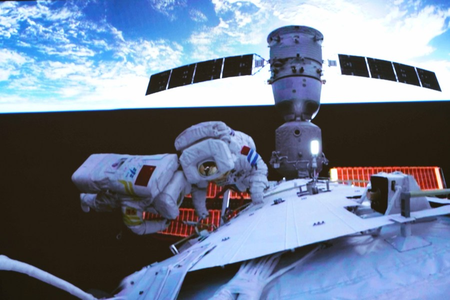
The ISS, completed in 2011 after delays, has hosted nearly 200 American astronauts, while China’s Tiangong space station, launched in 2022, has been continuously crewed since then. US officials believe that the upcoming years will be crucial in determining leadership in low Earth orbit.
