


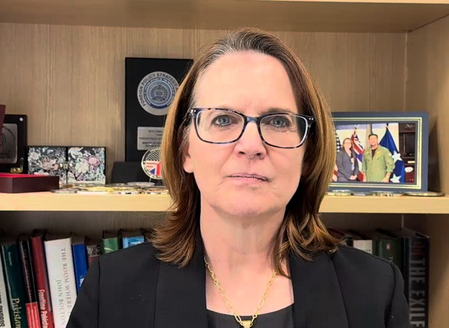
The ongoing US military operations involving Iran are posing challenges for India’s energy security and diplomatic equilibrium, as highlighted by Lisa Curtis, a former White House official for South Asia. India’s heavy reliance on oil imports from the Middle East is a significant concern due to potential disruptions affecting the economy. Curtis emphasized the immediate impact on India’s energy sector, particularly the surge in oil prices triggered by the conflict, which could have adverse effects on the country’s economic prospects.
Moreover, Curtis pointed out a diplomatic dilemma for India arising from recent US military actions against Iran. She mentioned an incident where the US targeted an Iranian vessel shortly after its participation in an India-hosted naval exercise, labeling it as “embarrassing for India” and a source of tension in the bilateral relationship. India’s expectation for the US to uphold a rules-based international order was underscored by Curtis, who emphasized India’s reliance on the US to safeguard freedom of navigation and protect countries from coercion.
In response to the complex situation, India is treading cautiously by attempting to maintain a neutral stance. Curtis noted India’s delicate balance between its strong ties with Iran and its crucial economic and strategic relationship with the United States. She highlighted that India’s approach aligns with that of other US allies like Japan, Australia, and the United Kingdom, who are striving to strike a balance between supporting the US and avoiding entanglement in a conflict they are not part of.
Curtis also mentioned the perceived isolation of Washington concerning its Iran policy, with major allies showing reluctance to engage in military operations. Instead, these partners are exploring non-military avenues to support stability, such as assisting in reducing risks for oil tankers and releasing strategic reserves into the market. On the bilateral front, Curtis acknowledged recent improvements in the US-India strategic relationship, citing the completion of an interim trade framework deal as a significant milestone.
Furthermore, Curtis highlighted the potential benefits for India from US policy shifts regarding Russian oil sales. She mentioned that allowing Russia to sell oil could aid India in navigating the energy crisis. However, she cautioned about the policy unpredictability in Washington, expressing concerns about the Trump administration’s erratic nature and its impact on other countries. Curtis emphasized the need for India to approach dealings with the Trump administration cautiously in light of this unpredictability.
