


As the US mid-term elections approach, both the Republican and Democratic parties are engaged in a fierce political battle over the SAVE Act. Senate Democrats have raised concerns, stating that the SAVE Act is more about influencing the political landscape than enhancing election security. Senator Alex Padilla criticized the bill, emphasizing that it could hinder voter access instead of safeguarding elections.
Padilla highlighted that the SAVE Act’s provisions extend beyond typical security measures, alleging that it aims to restrict voter registration and ballot casting for eligible Americans. Democrats expressed unease about proposals requiring voter data verification through federal systems and limiting voting methods like mail-in ballots. They argued that such measures would compromise voter privacy by sharing personal information with the Department of Homeland Security.
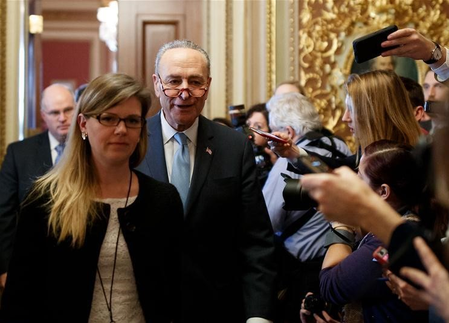
Senate Minority Leader Charles Schumer condemned the bill as a form of voter suppression, criticizing last-minute additions that he claimed were strategically inserted to avoid public scrutiny. Schumer pointed out what he viewed as inconsistencies in the messaging around voting methods, citing instances where prominent figures, including Donald Trump, had used mail-in voting despite ongoing debates about its integrity.
In response, Republicans dismissed the Democrats’ accusations and portrayed the SAVE America Act as a popular reform initiative. Senate Majority Leader John Thune asserted broad public backing for the bill, emphasizing its appeal across diverse demographic groups. Thune announced plans to advance a vote on voter identification requirements, particularly focusing on a proposed amendment mandating photo ID verification.
Thune criticized Democrats for obstructing previous attempts to implement voter ID measures, citing instances where their proposals were blocked in the Senate. The contentious debate underscores the significance of election laws in the lead-up to 2026, with both parties leveraging contrasting narratives on access and integrity to mobilize their supporters. Democrats position the issue as a battle against disenfranchisement, while Republicans present it as a move towards enhancing electoral safeguards.
