


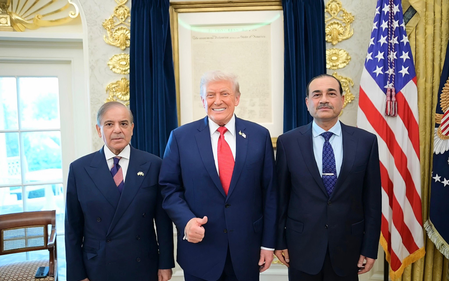
US President Donald Trump’s decision to honor Pakistan Army chief Field Marshal Asim Munir has drawn criticism for overlooking Pakistan’s history of sheltering Osama Bin Laden and supporting the Taliban, according to Michael Rubin, a senior fellow at the American Enterprise Institute. Rubin highlighted that Trump’s move has strained efforts to strengthen US-India relations over the past 25 years.
Describing Munir as an “unapologetic terror apologist,” Rubin pointed out the bloodshed linked to him involving both American and Indian interests. Despite Trump’s previous condemnation of Pakistan’s actions, he has now elevated the country by involving it in mediating US-Iran relations in the Middle East conflict.
Rubin expressed concerns that Pakistan might be seeking advanced technology from the US to counter India’s military strength or leveraging the situation for its benefit in Kashmir mediation. However, Rubin cautioned that Pakistan’s historical relationship with the US has been fraught with diverging interests, with Pakistan prioritizing conflicts with India over US objectives.
Rubin emphasized that the US has imposed sanctions on Pakistan multiple times in the past, including after Pakistan’s nuclear tests in 1998. He noted that with the reduced US presence in Afghanistan, Pakistan’s strategic importance has diminished, and any expectations of long-term benefits from the US may be unfounded.
