


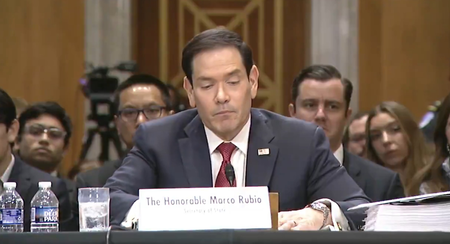
US Secretary of State Marco Rubio encountered strong criticism from Senate Democrats regarding foreign aid reductions, Congressional oversight, and the government’s management of a growing Ebola outbreak in Africa. During a Senate Foreign Relations Committee meeting on the State Department budget, Ranking Member Jeanne Shaheen accused the administration of neglecting Congressional requests for briefings on various foreign policy matters. Shaheen emphasized the importance of a robust partnership between the administration and Congress for effective American foreign policy.
The New Hampshire Democrat highlighted unanswered requests for briefings on US force posture in Europe, Ukraine, sanctions policy, global media programs, and developments related to Iran. She expressed concerns over the proposed 44% cut in the State Department budget and cautioned that reductions in global health programs could hinder disease outbreak control efforts. Shaheen criticized the elimination of funding for the World Health Organization and disease-specific funds during the ongoing Ebola crisis.
Rubio defended the administration’s approach, stating that foreign assistance programs were being restructured to align more closely with American interests and measurable outcomes. He emphasized the need for a new model that focuses on achieving results and highlighted the strategic management of aid programs under the State Department’s guidance. The discussion also centered on Gavi, an international vaccine alliance funding the development of an Ebola vaccine.
Shaheen pressed Rubio on releasing funds allocated by Congress for global health programs, particularly Gavi. Rubio acknowledged the ongoing review of the issue and mentioned Health and Human Services Secretary Robert F. Kennedy Jr.’s involvement in evaluating Gavi funding. Rubio assured that efforts were underway to address the matter promptly. Additionally, Rubio defended the administration’s humanitarian assistance efforts, citing challenges in delivering aid to conflict zones like Sudan due to security risks.
