


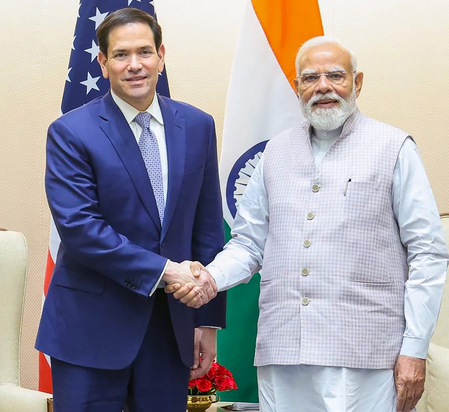
The recent visit of US Secretary of State Marco Rubio to India signifies a deepening phase in the relationship between New Delhi and Washington. The visit highlighted discussions on trade issues, differing geopolitical priorities, and concerns about American consistency. It also emphasized the Quad’s transformation from a diplomatic signaling platform to a framework focused on enhancing resilience in a fragmented global environment.
Rubio’s visit, which took place from May 23-26, was described as a significant but restrained event by former Foreign Secretary Nirupama Rao. The timing of the visit, following key international meetings and amidst global uncertainties, underscored its strategic importance. Rubio’s interactions in India aimed to provide reassurance amid evolving geopolitical dynamics.
The visit was strategically timed, occurring shortly after President Trump’s meeting with Xi Jinping and against the backdrop of tensions in the Gulf region. These events added layers of complexity to discussions during Rubio’s visit and the Quad Foreign Ministers’ Meeting on May 26. The bilateral discussions between Rubio and Indian officials focused on reinforcing the Indo-Pacific strategy, with India being central to US interests in the region.
Rubio’s visit had dual objectives according to Rao: reinforcing the significance of the India-US partnership and ensuring that engagement with China does not compromise regional commitments. The Quad’s evolving role was emphasized, with a focus on maritime security, economic cooperation, technology, and humanitarian assistance. India’s preference for flexible strategic partnerships was highlighted as aligning well with the Quad’s current agenda.
