


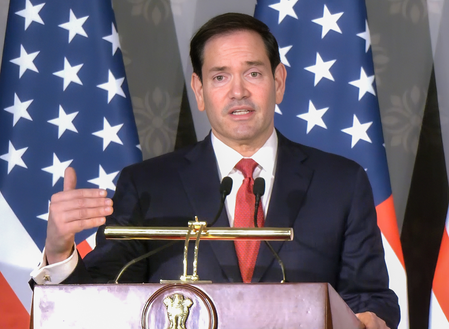
US Secretary of State Marco Rubio expressed concerns about China’s control over global critical mineral supply chains, emphasizing the threat it poses to economic and national security. Rubio stated that the US is actively seeking partnerships worldwide to reduce reliance on Beijing for essential resources crucial for advanced technologies, defense systems, and industrial production.
Rubio highlighted the strategic vulnerability created by the concentration of critical minerals and processing capacity in a single country, not only affecting the US but also its allies in Europe and Asia. He stressed the risks of depending on any one country for 90% of materials critical to industrial, defense, and technology sectors, calling it detrimental to global economy and security.
The Trump administration has prioritized critical minerals in its economic and foreign policies amid escalating competition with China. These minerals, such as lithium, cobalt, rare earth elements, and graphite, are vital for electric vehicles, semiconductors, batteries, telecommunications equipment, renewable energy technologies, and advanced military systems.
Rubio mentioned that the US is collaborating with numerous countries to diversify supply chains and establish alternative sources for both raw materials and processing capabilities. He underscored the importance of reducing economic coercion risks during crises by decreasing reliance on a single supplier for critical minerals and other essential products.
Representative John Moolenaar, chair of the House Select Committee on the Chinese Communist Party, echoed efforts to enhance supply chain resilience and lessen dependence on Chinese-controlled resources. The US is engaging with global partners to address vulnerabilities and forge alternative alliances to mitigate reliance on Chinese supply chains, particularly in strategic competition scenarios.
