


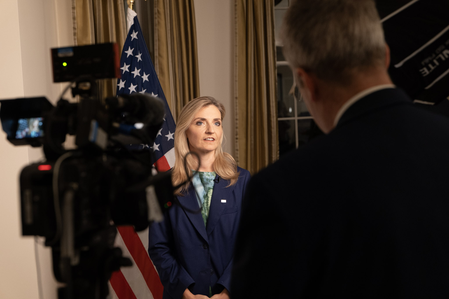
The United States is intensifying its public diplomacy initiatives to combat propaganda and influence campaigns from countries like Iran and China. Under Secretary of State for Public Diplomacy Sarah Rogers informed lawmakers about this during a congressional hearing. She emphasized that public diplomacy plays a crucial role in US national security, especially amid increasing geopolitical competition and military actions against Iran. Rogers highlighted the ongoing military operations in Iran under Operation Epic Fury, aimed at addressing threats posed by the Iranian regime to the US, its forces, and its allies.
Rogers also stressed the State Department’s immediate focus on ensuring the safety of American citizens and participants in exchange programs in the region. She mentioned that the department’s global public affairs communicators are utilizing social media and the Smart Traveler Enrollment Program to provide timely safety guidance to all American citizens. Additionally, Rogers stated that the department has facilitated the safe return of over 17,500 American citizens from the Middle East since February 28th, reflecting their commitment to citizens’ well-being during escalated conflicts.
Furthermore, Rogers outlined the administration’s strategy to counter disinformation and enhance America’s global narrative through diplomacy and strategic communication. She highlighted the significance of freedom of speech as a fundamental American freedom and strength. Rogers emphasized the US’s advocacy for free expression worldwide while opposing censorship that could impact American citizens and businesses. Additionally, she mentioned the efforts to strengthen the country’s ability to counter propaganda from adversaries by enhancing clarity on US resolve and combating anti-American propaganda and foreign influence operations.
Rogers detailed the two main pillars of US public diplomacy, focusing on long-term relationships through educational and cultural exchange programs and global messaging and communication. She highlighted initiatives like Fulbright, Gilman, and the International Visitor Leadership Programme that foster connections with future foreign leaders. Rogers also emphasized the use of digital channels and advanced analytics to shape global media narratives and measure effectiveness. The department has introduced unified branding guidelines to clearly associate US-funded programs abroad with American leadership, ensuring a cohesive and impactful approach to public diplomacy.
In addition to these efforts, Rogers mentioned the role of public diplomacy in advancing broader foreign policy objectives across various regions. She highlighted contributions in the Western Hemisphere to combat illegal immigration and disrupt transnational criminal organizations, technological leadership promotion in the Indo-Pacific, and partnership-building for peace and economic opportunities in the Middle East and Africa. Rogers also underscored the emerging role of sports diplomacy in promoting US engagement abroad, citing initiatives like USA pavilions at World Expos and partnerships with the NFL. She expressed optimism about leveraging major global sporting events in the US to enhance outreach and celebrate American achievements on the global stage.
