


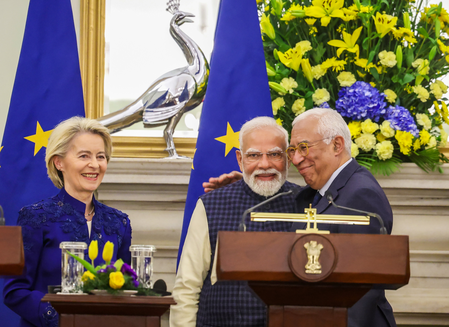
The recent free trade agreement between India and the European Union was hastened by the tariff disruptions initiated by US President Donald Trump under his “America First” trade strategy. This agreement, uniting two major markets, encompassing around two billion people and a quarter of global GDP, was finalized after nearly two decades of negotiations. The imposition of US tariffs on Indian exports and the breakdown of US-India trade discussions prompted India to diversify its trade partnerships.
European nations, facing tensions with the US, found common ground with India due to shared concerns over US trade policies. The threat of US tariffs over various issues acted as a catalyst for India and the EU to resolve their differences and reach a significant trade agreement. European Council President Antonio Costa highlighted this deal as a response to the protectionist stance of the US, emphasizing the importance of upholding international trade norms.
The India-EU partnership is not only a response to US trade policies but also serves as a strategic move to counterbalance China’s dominance in global supply chains. Both parties aim to strengthen their ties to reduce dependence on China and enhance their economic and strategic cooperation. The agreement includes a Security and Defence Partnership alongside the trade deal, focusing on areas like maritime security, defence technology, cyber security, and counter-terrorism.
European companies are now poised to relocate some manufacturing operations to India under the new agreement, particularly in sectors like batteries and specialty chemicals. This shift is intended to avoid reliance on Chinese components and benefit from the tariff advantages provided by the deal. Indian Prime Minister Narendra Modi hailed this agreement as the “biggest free trade deal in history,” emphasizing its broad impact on various sectors and the potential benefits for Indian citizens.
