


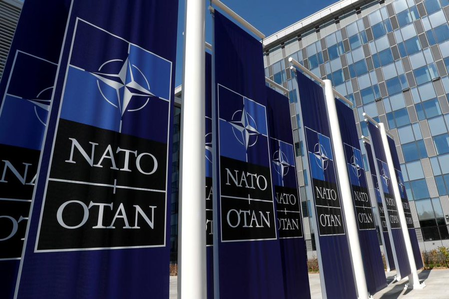
The United States is emphasizing that Europe should enhance its defense capabilities while maintaining a strong military presence on the continent. This shift, driven by Washington’s focus on China and the Indo-Pacific region, has implications for India. At a House Armed Services Committee hearing, US officials reiterated the importance of NATO in American strategy and urged allies to increase defense spending.
Chairman Mike Rogers cautioned against prematurely reducing US forces in Europe, citing potential risks of weakening deterrence against Russia. As the conflict in Ukraine continues, officials noted Russia’s enduring military strength despite significant losses. This situation poses economic and strategic implications for India, which has ties with both Moscow and Western nations, especially in energy markets.
General Alexus Grynkewich, commander of US European Command, highlighted the critical role of American forces in Europe for NATO and operations beyond the region. He emphasized that European countries are ramping up defense spending but cautioned that building substantial capability will require time. The Pentagon is advocating for a rebalancing of NATO’s responsibilities, expecting Europe to take the lead in conventional defense by 2035.
Assistant Secretary of Defense Daniel Zimmerman reaffirmed the US commitment to NATO while calling for Europe to lead in conventional defense efforts. This approach, termed “peace through strength,” emphasizes burden-sharing. Officials indicated that a stronger European defense posture would enable the US to shift resources towards the Indo-Pacific, aligning with India’s security interests.
Lawmakers highlighted the significance of the US military presence in Europe for global operations, including in the Middle East and Africa. Grynkewich underscored Europe’s role as a platform for projecting US combat power, supported by bases and allied access. The hearing also underscored the increasing coordination among US adversaries like Russia, China, Iran, and North Korea, necessitating a unified response.
