


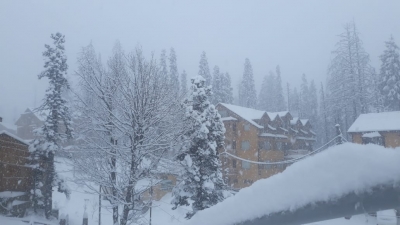
Night temperatures in the Valley plummeted below freezing, with Gulmarg hitting a chilling minus 6.5 degrees Celsius. However, following the end of the 40-day ‘Chillai Kalan’ cold spell on January 30, day temperatures in J&K have started to rise. Srinagar saw a maximum of 10 degrees, while Jammu recorded 22.1 degrees on Friday.
In contrast, the minimum temperatures on Saturday were minus 0.1 in Srinagar, minus 2.6 in Pahalgam, and minus 6.5 in Gulmarg. Jammu city experienced 10.1 degrees, Katra town 9 degrees, Batote 4.2 degrees, Banihal 0.8 degrees, and Bhaderwah 0.6 degrees as the minimum temperatures. The MET department has predicted generally cloudy weather with light to moderate rain/snow and gusty winds in J&K on January 31 and February 1.
Looking ahead, February 2 and 3 are expected to bring generally cloudy weather with light rain/snow in higher areas. From February 4 to 6 evening, partly cloudy conditions are anticipated, followed by generally cloudy weather with light rain/snow in a few places on February 7. Dry weather is forecasted from February 8 to 10 in J&K. An advisory has been issued for farmers to halt agricultural activities until February 7.
Residents in avalanche-prone regions are urged to be cautious when leaving their homes. Travellers and transporters are advised to check with the traffic department’s control rooms for updates on the Srinagar-Jammu National Highway before embarking on journeys. The recent heavy snowfall towards the end of Chillai Kalan has alleviated concerns about water scarcity in the upcoming summer months, as it replenishes water reservoirs in the mountains that support water bodies during summer in J&K.
