


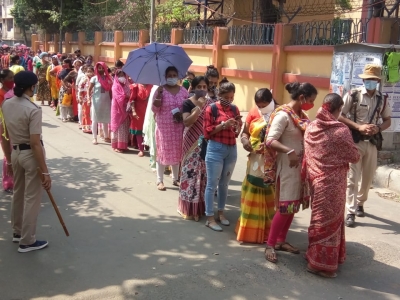
West Bengal elections have historically been a battleground primarily between two major political parties, with the upcoming 2026 elections expected to follow this trend. The Trinamool Congress, replacing the Congress, successfully challenged the Left Front, while the Bharatiya Janata Party (BJP) has emerged as a significant opposition force in recent times, surpassing the Congress and Communists.
Initially founded as the Bharatiya Jana Sangh in 1951, with roots in West Bengal, the BJP struggled to gain traction in the state. Despite this, the party, under the leadership of Mamata Banerjee, made significant progress, winning Lok Sabha seats and expanding its influence.
Over the years, political dynamics in West Bengal have shifted, with the Trinamool aligning with the Congress and securing victories, leading to the marginalization of the Left and Congress. The BJP, on the other hand, made notable progress in subsequent elections, culminating in a significant performance in 2021, winning a substantial number of constituencies and votes.
The 2021 elections marked a turning point with Mamata Banerjee’s defeat in Nandigram to Suvendu Adhikari of the BJP, a former ally. The Nandigram movement, along with other key events, played crucial roles in shaping the state’s political landscape. As new players like Janata Unnayan Party (JUP) and AIMIM enter the fray, the upcoming elections in West Bengal are poised to be closely contested.
