


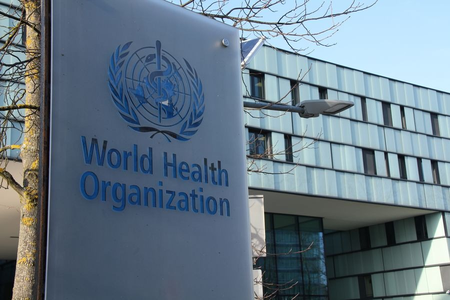
The World Health Organisation’s regional director for the Eastern Mediterranean, Hanan Balkhy, stated that the organization is getting ready for a potential nuclear incident in the Middle East due to the escalating US-Israel-Iran conflict. Balkhy emphasized the importance of reviewing protocols to address radiation exposure in such a scenario.
Health officials are also focusing on protocols to manage radiation exposure, mass casualties, and long-term environmental harm by drawing insights from past nuclear calamities. Balkhy cautioned that the repercussions of a nuclear incident could extend well beyond the immediate conflict area and persist for decades.
The WHO’s alert comes amidst increasing hostilities in the region, including assaults on Iran’s nuclear and energy facilities, raising concerns of a possible radiological incident even without the use of nuclear weapons. In the US, Robert Kadlec, assistant secretary of defence for nuclear deterrence and chemical and biological defence, highlighted the critical juncture in the country’s strategy.
US defense officials acknowledged the unprecedented challenge of deterring two nuclear adversaries simultaneously, with growing threats from China and Russia in nuclear, missile, and space capabilities. Kadlec advocated for theatre-range nuclear options like SLCM-N to manage conflict escalation with peer competitors.
Kadlec urged the acceleration of various defense systems including the Sentinel intercontinental ballistic missile, the Columbia-class submarine, the B-21 bomber, and the Long Range Stand Off cruise missile.
