


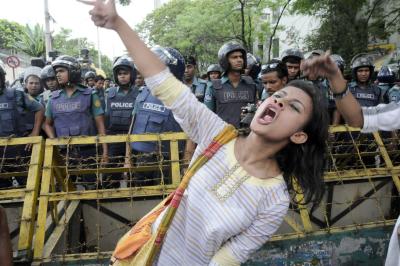
Women in Bangladesh are encountering increasing social, cultural, and political opposition despite their growing presence, as per a report. Data from the Bangladesh Bureau of Statistics and the United Nations Population Fund reveal that about 76% of women in the country experience violence at some point in their lives. This violence often remains concealed, with many cases being viewed as private matters, perpetuating a culture of silence around abuse.
The report highlights that the proliferation of digital technology has led to new forms of violence such as online harassment, blackmail, and misinformation dissemination. Online activists linked to religious groups frequently launch attacks, contributing to a structural ‘gender backlash’ against women. Despite the rise in women’s participation and visibility, efforts to control and resist them have also intensified.
According to the report, women in Bangladesh face challenges in public spaces, including streets, university campuses, and cultural events, where they encounter social surveillance, moral policing, and even violence. The fear of negative online attention and the presence of ‘bot armies’ further exacerbate their anxieties. Incidents of harassment in public spaces have sparked debates, underscoring the lack of a gender-neutral environment in Bangladesh’s public spheres.
The report emphasizes the prevalence of online abuse, noting that the gender backlash has extended into the digital realm, with many women experiencing online violence. Coordinated trolling, doxing, and character assassination are common, targeting journalists, politically active women, and students. Religious and moral narratives are often weaponized to undermine women’s freedom of expression and participation in public discourse.
To address the pervasive gender discrimination in Bangladesh, the report calls for inclusive dialogues encompassing development, culture, religious beliefs, and political structures to ensure sustainable gender equity in the future.
