


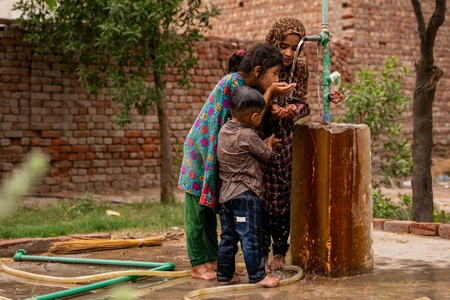
The World Bank Group has introduced a global initiative, Water Forward, with the goal of enhancing water security for one billion individuals by 2030. This initiative aims to connect access to dependable water directly to employment, economic advancement, and stability in developing nations. World Bank President Ajay Banga emphasized the critical role of water in economic functionality, stating that functional water systems are essential for agricultural productivity, business operations, and attracting investments.
Water Forward seeks to address the impact of water scarcity on around 4 billion people worldwide, with water-dependent sectors currently supporting over 1.7 billion jobs. The World Bank plans to directly impact 400 million people through this initiative, with partner organizations anticipated to extend this reach to over one billion individuals. The cornerstone of Water Forward includes country-led “water compacts,” where governments commit to reforms, enhance institutions, and outline investment plans.
The initiative also aims to mobilize private investments by enhancing regulations, utility performance, and project readiness. Business leaders, including Nigerian industrialist Aliko Dangote, emphasized the importance of considering water as essential infrastructure. Dangote highlighted the repercussions of water system failures on labor markets, agriculture, industry, health, and human capital. The necessity of targeted assistance for the most affected individuals was underscored by Banga, particularly amidst global economic challenges stemming from conflicts and debt burdens.
Various speakers from developing nations underscored how water shortages impact education, agriculture, and commercial activities. They emphasized that water scarcity affects more than just thirst, influencing aspects like access to education and job retention. Multilateral development banks and institutions have pledged their support to the initiative, with commitments targeting millions of people across different regions, including Asia, Africa, and Latin America.
