


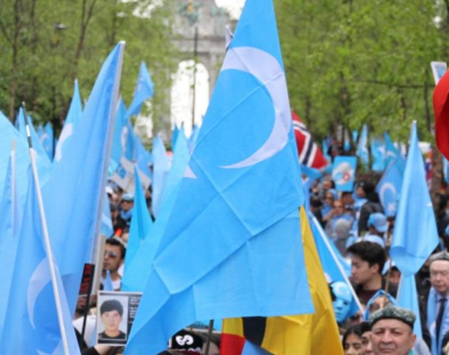
The World Uyghur Congress (WUC) has expressed worry about reports of Uyghurs in China’s Xinjiang region facing limitations during Ramadan, with some individuals reportedly detained for religious observances. The WUC highlighted the lack of religious freedom in East Turkistan, also known as Xinjiang Uyghur Autonomous Region. According to the WUC, police in Hotan Prefecture arrested six Uyghurs from various villages for allegedly fasting in secret during Ramadan.
WUC President Turgunjan Alawdun criticized the tightening restrictions on Ramadan, stating that recent detentions show a lack of privacy even in homes. These actions, including surveillance and forced labor, violate international and Chinese laws. The WUC reported these incidents amidst discussions on Uyghur issues at the UN Human Rights Council session in Geneva.
The UN Special Rapporteur on Freedom of Religion or Belief, Nazila Ghanea, highlighted the Chinese government’s actions of destroying and replacing Uyghur Muslim cemeteries without informing the deceased’s relatives. The WUC noted that these actions align with China’s policy of “Sinicisation” of religion, aiming to reshape religious practices to align with Communist Party ideology and state control.
The WUC emphasized that in Xinjiang, restrictions on Islamic faith include bans on Ramadan fasting for many, altering mosques, prohibiting religious education, and criminalizing normal religious practices. Such actions are seen as signs of “extremism.” The surveillance and punishment of Uyghurs for observing Ramadan are part of a strategy to erode independent religious life and assimilate Uyghurs into state-defined cultural norms, violating international laws on freedom of religion.
