


In this Om Shanti Shanti Shantihi movie review, we explore a film that proves remakes can have their own soul when crafted with authenticity and care. When was the last time a Telugu remake made you forget about the original and simply experience the story as if hearing it for the first time? Director A R Sajeev’s debut offering doesn’t just translate the Malayalam hit Jaya Jaya Jaya Hey—it transforms it into a distinctly Telugu narrative soaked in Godavari culture, delivered through powerhouse performances that remind us why regional cinema thrives on authentic storytelling.
This is Tharun Bhascker’s finest hour as an actor, stepping confidently beyond his directorial comfort zone. Eesha Rebba finally gets a role worthy of her talent, delivering a performance that anchors the film’s emotional core. With its beautiful cinematography capturing East Godavari’s rustic charm and a narrative that balances dark humor with genuine empowerment, Om Shanti Shanti Shantihi is the kind of thoughtful entertainer that stays with you.
Quick Takeaway:
Om Shanti Shanti Shantihi is a well-crafted dark comedy that succeeds through authentic localization, strong performances, and sincere handling of serious themes. While familiarity with the original might reduce surprises, the film’s Godavari nativity, Tharun Bhascker’s breakthrough acting work, and Eesha Rebba’s powerful portrayal make it compelling viewing. The beautiful cinematography and meaningful social messaging elevate this beyond typical remake territory.
Language: Telugu
Age Rating: U/A
Genre: Dark Comedy, Social Drama
Director: A R Sajeev
The Story: A Journey from Silence to Strength
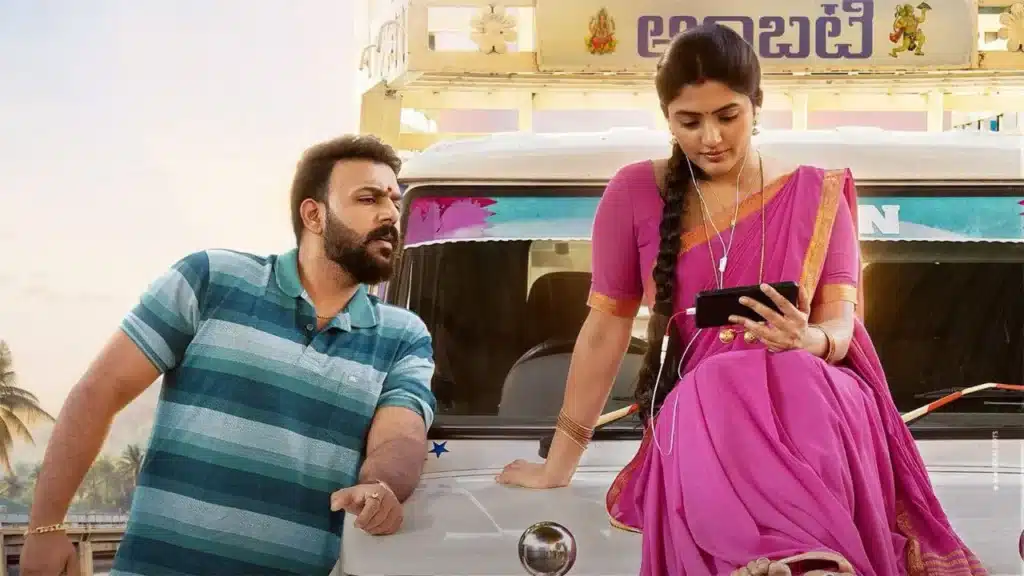
Om Shanti Shanti Shantihi tells the story of Kondaveeti Prashanti (Eesha Rebba), a woman who has spent her entire life conforming to others’ expectations. From childhood games to career choices to marriage, she’s never had agency over her own decisions. Her parents arrange her marriage to Ambati Omkar Naidu (Tharun Bhascker), a successful fishery businessman from Dhawaleshwaram in East Godavari district, Andhra Pradesh.
What begins as adjustment to a new household gradually reveals itself as something darker. Omkar’s domineering nature, explosive temper, and deeply patriarchal attitudes transform Prashanti’s life into a daily negotiation for basic dignity. The film follows her journey from silent suffering to reclaiming her voice, autonomy, and self-respect.
What makes this narrative work is its refusal to preach. The story unfolds naturally, allowing us to witness Prashanti’s evolution without melodramatic overselling. The dark comedy elements provide breathing room between heavier moments, making the film’s message about equality and respect land with genuine impact rather than forced messaging.
Performances: Everyone Shines Bright
Tharun Bhascker: Actor Unleashed
This Om Shanti Shanti Shantihi movie review must celebrate what might be Tharun Bhascker’s most significant achievement as a performer. Known primarily as the visionary director behind Pelli Choopulu and Ee Nagaraniki Emaindi, Tharun has often faced questions about “wasting” his directorial talent by acting. This film is his definitive answer.
His portrayal of Omkar Naidu is layered and authentic. The Godavari accent flows naturally—never forced, never caricatured. Watch him in the comedy sequences during fights; he commits fully to the physical humor while maintaining character consistency. There’s genuine menace in his angry outbursts, yet he never makes Omkar a one-dimensional villain. The character believes he’s right, and Tharun captures that misguided conviction perfectly.
The interval sequence and the portions following it showcase Tharun at his finest—navigating complex emotional terrain while keeping the dark comedy intact. This is an actor who has found his rhythm, discovered his range, and delivered something memorable.
Eesha Rebba: The Film’s Beating Heart
Eesha Rebba carries Om Shanti Shanti Shantihi on her shoulders, particularly from the interval onwards. For an actress who has often been sidelined in roles that don’t utilize her abilities, this is a revelation. Her Prashanti is restrained in the first half—appropriately so, given the character’s suppressed state. But watch the transformation as she finds her voice.
The action sequences are executed with surprising conviction. Eesha brings both physical commitment and emotional truth to these confrontations, making them feel earned rather than manufactured. Her pain is palpable, her sadness genuine, her ultimate empowerment believable. This is the kind of substantial role she deserves more often, and she absolutely delivers.
The chemistry between Tharun and Eesha works beautifully. Their scenes crackle with tension—sometimes comedic, sometimes uncomfortable, always engaging. They understand the tonal tightrope the film walks and navigate it together skillfully.
Brahmaji: Comedy Gold in Limited Doses
Brahmaji as the hero’s maternal uncle is an absolute delight. Every appearance generates genuine laughs through impeccable timing and natural humor. It’s the kind of role he excels at—grounded, relatable, perfectly calibrated. After years of similar parts, he makes this feel fresh through sheer talent and commitment.
The film underutilizes him somewhat, which is the only complaint. More Brahmaji would have elevated the comedy quotient even higher. Still, what we get is memorable and consistently entertaining.
Brahmanandam’s Climax Impact
The legendary comedian’s entry in the climax provides exactly the energy boost the finale needs. His presence alone brings smiles, and he delivers his moments with the mastery of decades. It’s a smart creative choice to save this firepower for the ending, ensuring the film finishes on a high note.
Direction and Vision: Authentic Storytelling Wins
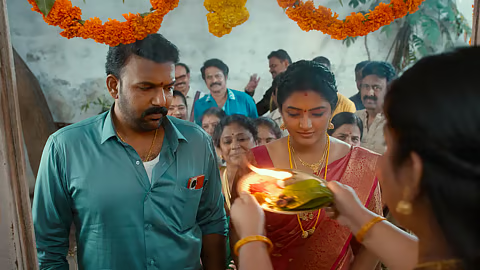
A R Sajeev makes a confident Telugu debut by understanding what this story needs—authenticity over innovation. Rather than radically reimagining the original, he focuses on cultural translation, ensuring every element feels genuinely Telugu. The Godavari region becomes a character itself, its dialects and customs woven seamlessly into the narrative fabric.
The decision to stay largely faithful to the source material might limit surprises for those familiar with Jaya Jaya Jaya Hey, but Sajeev compensates through meticulous attention to regional detail. The language, the humor, the family dynamics—everything feels rooted in Telugu sensibility rather than merely translated from Malayalam.
Where Sajeev truly succeeds is tonal balance. Dark comedy about serious subjects like domestic abuse and patriarchy requires delicate handling. Go too light and you trivialize important issues; go too heavy and you lose entertainment value. The director navigates this skillfully, trusting his actors and material enough to let moments breathe naturally.
The pacing occasionally dips in the second half, and a tighter edit could have maintained momentum better. But these are minor issues in an otherwise well-constructed debut that shows genuine promise for Sajeev’s future work.
Technical Excellence: Godavari’s Visual Poetry
Cinematography: The Region Comes Alive
Deepak Yaragera’s cinematography is nothing short of spectacular. The way he captures East Godavari’s landscape—the rivers, the fields, the rustic architecture—creates visual richness that elevates the entire film. As Tharun Bhascker mentioned before release, this might be the most beautiful cinematic representation of the Godavari region in recent memory.
The color palette is warm and inviting, making even difficult scenes easier to watch. The camera work during action sequences maintains clarity while adding dynamic energy. There’s a pleasant, lived-in quality to the visuals that makes the world feel real and immersive.
Music and Sound: Enhancing Without Overwhelming
Jay Krish’s background score deserves recognition for providing freshness to familiar material. The music complements the narrative’s shifting moods—playful during comedy, intense during confrontations, tender during emotional beats. It never overwhelms the storytelling, instead serving the scenes perfectly.
The songs integrate naturally without disrupting flow. The sound design creates an authentic atmosphere that grounds the film in its regional setting. Every technical department clearly understood the assignment and delivered quality work.
Production Design and Editing
The production values are solid throughout. Sets feel authentic rather than artificial, costume choices reflect character and culture accurately, and the overall visual presentation maintains professional polish.
The editing maintains good pace for most of the runtime, though the second half could benefit from trimming 10-12 minutes. The interval sequence is timed perfectly, creating maximum impact. Scene transitions flow smoothly, and the interweaving of comedy and drama never feels jarring.
Cultural Authenticity: Telugu Soul
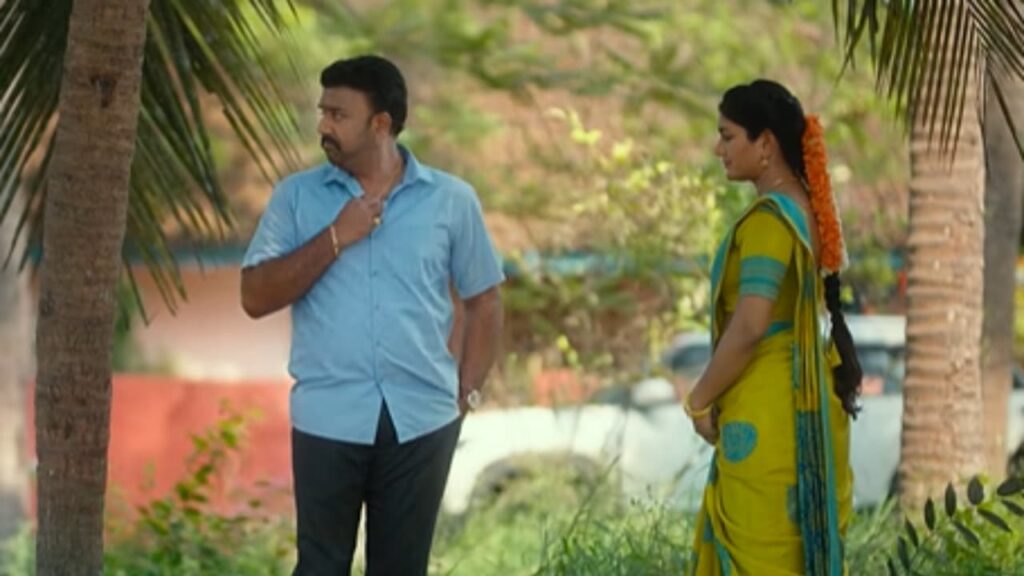
What separates Om Shanti Shanti Shantihi from typical remakes is its cultural specificity. This isn’t a scene-by-scene copy with Telugu dialogue—it’s a reimagining that understands regional identity matters. The Godavari dialect isn’t just accent; it’s character. The local humor isn’t just translation; it’s cultural translation.
For Telugu audiences, especially those familiar with coastal Andhra culture, the film offers recognition and authenticity. The family dynamics, the social expectations, the way conflict is handled—everything rings true to the milieu being portrayed.
Even viewers unfamiliar with the original Malayalam film will appreciate the story on its own merits, experiencing it as a fresh narrative rather than a remake. That’s the ultimate success of culturally authentic adaptation.
Themes That Resonate: More Than Entertainment
Beneath the dark comedy lies serious commentary on patriarchy, domestic power dynamics, and the fundamental need for equality in relationships. The film doesn’t preach or lecture—it shows. Through Prashanti’s journey, we understand how conditioning perpetuates harmful patterns, how silence enables abuse, and how reclaiming agency requires immense courage.
Dialogues like “What a wife wants from a husband is freedom, independence, equality” land with impact because they’re earned through storytelling rather than inserted as messaging. The film trusts audiences to engage with these themes thoughtfully.
The narrative also explores how patriarchal attitudes harm everyone, not just women. Omkar isn’t portrayed as evil—he’s a product of conditioning who believes his behavior is normal and justified. This nuance makes the story more complex and ultimately more powerful.
Strengths and Minor Weaknesses
What Works Magnificently
- Tharun Bhascker’s career-best acting – Authentic accent work, strong comic timing, convincing portrayal
- Stunning Godavari region cinematography – Visual poetry that celebrates the landscape
- Authentic cultural localization – Feels genuinely Telugu, not merely translated
- Brahmaji’s impeccable comic timing – Consistently entertaining despite limited screen time
- Meaningful social themes handled sensitively – Empowerment without preaching
- Strong interval and climax sequences – Emotional high points that deliver impact
- Fresh background score – Jay Krish’s music enhances without overwhelming
Where It Could Improve
- Second half pacing dips slightly – Could benefit from tighter editing
- Familiarity for those who saw the original – Scene-by-scene similarities reduce surprise factor
- Supporting characters underutilized – Brahmaji particularly deserved more screen time
- Some stretches feel prolonged – 10-12 minutes could be trimmed without losing impact
Final Verdict: 4/5 Stars ⭐⭐⭐⭐
Om Shanti Shanti Shantihi succeeds as both entertainment and meaningful cinema. In this Om Shanti Shanti Shantihi movie review, we celebrate a film that respects its source material while establishing its own Telugu identity through authentic localization and powerful performances.
Tharun Bhascker proves he’s a formidable actor who brings the same thoughtfulness to performing that defines his directorial work. Eesha Rebba finally gets a role worthy of her considerable talent and seizes the opportunity brilliantly. Together, they anchor a film that balances dark humor with genuine emotional weight.
A R Sajeev’s directorial debut shows promise and understanding of regional storytelling. While staying faithful to the original limits surprises, the beautiful cinematography, meaningful themes, and sincere performances make this a worthwhile theatrical experience.
For viewers seeking quality entertainment with substance, Om Shanti Shanti Shantihi delivers satisfying results. The film celebrates empowerment, dignity, and equality without sacrificing entertainment value—a difficult balance it achieves admirably.
