


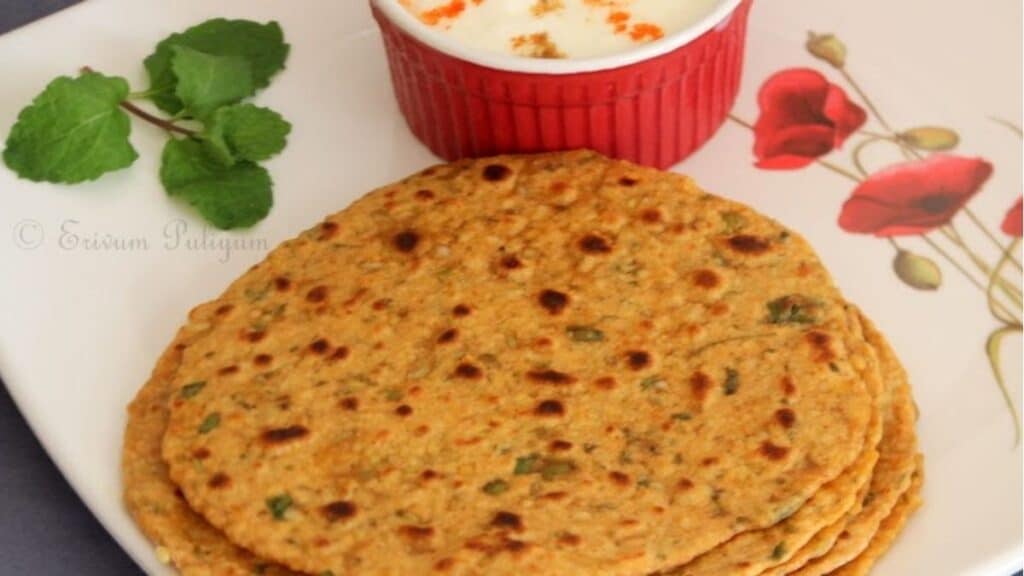
If you’ve only experienced the familiar stuffed parathas common across India, Rajasthani Moong Dal Paratha will completely transform your understanding of what this beloved flatbread can be. Unlike typical parathas where filling is enclosed within dough layers, this Rajasthani specialty incorporates soaked moong dal directly into the dough itself, creating an extraordinarily crispy texture, nutty flavor, and protein boost that makes it simultaneously more nutritious and more delicious than its conventional cousins.
Quick Summary:
Rajasthani Moong Dal Paratha is a unique crispy flatbread made by kneading soaked split yellow moong dal directly into whole wheat dough with aromatic spices. This protein-rich paratha requires just 30 minutes soaking, 30 minutes resting, and 10 minutes cooking to create a textured, flavorful breakfast or meal that’s healthier than regular parathas.
Table of Contents
What Makes Rajasthani Moong Dal Paratha Different from Regular Parathas
The Rajasthani approach to moong dal paratha represents a fundamental departure from how most Indian regional cuisines prepare stuffed or flavored parathas, and understanding this difference helps you appreciate what makes this version special both culinarily and nutritionally.
Traditional stuffed parathas typically involve creating a dough, then separately preparing a filling (whether spiced potatoes, paneer, cauliflower, or lentils), enclosing that filling within rolled dough, and cooking the sealed paratha. This method creates distinct layers—soft bread exterior protecting a flavorful filling interior. The textures and flavors remain somewhat separate, with the dough serving primarily as a vehicle for the filling.
Rajasthani Moong Dal Paratha completely abandons this approach. Here, the moong dal isn’t cooked and mashed into a filling—it’s simply soaked until softened, then kneaded directly into the wheat flour dough along with all the spices and aromatics. This integration means every bite contains both wheat and dal, creating a fundamentally different texture and nutritional profile.
The result is extraordinary crispiness that stuffed parathas rarely achieve. The dal pieces, when rolled thin and cooked on the tawa, develop crispy edges and nutty flavor while the wheat flour provides structure. The texture becomes almost layered naturally through the cooking process, with spots of extra crispiness where dal concentrations are higher.
This method also offers practical advantages. There’s no tricky folding or sealing required to prevent filling from leaking out. There’s no risk of the paratha bursting during cooking and spilling its contents. The preparation is more straightforward—essentially just making flavored dough and rolling it out like any basic paratha, yet the results are far more interesting than plain wheat flatbread.
Nutritionally, integrating dal throughout the paratha rather than concentrating it in the center means more protein in every bite. You’re not eating mostly bread with occasional pockets of protein-rich filling—you’re eating a genuinely protein-enriched flatbread throughout. For vegetarian diets where protein distribution matters, this makes meaningful difference.
The spices in Rajasthani Moong Dal Paratha—cumin, fennel, nigella seeds, hing (asafoetida), turmeric—aren’t just flavor additions but traditional digestive aids that complement lentils’ natural properties. This thoughtful spicing reflects Rajasthani culinary wisdom about making lentils more digestible and flavorful.
CHECK MORE ON:Meethe Chawal Recipe: Traditional Punjabi Sweet Rice for Basant Panchami
Essential Ingredients and What Each Contributes
Understanding the role each ingredient plays in Rajasthani Moong Dal Paratha helps you make smart substitutions when necessary while maintaining the dish’s essential character.
Moong dhuli dal (split yellow moong dal) forms the star ingredient that distinguishes this paratha from all others. The “dhuli” designation means the dal is split and hulled, with the green skin removed, leaving the yellow interior. This matters because skinless dal softens more readily during soaking and integrates more smoothly into dough than whole moong or moong with skin intact.
The dal provides plant-based protein (about 24g per 100g dry weight), dietary fiber, and essential nutrients including iron, magnesium, and B-vitamins. When soaked for several hours, the dal softens enough to knead into dough while retaining enough structure to create textural interest rather than dissolving completely.

Atta (whole wheat flour) provides the structural foundation that holds everything together. Whole wheat flour contains gluten that develops during kneading, creating the elasticity needed to roll the dough thin without tearing. The fiber and nutrients in whole wheat complement the dal’s nutritional profile, creating genuinely wholesome flatbread.
Using atta rather than refined flour (maida) keeps the paratha aligned with traditional Indian dietary preferences for whole grains and adds nutritional value that white flour versions would lack. The slightly nutty flavor of whole wheat also complements the dal beautifully.
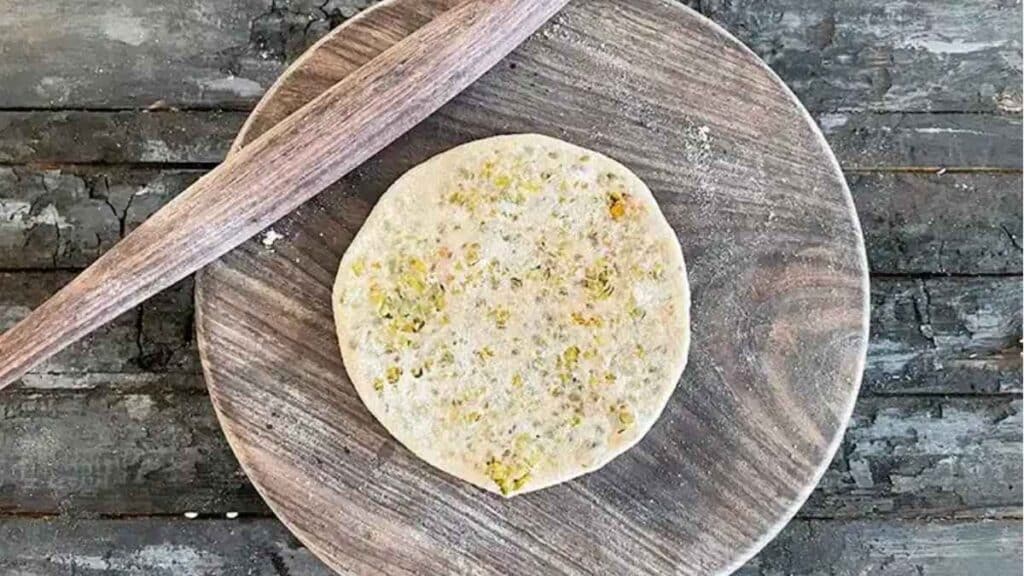
Whole spices—cumin (jeera), fennel seeds (saunf), and nigella seeds (kalonji)—contribute layers of flavor and digestive benefits. Cumin’s earthy warmth is fundamental to Indian savory cooking and particularly complements lentils. Fennel seeds add subtle sweetness and licorice-like notes while supporting digestion. Nigella seeds (often called kalonji or black cumin, though they’re not actually cumin) provide slight bitterness and peppery notes that create complexity.
These whole seeds, when cooked on the hot tawa, release essential oils and develop deeper, toasted flavors that ground spices simply cannot match. They also create textural interest—tiny bursts of concentrated flavor throughout the paratha.

Hing (asafoetida) is a resinous spice that smells quite pungent in its raw form but transforms during cooking into something subtle, savory, and umami-rich. In Indian cooking, hing is particularly associated with lentil and legume dishes because it helps reduce gas and bloating that beans and lentils can cause. Even the small pinch called for in this recipe contributes meaningful digestive support and adds depth to the overall flavor profile.
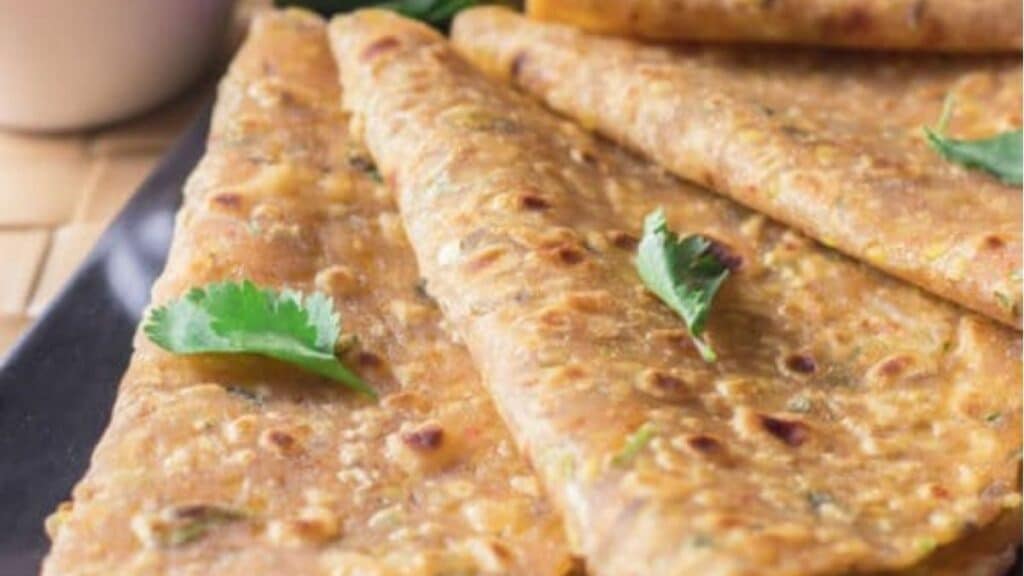
Turmeric (haldi) provides both color—giving the paratha attractive golden hue—and anti-inflammatory benefits that modern research increasingly validates. Traditional Indian cooking has always included turmeric in lentil preparations, intuitively understanding its beneficial properties long before contemporary science confirmed them.
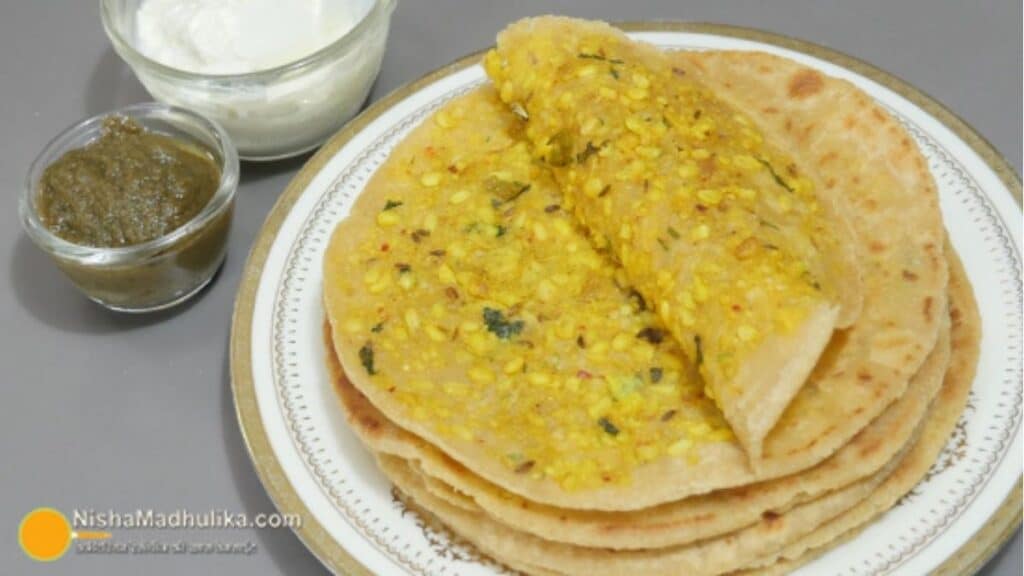
Red chilli powder and fresh green chillies provide heat at different intensities and flavors. The dried red chilli powder offers consistent, even heat throughout the dough, while fresh green chillies add bright, fresh heat and slight vegetal flavor. The combination creates more complex spiciness than either would alone.
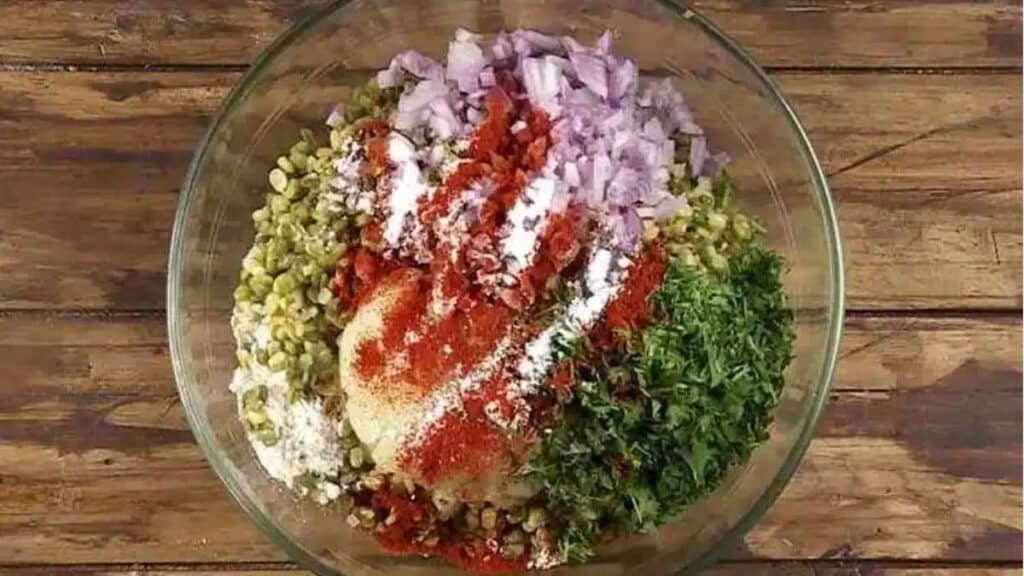
Fresh coriander leaves (cilantro) add brightness, color, and fresh herbal notes that lift the earthy flavors of dal and spices. The herb’s distinctive flavor either delights or repels people (genetic factors influence how cilantro tastes to different individuals), but for those who enjoy it, coriander adds essential freshness to the paratha.
Ghee or oil serves multiple purposes. During dough preparation, adding small amounts of fat creates softer, more pliable dough. During cooking, brushing parathas with ghee creates crispy, golden-brown surfaces and adds rich flavor. Ghee provides traditional authentic taste, while oil works for vegan preparations or when ghee isn’t available.
Salt is obviously essential for seasoning, but it also affects dough development. Salt strengthens gluten structure in wheat dough, helping create parathas that roll out well and maintain integrity during cooking without becoming tough.
Step-by-Step Instructions for Perfect Rajasthani Moong Dal Paratha
Creating perfect Rajasthani Moong Dal Paratha requires attention to technique at each stage, from soaking the dal properly through achieving the ideal crispy texture during cooking.
Soaking the Moong Dal Properly
Washing and soaking the moong dal correctly sets the foundation for everything that follows. Measure half a cup of moong dhuli dal and place it in a fine-mesh strainer. Rinse thoroughly under running water, rubbing the dal between your hands to remove any residual dust or debris. The water will run cloudy initially and should become clearer as you continue rinsing.
Transfer the washed dal to a bowl and cover with at least 2 cups of fresh water—you want plenty of water for the dal to absorb. The soaking time isn’t precisely critical, but aim for 3-4 hours minimum, or up to 8 hours if you’re preparing ahead. The dal should soften enough that you can easily crush a piece between your fingers but still retain some firmness—it shouldn’t turn mushy.
If you’re short on time, you can speed-soak the dal by covering it with boiling water and letting it sit for 1-2 hours, though traditional room-temperature soaking yields slightly better texture and digestibility.
Draining thoroughly after soaking is crucial. Pour the soaked dal into a fine-mesh strainer and let it drain for 5-10 minutes, shaking occasionally to remove excess water. Too much water clinging to the dal will make your dough too wet and difficult to work with. If the dal seems very wet, you can even spread it on a clean kitchen towel for a few minutes to absorb remaining moisture.
Preparing the Dough
Combining dry ingredients starts the dough-making process. In a large, wide bowl (wider is better for kneading), add your cup of atta, the drained moong dal, 1 teaspoon red chilli powder, quarter teaspoon each of fennel seeds and nigella seeds, half teaspoon turmeric powder, a generous pinch of hing, half teaspoon cumin seeds, chopped green chilli (adjust quantity to your heat preference), and chopped fresh coriander leaves (about 2-3 tablespoons, though you can add more if you love coriander).
Add salt to taste—start with about 3/4 to 1 teaspoon, knowing you can adjust in future batches based on preference. Mix everything together with your hands, distributing the soaked dal evenly throughout the flour and ensuring spices are well distributed.
Adding water gradually is the key to achieving proper dough consistency. Start with about 2-3 tablespoons of water, mixing and squeezing with your hands. The soaked dal will release some moisture as you knead, so you need less additional water than you would for regular wheat dough. Add water very gradually, a tablespoon at a time, kneading after each addition.
The goal is a firm but pliable dough—significantly firmer than bread dough but soft enough to roll without cracking. The dough should feel slightly textured from the dal pieces and spices rather than completely smooth. If it feels too dry and cracks when you try to form a ball, add tiny amounts of water. If it feels sticky, dust with a little flour.
Kneading technique matters for developing gluten structure while protecting the dal pieces. Knead the dough for about 5-7 minutes, using the heel of your hand to push the dough away from you, then folding it back over itself. This develops gluten strands that give the dough elasticity for rolling.
Be somewhat gentle—you’re not trying to smash the dal pieces but rather incorporate them throughout the wheat flour matrix. The dal will break down somewhat during kneading, which is fine, but you want to retain some textural pieces rather than completely pulverizing everything.
Resting the dough is not optional—it’s essential for easy rolling and better texture. Cover the kneaded dough with a damp cloth or plastic wrap and let it rest for 30 minutes at room temperature. This resting period allows the gluten to relax (making rolling easier), lets the flour fully hydrate, and gives the dal pieces time to soften further and integrate better with the dough.
Cooking the Parathas to Crispy Perfection
Heating the tawa properly is crucial for achieving the characteristic crispy texture. Use a heavy-bottomed tawa or cast-iron skillet, which retains heat well and cooks evenly. Heat it over medium to medium-high flame for 2-3 minutes until properly hot—you can test by sprinkling a few drops of water on the surface; they should sizzle and evaporate immediately.
First side cooking happens without any oil initially. Place the rolled paratha on the hot tawa and let it cook undisturbed for about 45-60 seconds. You’ll notice small bubbles beginning to form on the surface, and the bottom will start developing light brown spots. This initial dry cooking helps set the structure.
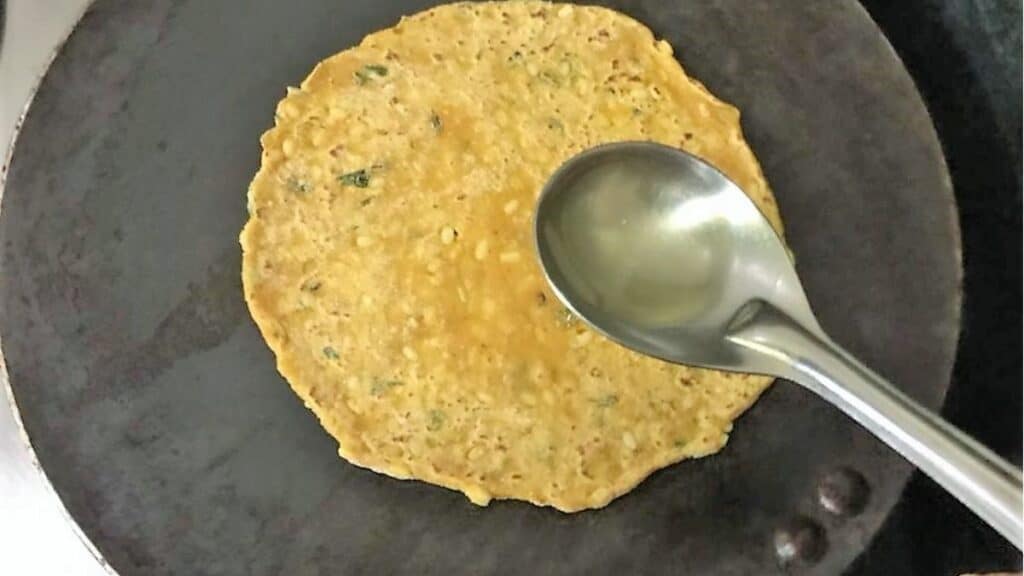
Flipping and crisping is where the magic happens. After the first side shows light brown spots, flip the paratha. Now drizzle or brush about half a teaspoon of ghee or oil around the edges and over the surface. The ghee will seep into the paratha and create those deliciously crispy, golden-brown patches.
Second flip and final crisping completes the cooking. Flip again, add another half teaspoon of ghee, and press again with the spatula. Cook for another minute or so until both sides have achieved beautiful golden-brown color with crispy, darker brown spots throughout.
Serving immediately yields the best texture. Rajasthani Moong Dal Paratha is at its absolute best when served hot off the tawa, when the exterior is at maximum crispiness and the interior is still steaming. Stack finished parathas in a clean kitchen towel or roti box to keep warm while you cook the remaining ones, but plan to serve them soon after cooking completes.
Pro Tips for Restaurant-Quality Moong Dal Parathas
These professional techniques elevate homemade Rajasthani Moong Dal Paratha from good to exceptional, addressing common challenges and refining the process for consistently perfect results.
Soaking time variations affect final texture. For slightly firmer, more defined dal pieces in your paratha, soak for the minimum 3 hours. For dal that integrates more thoroughly into the dough with softer texture throughout, soak for 6-8 hours. Very long soaking (overnight) makes the dal extremely soft, almost disappearing into the dough, which some people prefer for easier rolling but which sacrifices some textural interest.
Dough consistency adjustments depend on several factors including your specific flour’s absorption rate, humidity levels, and how thoroughly you drained the dal. The dough should feel like firm play-doh—moldable but not sticky, holding its shape when formed into a ball. If you’re unsure whether you’ve added enough water, err on the side of slightly firmer dough; you can always add tiny amounts of water if needed, but you cannot remove excess water once added.
Spice customization allows you to tailor the parathas to your taste preferences. The recipe provides a balanced, moderately spiced baseline, but you can adjust freely. For more heat, increase green chillies or red chilli powder. For more aromatic warmth, add a pinch of garam masala to the dough. For a different flavor profile, include a teaspoon of crushed coriander seeds or a pinch of amchur (dry mango powder) for tanginess.
Rolling without tearing becomes easier with practice, but a few techniques help. Ensure your dough is well-rested and properly kneaded. Use just enough flour for dusting—too much makes parathas dry, too little causes sticking. If a section keeps tearing, press it together, dust lightly with flour, and roll more gently. Sometimes slightly thicker parathas (not rolled quite as thin) are easier to manage and still taste delicious.
Achieving maximum crispiness requires several factors working together. Roll parathas relatively thin but not paper-thin. Cook on properly heated tawa that’s hot enough to create quick browning. Use adequate ghee—don’t be stingy, as the fat is what creates crispy surfaces. Press with the spatula during cooking to create more surface contact with the hot tawa. Most importantly, serve soon after cooking, as parathas soften as they sit.
Batch cooking efficiency helps when making multiple parathas. Set up an assembly line: roll 2-3 parathas ahead while one cooks. Keep rolled parathas covered to prevent drying. Have your ghee and spatula within easy reach. Use two tawas simultaneously if you’re comfortable managing both. This workflow means you’re not waiting between each paratha, keeping everyone fed with hot parathas rather than some people eating while others wait.
Storage and reheating strategies help when you make extra. Cooled parathas can be stored in the refrigerator for 2-3 days, layered with parchment paper to prevent sticking. Reheat on a dry tawa over medium heat for about 30 seconds per side, then brush with ghee and cook for another 30 seconds to restore some crispiness. Alternatively, microwave for 20-30 seconds to warm through, though this won’t restore the crispy texture as effectively as tawa reheating.
Make-ahead preparation allows you to prep components in advance. Soak the dal the night before if cooking in the morning, or morning-of if cooking for dinner. You can even prepare and knead the dough, then refrigerate it for up to 24 hours (let it come to room temperature before rolling). Rolling parathas and stacking them between parchment paper layers works for advance prep, though freshly rolled parathas cook slightly better than refrigerated ones.
Serving Suggestions and Perfect Pairings
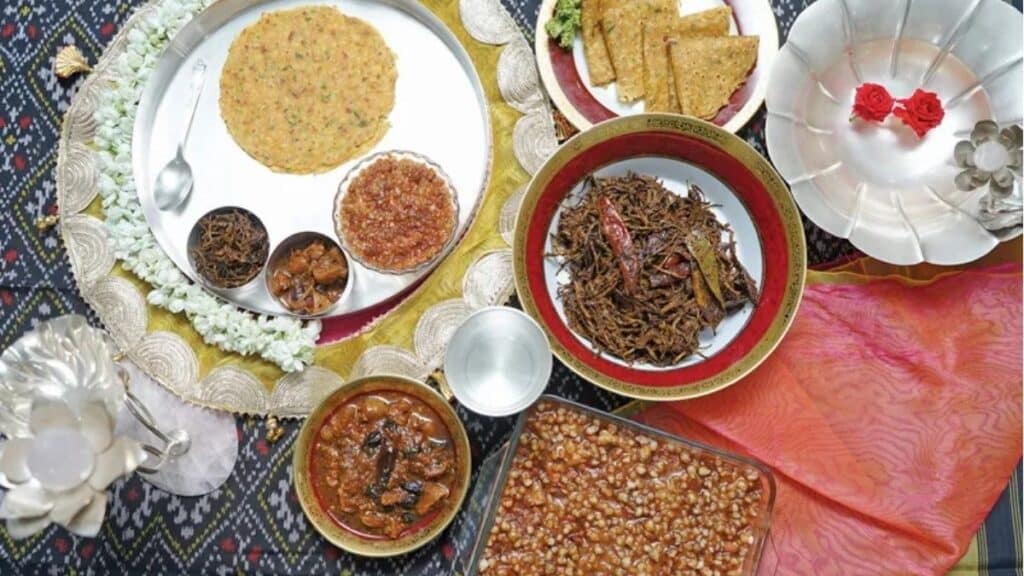
Traditional Rajasthani breakfast pairs these parathas with fresh dahi (yogurt) and a cup of chai. The cool, tangy yogurt provides perfect contrast to the warm, spiced paratha, while the chai’s warmth and sweetness round out the meal. This combination provides balanced nutrition—protein and fiber from the paratha, probiotics and calcium from yogurt, and comforting satisfaction from chai.
Pickle and chutney accompaniments enhance the parathas’ flavors rather than competing with them. Mango pickle (either sweet or spicy versions), lime pickle, or mixed vegetable pickle all work beautifully. Their sharp, intense flavors complement rather than overwhelm the paratha’s more subtle seasoning.
Raita varieties cool and complement in equal measure. Plain raita with just yogurt, cumin, and salt offers simple, classic pairing. Cucumber raita adds refreshing crunch. Boondi raita contributes textural interest. Mixed vegetable raita with onions, tomatoes, and cucumber creates almost a salad-like accompaniment that makes the meal feel more complete.
Curry and sabzi pairings transform the paratha from breakfast item to lunch or dinner component. Since the paratha already contains dal, you don’t necessarily need dal on the side (though dal lovers might disagree). Instead, pair with vegetable curries—aloo gobi, bhindi masala, baingan bharta, or any seasonal vegetable preparation.
Light meal combinations work when you want something satisfying but not heavy. A couple of moong dal parathas with just raita and salad make a complete, nutritious meal that provides balanced macronutrients without excessive calories. This combination is particularly popular for dinner when people want something filling but not too rich before bed.
Kids’ lunchbox ideas leverage these parathas’ appeal to younger palates and nutrition-conscious parents. The parathas pack well, maintain decent texture even when cooled, and provide protein that’s often lacking in school lunches. Pack with a small container of yogurt or ketchup (kids often enjoy the sweet-tangy flavor with parathas), and include some fruit and a small treat to round out the lunch.
Beverage pairings extend beyond chai to various traditional and contemporary options. Buttermilk (chaas) provides cooling, digestive benefits and pairs naturally with spiced parathas. Lassi—either sweet or salted—offers similar benefits with more indulgence. For non-dairy options, fresh lime water or jeera water complement the meal without overwhelming delicate flavors.
Nutritional Benefits and Health Considerations
Understanding the nutritional profile of Rajasthani Moong Dal Paratha helps appreciate it as more than just delicious food—it’s genuinely nutritious in ways that support wellbeing when consumed as part of balanced diet.
Protein content significantly exceeds regular parathas. Moong dal contains approximately 24g protein per 100g dry weight, and while the half cup used in this recipe distributes across multiple parathas, each one still provides meaningful protein—roughly 5-7g per paratha depending on size. Combined with wheat flour’s protein (about 12g per 100g), you’re getting approximately 8-10g protein per medium-sized paratha.
Fiber from both dal and whole wheat supports digestive health, helps maintain stable blood sugar levels, and promotes satiety. Moong dal provides both soluble fiber (which slows digestion and helps regulate blood sugar) and insoluble fiber (which supports digestive motility). Whole wheat atta adds additional fiber that refined flour versions would lack.
Complex carbohydrates from wheat and dal provide sustained energy rather than the quick spike and crash of refined carbs. The combination of protein, fiber, and complex carbs means these parathas maintain relatively low glycemic index compared to plain wheat parathas, making them better choices for blood sugar management.
Vitamins and minerals contribute to the parathas’ nutritional density. Moong dal provides folate (important for cell division and particularly crucial during pregnancy), iron (supporting oxygen transport in blood), magnesium (supporting hundreds of enzymatic processes), and B-vitamins (supporting energy metabolism). Whole wheat contributes additional B-vitamins, iron, and minerals.
