


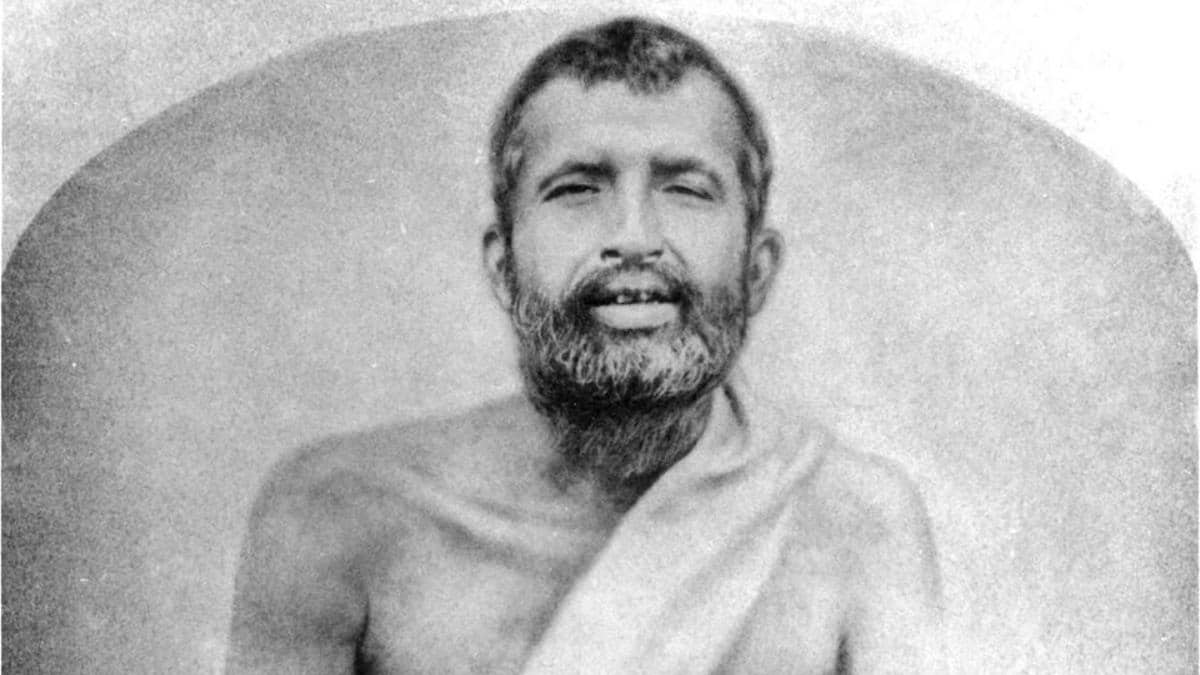
There’s something deeply comforting about knowing that someone, nearly two centuries ago, looked at our divided world and said, “We’re all just drawing water from the same lake, calling it by different names.” That someone was Ramakrishna Paramahamsa, and on February 19, 2026, we’ll celebrate his 191st birth anniversary—a day that feels especially meaningful for those of us trying to hold onto our cultural roots while building new lives far from home.
In a Nutshell:
Ramakrishna Jayanti 2026 falls on Thursday, February 19, honoring the 191st birth anniversary of Sri Ramakrishna Paramahamsa, the beloved Bengali mystic who taught that all religions lead to the same divine truth. Celebrated according to the Hindu lunar calendar on Dwitiya Tithi of Phalguna month, the day brings together devotees worldwide for prayers, spiritual discourses, and communal meals at Ramakrishna Math centers. His timeless teachings on love, devotion, and the essential unity of all faiths continue to guide millions seeking spiritual meaning in today’s complex world.
When Is Ramakrishna Jayanti 2026?
Ramakrishna Jayanti in 2026 will be observed on Thursday, February 19, 2026, though his Gregorian calendar birth date is February 18, 1836. The celebration follows the Hindu lunar calendar, falling on Dwitiya Tithi (second day) of Shukla Paksha (waxing moon phase) in the month of Phalguna.
Key Timings:
- Dwitiya Tithi begins: 4:57 PM on February 18, 2026
- Dwitiya Tithi ends: 3:58 PM on February 19, 2026
- Main observance: Rituals typically begin at sunrise on February 19
For many of us living abroad, these lunar calendar dates can be tricky to track—one more small challenge of maintaining traditions across time zones and calendars. But that’s also what makes participating feel so intentional, so chosen.
Who Was Ramakrishna Paramahamsa?
Born as Gadadhar Chattopadhyay on February 18, 1836, in the small village of Kamarpukur in West Bengal, Ramakrishna came from humble beginnings. His family wasn’t wealthy, and his formal education was limited. Yet from childhood, he showed an intense spiritual temperament that set him apart—not in a distant, otherworldly way, but in his genuine, almost childlike devotion to understanding the divine.
Around age twenty, he became a priest at the Dakshineswar Kali Temple near Calcutta (now Kolkata). It was here, serving as a devotee of Goddess Kali, that his spiritual journey deepened in ways that would eventually transform Bengali spiritual life and influence seekers worldwide.
What made Ramakrishna extraordinary wasn’t just his devotion to Kali. It was his insatiable spiritual curiosity. He didn’t just read about different paths to God—he lived them. Under various gurus, he practiced Vaishnavism, Tantric Shaktism, and Advaita Vedanta. He explored Sufi Islam and Christianity. Each time, he claimed to reach the same divine realization, just through different doors.
His marriage to Sarada Devi, arranged according to prevailing customs when he was in his twenties, was never consummated but evolved into a profound spiritual partnership. She would later be revered as the Holy Mother by his followers.
Ramakrishna spoke primarily in Bengali, with some Hindi and understanding of Sanskrit. There are even recorded instances in the Gospel of Ramakrishna of him using English words occasionally—a small detail that somehow makes him feel more accessible, more real.
The Heart of His Teaching: “So Many Paths to the Same Goal”
Ramakrishna’s central message was beautifully simple and radically inclusive for his time: all religions are valid paths to the same ultimate truth. He famously said, “I have found that it is the same God toward whom all are directing their steps, though along different paths.”
His parable about water is one that resonates deeply, especially for immigrant families navigating multiple cultural identities: At one ghat (riverbank steps), Hindus draw water in pitchers and call it ‘jal.’ At another, Muslims draw it in leather bags and call it ‘pani.’ Christians call it ‘water.’ The substance remains the same—only the names change according to climate, temperament, and tradition.
For those of us raising children between cultures, explaining why we celebrate Diwali and Christmas, why we speak Hindi at home and English outside, Ramakrishna’s teaching offers a framework: we’re not confused or diluted. We’re simply accessing the same essential truths through different cultural containers.
Core Teachings That Still Speak to Modern Life
- Experience Over Scripture: Ramakrishna emphasized direct spiritual experience rather than bookish knowledge. He valued the feeling of the divine in one’s heart over the ability to quote texts perfectly—a relief for those of us who sometimes struggle to remember all the verses our parents knew by heart.
- Devotion and Love: Sincere bhakti (devotion) and love for the divine were central to his path. This wasn’t about grand rituals or expensive offerings, but genuine, heartfelt connection.
- Self-Realization as Life’s Goal: He taught that attaining God-consciousness is the highest purpose of human life. Everything else—career, family, success—are part of the journey, but the destination is spiritual awakening.
- Inner Purity Over Ritual Purity: True purity, he insisted, comes from freedom from greed, lust, and ego—not from external practices alone. You could perform every ritual perfectly and still miss the point entirely.
- Service to Humanity Is Service to God: Perhaps most practically, he taught that since the divine resides in every being, serving others is a direct form of worship. This teaching inspired countless social service initiatives through the Ramakrishna Mission.
How Ramakrishna Jayanti Is Celebrated in 2026
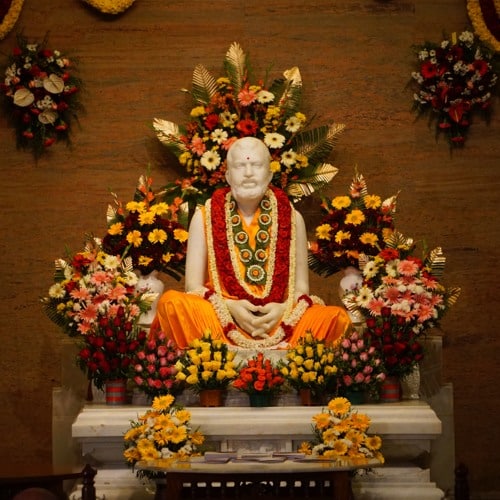
The headquarters of the Ramakrishna Math and Mission at Belur Math in West Bengal serves as the epicenter of celebrations. Special morning prayers begin at sunrise, devotional songs (bhajans) fill the temple complex, and a communal feast (prasad) is offered to all devotees—a beautiful reminder that spiritual community is built around shared meals as much as shared prayers.
Branch centers worldwide—from Ramakrishna Math Pune to Chennai, from New York to Johannesburg—host their own observances. Special homa (fire rituals) are performed, spiritual discourses on Ramakrishna’s teachings are delivered, and communities gather to remember his message of universal acceptance.
While not a nationwide public holiday in India, the day holds deep significance for followers of the Ramakrishna movement and appears on many academic and institutional calendars.
For diaspora families, these celebrations offer something precious: a way to connect children to a spiritual heritage that’s about questions rather than rigid answers, about experience rather than mere tradition, about finding the divine in unexpected places.
The Legacy: Swami Vivekananda and Beyond
Ramakrishna’s most famous disciple, Swami Vivekananda, carried his guru’s message to the world stage, famously addressing the Parliament of World Religions in Chicago in 1893. Through Vivekananda’s efforts, the Ramakrishna Mission was formally established, and it continues today as a global organization focused on spiritual development and humanitarian service.
The Mission runs schools, hospitals, relief operations, and spiritual centers—embodying Ramakrishna’s teaching that serving humanity is serving God. For many immigrants, these centers abroad have served as cultural anchors, places where Bengali heritage and universal spiritual values coexist comfortably.
Ramakrishna died of throat cancer on August 16, 1886, at age 50, in Cossipore (now part of Kolkata). But his influence has only grown with time, particularly relevant in our current era of religious polarization and cultural anxiety.
Why Ramakrishna Matters in 2026
In a world where religious identity often divides rather than unites, where immigrants face pressure to choose between heritage and belonging, Ramakrishna’s message feels almost prophetic. He lived the possibility of honoring multiple traditions without diluting any of them. He showed that deep devotion and radical openness aren’t contradictory—they’re complementary.
For second-generation immigrants, especially, who sometimes feel caught between their parents’ expectations and their own evolving spirituality, Ramakrishna offers permission to explore, to question, to find God in ways that feel authentic rather than inherited.
His emphasis on direct experience over scriptural authority speaks to a generation raised on questioning and personal authenticity. His insistence on inner transformation rather than external conformity resonates with those tired of performative religion.
As we mark 191 years since his birth, his teachings continue to offer guidance for navigating our increasingly interconnected yet fractured world. The questions he grappled with—how to honor tradition while embracing truth wherever it appears, how to practice devotion in authentic ways, how to see the divine in all beings—remain strikingly current.
Ramakrishna never wrote books or gave formal lectures. He spoke in simple Bengali, using parables and stories from everyday life—about merchants and milk, about lakes and pitchers, about mothers and children. Yet his words, recorded by devoted disciples, continue to offer a way through our modern spiritual confusion. On February 19, 2026, as devotees gather in Belur Math and in centers scattered across continents, they’ll be honoring not just a historical figure, but a living reminder that the search for meaning doesn’t require choosing between tradition and authenticity—it requires, as Ramakrishna showed, the courage to seek truth wherever it might be found.
