


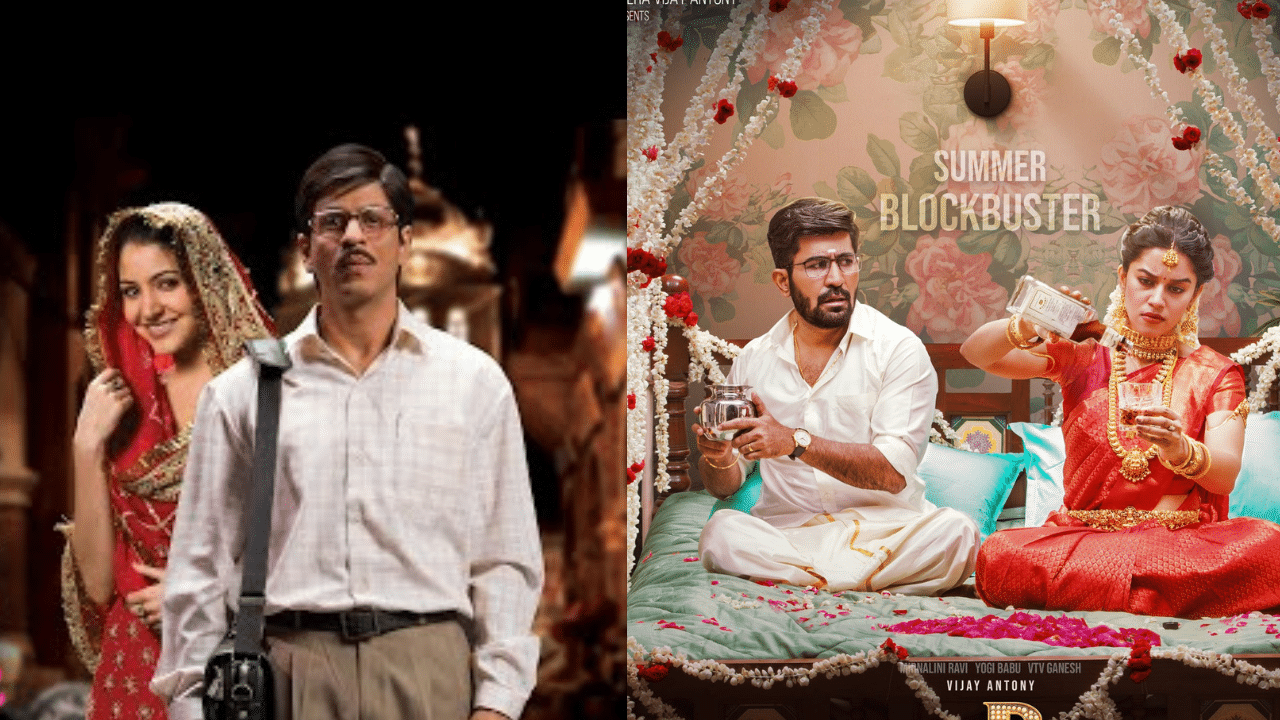
When Simplicity Meets Love: A Comparison of Romeo (Tamil) and Rab Ne Bana Di Jodi (Bollywood)
Two movies, two languages, but one shared theme: the transformative power of love. Tamil cinema’s Romeo (2002) and Bollywood’s Rab Ne Bana Di Jodi (2008) might seem different at first glance, yet they strike a similar chord with their exploration of identity, self-worth, and relationships. Here’s how these two films compare:
1. The Love Story Framework
Both Romeo and Rab Ne Bana Di Jodi revolve around unconventional love stories.
- Romeo tells the story of Subbu, a man who believes love and marriage are out of his reach due to his financial struggles and insecurities. When he meets Janaki, a determined and career-oriented woman, their love story unfolds amidst misunderstandings and emotional struggles.
- Rab Ne Bana Di Jodi introduces Surinder, a mild-mannered, unassuming man who falls in love with Taani, his spirited wife. To win her heart, Surinder creates a new, flamboyant persona named Raj, leading to a journey of self-discovery and emotional transformation.
In both films, the protagonists undergo personal growth as they navigate their relationships.
2. Themes of Identity and Transformation
At their core, both movies explore how individuals mask their insecurities through alternate personas.
- In Romeo, Subbu tries to navigate his life with charm and wit, masking his financial troubles. His journey is about embracing his true self and finding worth beyond material success.
- In Rab Ne Bana Di Jodi, Surinder’s transformation into Raj represents his attempt to connect with Taani in a way that feels exciting and unconventional. Ultimately, he learns that love is strongest when built on authenticity.
Both stories highlight the importance of self-acceptance in relationships.
3. The Role of the Female Protagonist
The women in these stories—Janaki in Romeo and Taani in Rab Ne Bana Di Jodi—play pivotal roles in driving the narrative.
- Janaki is an independent woman who values honesty and determination. Her character challenges Subbu to confront his insecurities and rise above them.
- Taani, while initially portrayed as a woman trapped in an arranged marriage, gradually evolves into a more layered character. Her emotional journey complements Surinder’s transformation, as she learns to see the depth of his love.
Both women are not just romantic leads; they are catalysts for the protagonists’ growth.
4. Humor and Emotional Depth
While Romeo leans more on light-hearted moments and comedic misunderstandings, Rab Ne Bana Di Jodi strikes a balance between humor and poignant emotional beats.
- Romeo uses situational comedy to reflect Subbu’s struggles and the societal pressures he faces.
- Rab Ne Bana Di Jodi juxtaposes Surinder’s awkward charm with Raj’s exaggerated flamboyance, adding layers of humor while delving into themes of love and sacrifice.
Both films effectively blend humor with heartfelt moments to keep audiences engaged.
5. Music as a Narrative Tool
Music plays a crucial role in both films, reflecting the emotional and narrative arcs.
- Romeo features melodies that capture the essence of Tamil cinema’s love stories, with songs that emphasize emotional depth and romantic connection.
- Rab Ne Bana Di Jodi offers a mix of soulful tracks like Tujh Mein Rab Dikhta Hai and high-energy numbers like Dance Pe Chance, showcasing the duality of Surinder’s personas.
Both soundtracks are integral to the storytelling, enhancing the emotional impact of key scenes.
6. Cultural Nuances and Universal Appeal
While Romeo is deeply rooted in Tamil culture, with its focus on societal norms and familial expectations, Rab Ne Bana Di Jodi takes a broader, pan-Indian approach.
Despite these cultural differences, both films resonate universally with their themes of love, identity, and self-worth.
Final Thoughts
Romeo and Rab Ne Bana Di Jodi are more than just romantic dramas—they are stories about self-discovery and the transformative power of love.
Where Romeo captures the simplicity and charm of a Tamil love story, Rab Ne Bana Di Jodi uses Bollywood’s flair to deliver a universally relatable tale.
At the heart of both lies a timeless message: love is about seeing beyond appearances and embracing each other’s true selves. Whether you’re a fan of Tamil cinema or Bollywood, these films remind us that love, in its purest form, transcends boundaries and identities.
