


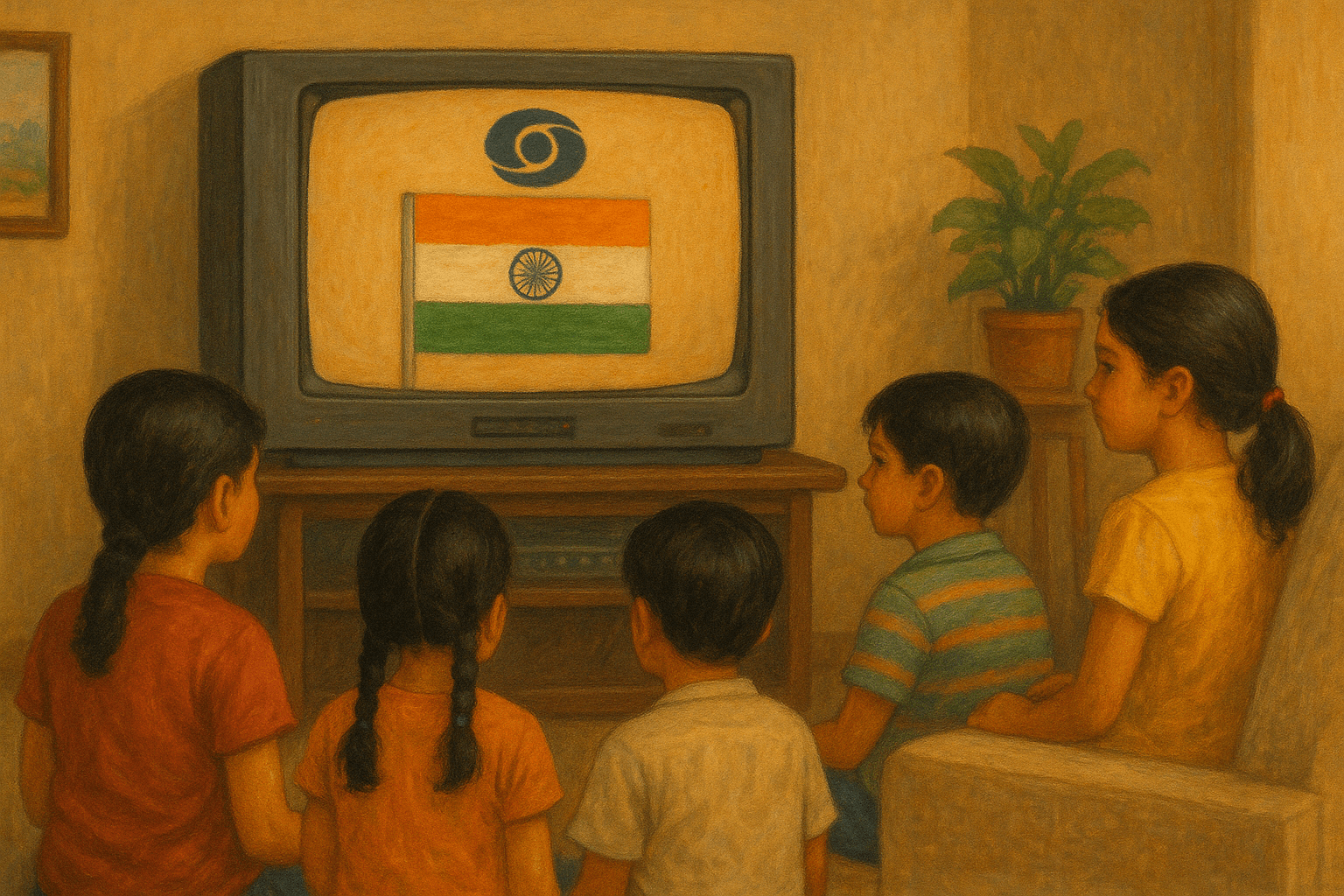
There was a time when a song didn’t just play in our homes. It stayed in our hearts.
No trending audio. No social media push. Just a simple melody that rolled out between TV shows —
and rolled gently into our sense of self.
Mile Sur Mera Tumhara, To Sur Bane Humara…
Eight words. One tune. A feeling no school curriculum ever taught, but every Indian child somehow understood.
We Didn’t Watch It. We Absorbed It.
In the soft hum of Doordarshan’s broadcast, between a grainy newsreader and a black-and-white serial,
came a tune that didn’t ask for applause.
It just asked us to listen.
To each other. To voices that looked and sounded nothing like ours — but somehow felt like family.
As children, we didn’t grasp all the languages. But we felt the rhythm of something larger than language.
We saw faces from snowy mountains to coastal villages. We heard Hindustani blend into Tamil, Assamese flow into Bengali. And it all made sense. Not logically. But musically.
India wasn’t explained to us. It was sung into us.
The Childhood Soundtrack of Belonging
Every time that flute played, it felt like India was reminding us — gently — that it was made of pieces that didn’t always fit… but still belonged together.
And we, as kids, believed that.
We weren’t debating who’s in or who’s out. We were simply in it. Together.
It wasn’t about flags or slogans. It was about faces. Voices. Togetherness without explanation.
And even now — decades later, continents apart — when that tune plays, something ancient stirs.
Not nostalgia. Recognition.
What Our Children Are Missing
Today, kids grow up with headphones, algorithms, and echo chambers. They consume content curated for them, but rarely hear the sound of a country singing together.
They know influencers in London and Seoul, but not dialects from Manipur or Malwa.
They swipe past differences — or worse, scroll into divisions.
What they need isn’t another tech upgrade. They need a soul upgrade.
They need to know that it’s okay to not speak the same language. To wear different clothes, eat different food, sing in a different scale — and still say: I see you. I hear you. You are part of me.
Just like Mile Sur taught us.
A Song Worth Playing Again — Not Just on TV
India has changed. It’s faster, louder, more connected — and paradoxically, more fragmented.
But the lesson remains. And the need is greater. We don’t need to remake Mile Sur with better graphics or pop voices. We need to revive its spirit.
The spirit that said: You don’t have to be the same to be together.
You don’t have to win over others. You just have to sing with them.
Let’s Raise the Next Generation With the Same Tune
If you grew up with Mile Sur Mera Tumhara, you didn’t just grow up Indian. You grew up in harmony.
Let’s pass that on — not just by telling our kids what India is, but by letting them feel it.
Play them the song. Talk about the faces. The places. The instruments. Tell them that this — this is what unity sounds like.
Because that song didn’t just raise us. It reminded us.
Of who we were. Of who we can be again.
Mile sur mera tumhara… toh sur bane hamara.
Still true. Still needed. Still playing — if we choose to listen.
