


You’ve seen it a hundred times, maybe without ever really clocking it. A small red or maroon dot sitting right between the eyebrows, on a woman crossing the street, in a Bollywood scene, at a cousin’s wedding. And if you’ve ever wondered what it means, chances are someone told you it signals marriage. That answer isn’t entirely wrong, it’s just aimed at the wrong mark. There are actually three distinct symbols worn on the forehead and scalp in Indian tradition, and only one of them has anything to do with marital status. It isn’t the one most people point to.
There are three separate forehead and hairline markings in Hindu tradition, and they’re often confused for one another: the bindi (a dot between the eyebrows, today often a fashion accessory matched to an outfit), the tilak (applied by someone else, usually for a specific occasion like a temple visit, exam, or wedding, and its shape can indicate religious affiliation), and sindoor (red powder applied along the parting of the hair, which is the actual traditional marker of a married Hindu woman). The common belief that a forehead dot signals marriage is a mix-up between the bindi and sindoor, since married women often wear both at once. Popular claims about black bindis meaning widowhood or bindi colors indicating caste are oversimplified and don’t hold up as universal rules.
The Bindi: From Sacred Practice to Everyday Style
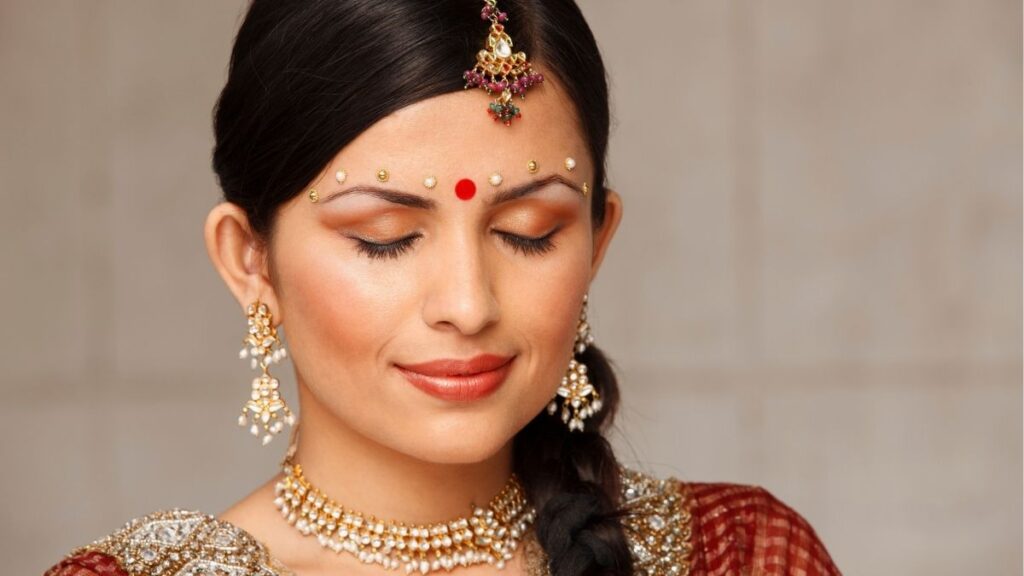
The word bindi comes from the Sanskrit “bindu,” meaning a drop or a point. Traditionally, it was applied using kumkum, a red powder made from turmeric and lime, though sandalwood paste and even ash have been used depending on region and occasion. A woman would dab it on with a fingertip, a small, deliberate act rather than an afterthought.
These days, most bindis are stickers, sold in strips with dozens of colors and shapes, costing next to nothing. And here’s what tends to surprise people outside the culture: for a lot of women, the bindi is now a styling choice as much as anything else. A maroon saree gets a maroon bindi. A gold-bordered outfit gets gold. On a regular day lounging at home, she might skip it entirely. That doesn’t mean the symbol has been hollowed out, it means its meaning has simply expanded. What started as devotional practice became a marker of cultural belonging, and now, for many, it’s also just part of getting dressed. All three of these layers, the spiritual, the cultural, and the aesthetic, exist side by side across different households and generations.
The Tilak: A Mark Someone Else Gives You
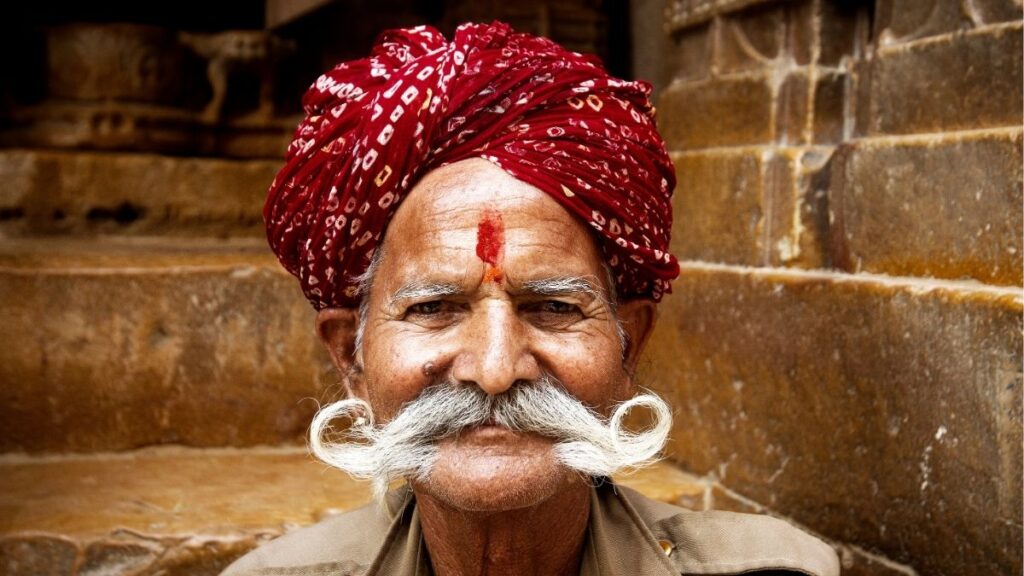
The tilak works completely differently from the bindi in one key way: you don’t usually put it on yourself. Someone else does it for you. A mother might apply tilak on her child’s forehead before a long trip. A priest applies it at the temple, sometimes pressing a few grains of rice into the paste. It’s placed on a groom during a wedding ceremony, and on kids before an exam or the first day of school.
Where the bindi is about everyday appearance, the tilak marks a specific occasion, and it’s meant to fade, not to be maintained all day. The shape of a tilak also carries real information for anyone who grew up around it. Two lines meeting in a U shape point to followers of Vishnu. Three horizontal lines of ash across the brow point to followers of Shiva. Someone raised in this tradition can look at a stranger’s forehead and immediately know which spiritual lineage that person follows. Both men and women wear tilak, but almost no one wears it as a constant, all-day feature the way a bindi can be worn.
Sindoor: The Actual Marker of Marriage
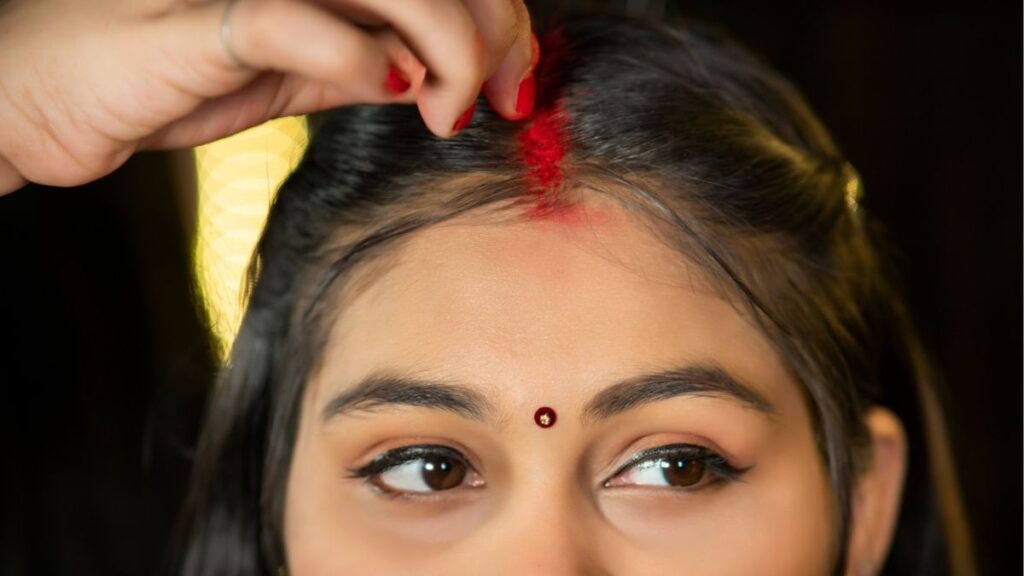
This is the one most people miss entirely, largely because it isn’t even on the forehead. Sindoor is a red powder applied along the parting of the hair, starting at the hairline and running back along the scalp. In many Hindu communities, this is the mark that actually signifies a woman is married, not the bindi.
It’s first applied during the wedding ceremony itself, by the groom, and in more traditional households, a woman reapplies it herself every morning for the rest of the marriage. So when people assume the dot on a woman’s forehead is telling them she’s married, they’re usually looking in the wrong place. The real answer is a line of red powder in her hairline that most outsiders never even notice.
So Why Does Everyone Assume the Bindi Means Marriage?
The mix-up makes sense once you see how it happens. Married women often wear a red bindi along with sindoor, so someone notices the red dot and the marital status at the same time and connects the two. But that connection isn’t reliable. Unmarried women wear bindis. Young girls wear bindis. Grandmothers wear bindis. A woman might wear a red bindi purely because it matches her outfit, with no statement about marriage intended at all.
A few other common claims about the bindi deserve a closer look too, since they get repeated as fact far more often than they’re actually true.
Does a black bindi mean someone is a widow? In certain regions, at certain points in history, widows were expected to stop wearing red bindis, and that historical detail is real. But it was never a nationwide rule, and most families today don’t follow any such convention.
Does the bindi’s placement have health or wellness benefits? The bindi does sit on what’s traditionally called the Ajna chakra, or “third eye” point, and that spiritual significance goes back centuries. But claims about it sharpening focus or relieving stress are modern wellness additions layered onto an old tradition, not part of the original practice.
Does bindi color indicate caste? This one shows up constantly online, some tidy claim about four castes and four colors. It isn’t accurate. That’s not how the tradition actually functioned historically, and treating it as a caste code oversimplifies something far more regional and personal.
The Bottom Line
Three different marks, three different purposes: one you choose for yourself and often to match your outfit, one someone else gives you to mark a moment, and one that quietly carries the weight of a marriage without ever needing to be explained. Once you know where to look, you start noticing all three, and you start noticing how much meaning can live in something as small as a dot or a line of powder that most people walk past without a second glance.
What is the difference between a bindi and sindoor?
A bindi is worn on the forehead between the eyebrows and today is often chosen to match an outfit. Sindoor is red powder applied along the parting of the hair and traditionally signals that a woman is married.
Does wearing a bindi mean a woman is married?
Not necessarily. Bindis are worn by married and unmarried women, young girls, and grandmothers alike. The actual traditional marker of marriage is sindoor, applied along the hair parting, not the bindi.
What does a tilak signify?
A tilak is applied by someone else, such as a parent or priest, usually to mark a specific occasion like a temple visit, wedding, exam, or journey. Its shape can also indicate religious affiliation, such as devotion to Vishnu or Shiva.
Does the color of a bindi indicate caste?
No. This is a commonly repeated claim that doesn’t reflect how the tradition actually worked historically. Bindi color has more to do with region, personal choice, and styling than any caste system.
Is it true that a black bindi means someone is a widow?
In some regions historically, widows were expected to avoid red bindis, but this was never a universal or nationwide rule, and most families today don’t observe it.
