


When was the last time a Marathi film quietly walked up to you, sat down beside you, and made you feel every single thing — grief, laughter, resentment, and fierce love — all within a hundred minutes? Tighee (2026) does exactly that. Directed by debutant Jeejivisha Kale and written by Nikhil Mahajan and Prajakt Deshmukh, this is the kind of intimate, deeply humane cinema that reminds you why regional Indian films continue to punch above their weight.
Roughly translating to “Three of Us,” Tighee is a masterfully observed portrait of three women — a dying mother and her two daughters — navigating grief, guilt, buried secrets, and the everyday cost of being a woman in a patriarchal world. It arrives not with spectacle but with sincerity, and that is precisely what makes it unforgettable.
Tighee is Marathi cinema at its very best — a tightly written, beautifully performed family drama that covers extraordinary emotional ground without ever feeling overwrought. Bharati Achrekar, Nehha Pendse and Sonalee Kulkarni form one of Indian cinema’s most compelling on-screen trios, and Jeejivisha Kale’s direction is a revelation. Essential viewing.
Language: Marathi (with English subtitles)
Age Rating: U/A
Genre: Family Drama, Slice-of-Life
Director: Jeejivisha Kale
The Story: Three Women, One Household, A Lifetime of Unspoken Words
At its heart, Tighee centres on matriarch Hemalata (Bharati Achrekar) and her daughters Swati (Nehha Pendse) and Sarika (Sonalee Kulkarni). Sarika has put her personal ambitions on hold to care for their ailing mother in their Pune home, quietly carrying the full weight of the family’s daily reality. Swati, on the other hand, lives in Mumbai with her estranged husband Malhar (Pushkaraj Chirputkar), buried under financial pressure and the predatory behaviour of an exploitative boss (Jaimini Pathak).
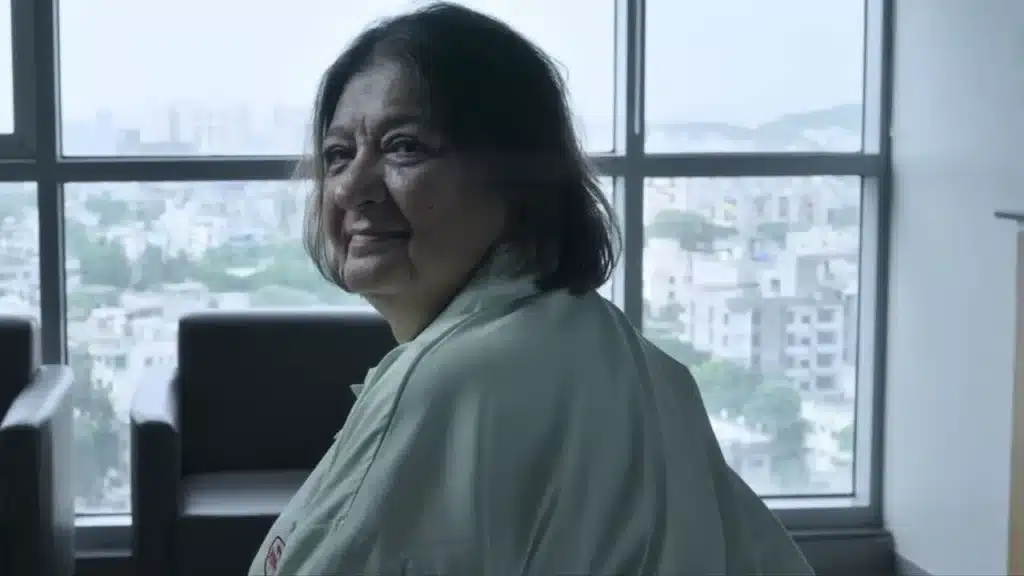
When Hemalata’s health deteriorates, the daughters are drawn back together — and with them come layers of resentment, an unspoken family secret, and deeply personal reckonings. What makes Tighee special is how it understands that dysfunctional families are not always tense and bleak. Humour slips in between grief. Sibling banter cuts through sorrow. Life, in all its messy, contradictory fullness, keeps showing up — including a stray puppy that briefly turns the household wonderfully chaotic and nudges Hemalata into unexpected philosophical reflection.
The film covers a remarkable range of themes — childhood trauma, career ambitions, financial stress, sexual abuse, and the quiet violence of patriarchy — without ever feeling overloaded. It is, above all, a story about survival, love, and what families owe each other.
Performances: Three Actresses at the Peak of Their Powers
Bharati Achrekar is nothing short of phenomenal as Hemalata. She plays a woman who is pig-headed and private, who holds a long-buried truth close to her chest even as she faces death. Achrekar conveys decades of complicated emotion through restraint alone — a glance, a pause, a reluctant confession. She is the beating heart of the film.
Nehha Pendse delivers what is arguably the most emotionally demanding performance of her career. Her Swati is a woman quietly falling apart — crushed by debt, humiliated by her boss, and struggling to find her voice. The scenes in which Swati finally stands up for herself are deeply moving, and Pendse handles them with extraordinary sensitivity.
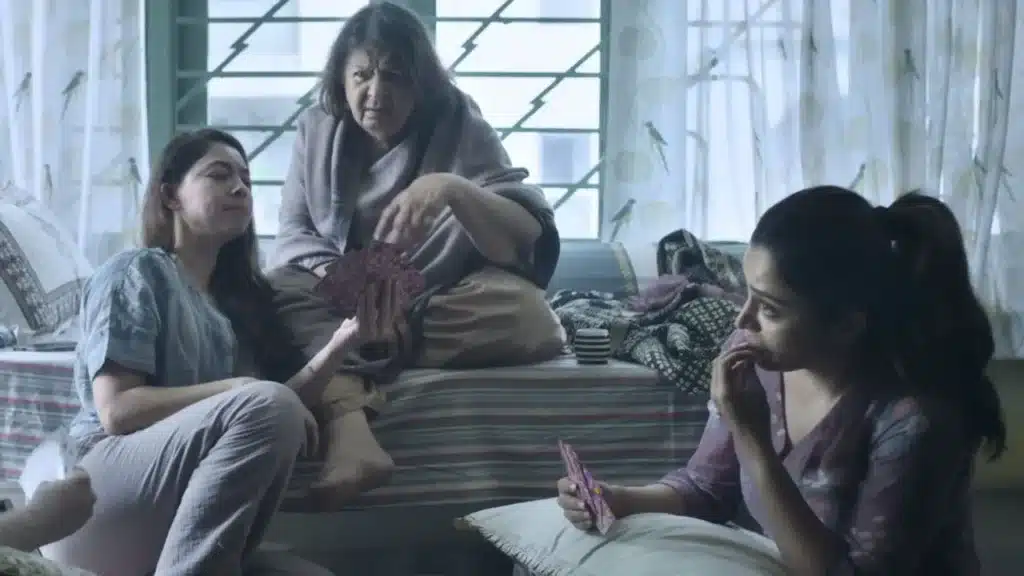
Sonalee Kulkarni is superb as the embittered, fiercely determined Sarika. Her performance is layered with unspoken sacrifice and simmering frustration, and her arc — learning to accept the burdens life places upon her while still reaching for her own dreams — is one of the film’s most resonant.
Together, the three actresses create a relationship that feels utterly real — warm and wounding, infuriating and irreplaceable.
The supporting cast shines just as brightly. Jaimini Pathak is genuinely unsettling as Swati’s predatory boss. Pushkaraj Chirputkar brings shambolic, lived-in energy to Malhar. Nipun Dharmadhikari is warm and grounded as Sarika’s supportive business partner.
Direction & Technical Excellence
Jeejivisha Kale announces herself as a major talent with this debut. She handles tonal shifts — between dark humour and devastating revelation, between warmth and grief — with remarkable composure, never once letting the film tip into melodrama.
Milind Jog’s cinematography is elegant and purposeful, with a muted palette that perfectly suits the story’s emotional temperature. A composition of Sarika slumped in a corner — simultaneously stunned and elated — is the kind of image that stays with you long after the credits roll.
The editing by Nikhil Mahajan and Hrishikesh Petwe is disciplined and respectful of the film’s unhurried rhythms. At exactly 100 minutes, Tighee doesn’t waste a single frame.
Mahajan’s screenplay and Deshmukh’s dialogue are the backbone of everything. A line — roughly translated as “even leaves don’t have free will before they fall” — captures the film’s philosophy beautifully: an acceptance of life and death, and the faint, stubborn hope that lives between them. Tighee earns frequent comparisons to Shoojit Sircar’s beloved Piku (2015), and it wears that comparison with complete confidence.

Strengths & Minor Considerations
What Works Beautifully
- Extraordinary performances from all three lead actresses
- Masterfully layered screenplay balancing humour, grief and social commentary
- Confident, cinematic direction from debutant Jeejivisha Kale
- Elegant cinematography and tight, disciplined editing
- Authentic, lived-in production design
- Sensitive handling of trauma, abuse and female agency
Minor Considerations
- The film’s quiet, deliberate pace may not suit viewers expecting a plot-driven narrative
- The resolution of the central family secret feels slightly rushed given its emotional weight
Final Verdict: 4.5/5 Stars ⭐⭐⭐⭐½
Tighee is a quiet triumph of Indian regional cinema. In just 100 minutes, Jeejivisha Kale has delivered a film that honours the complexity of womanhood without simplifying, sensationalising, or sentimentalising it. Bharati Achrekar, Nehha Pendse and Sonalee Kulkarni are individually outstanding and collectively breathtaking — each woman shining as brightly as the film’s title promises.
For anyone who loves intimate, beautifully made family dramas — and for anyone who believes Marathi cinema deserves a far wider audience — Tighee is not just a recommendation. It is essential viewing.
What is the age rating of Tighee (2026)?
Tighee carries a U/A certification, meaning it is suitable for general audiences with parental guidance recommended for younger viewers.
Can I watch Tighee with kids?
Tighee is best suited for teenagers and adults.
Is Tighee based on a true story?
No, Tighee is not based on a true story. It is an original screenplay written by Nikhil Mahajan and Prajakt Deshmukh.
Where can I watch Tighee (2026)?
Tighee is currently playing in cinemas with English subtitles. Streaming availability has not yet been officially confirmed.
