


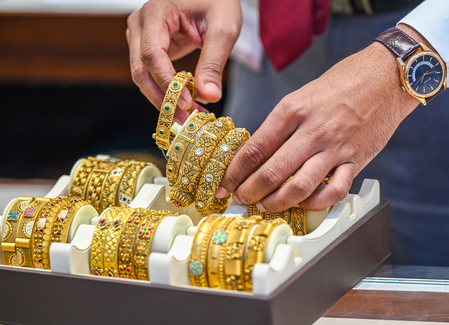
Gold loans have become the dominant sector in India’s retail credit market, representing 36% of loan volumes and about 40% by value. This growth is fueled by the surge in gold prices and a growing preference among consumers for secured borrowing. The average gold loan amount has notably increased to around Rs 1.9 lakh in the December 2025 quarter, reflecting a significant rise over the past two years.
The Consumer Market Indicator (CMI) rose to 102 in the December 2025 quarter, up from 97 a year earlier and 100 in the preceding September quarter. This marks the third consecutive quarter of improvement, indicating a positive trend in the credit market health. The report also highlighted that the uptick in gold prices has prompted consumers to leverage their gold holdings, resulting in a notable increase in loan demand and disbursements.
Gold loans, traditionally popular in southern India, are now witnessing growth in northern and western states like Uttar Pradesh, Madhya Pradesh, and Rajasthan. Moreover, a broader range of borrowers are now opting for gold loans, with more than half of the loans being taken by prime and above-category customers. This shift indicates a growing acceptance of gold loans as a mainstream credit product.
Despite a temporary easing in credit supply post-festive season and GST-related activities, the moderation is attributed to seasonal patterns rather than a structural slowdown. Demand for credit remains robust, especially in semi-urban and rural areas, with non-metro regions accounting for 54% of the total borrower base, marking a three-percentage-point increase year-on-year. Additionally, the proportion of new-to-credit consumers has risen to 15%.
Auto loans have maintained stable volumes post-festive period, supported by demand in the affordable mid-segment category. Supply in this segment has also increased on a daily average basis compared to the previous year.
