
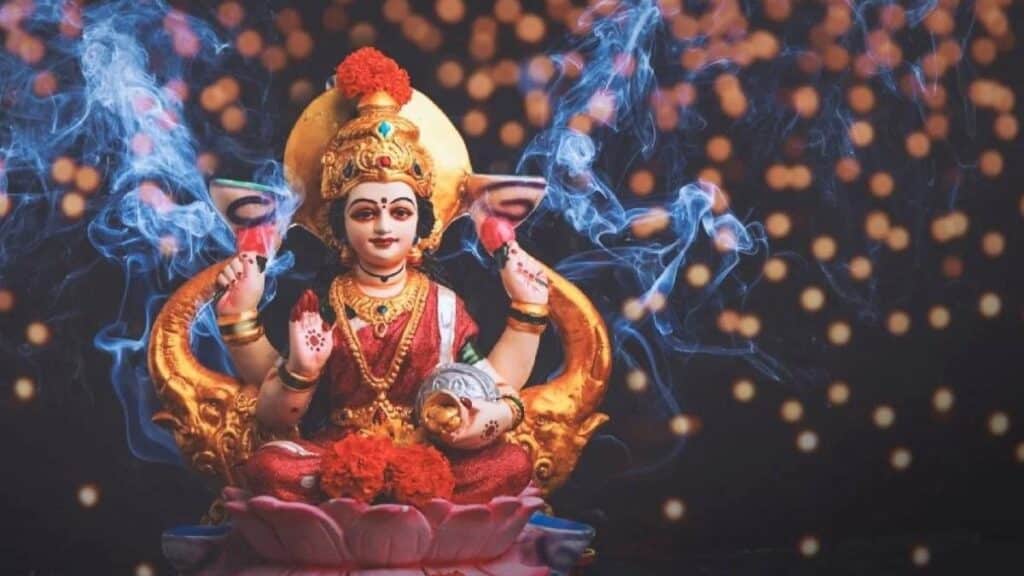
Varalakshmi Vratam is one of the most auspicious Hindu observances of South India, celebrated as a day of devotion, fasting, and prayer to Goddess Varalakshmi — a form of Goddess Mahalakshmi who grants boons to her devotees. Observed primarily by married women, the festival honors the divine feminine and invokes blessings of prosperity, health, longevity, and family well-being. Rooted in the sacred month of Shravana, it carries deep spiritual significance across Andhra Pradesh, Telangana, Karnataka, Tamil Nadu, and Maharashtra — and is increasingly celebrated by South Indian diaspora communities worldwide.
The name itself holds meaning: Vara means boon, and Lakshmi is the goddess of prosperity — together, Varalakshmi is the goddess who fulfills all wishes. Worshipping her on this day is believed to be equivalent to worshipping all eight forms of Lakshmi, the Ashtalakshmi, making it one of the most potent Lakshmi observances of the year.
When Is Varalakshmi Vratam in 2026?
Varalakshmi Vratam is observed on the last Friday before the full moon (Purnima) of the Hindu month of Shravana, which falls in July–August.
Varalakshmi Vratam 2026 Date: Friday, August 28, 2026
Puja Muhurat Timings (IST — New Delhi)
| Lagna | Timing | Duration |
|---|---|---|
| Simha Lagna (Morning) | 5:57 AM – 7:29 AM | 1 hr 32 mins |
| Vrishchika Lagna (Afternoon) | 12:05 PM – 2:23 PM | 2 hrs 19 mins |
| Kumbha Lagna (Evening) | 6:09 PM – 7:37 PM | 1 hr 27 mins |
| Vrishabha Lagna (Midnight) | 10:37 PM – 12:33 AM (Aug 29) | 1 hr 56 mins |
The evening Kumbha Lagna (6:09 PM – 7:37 PM) overlapping with Pradosh Kaal is considered the most auspicious time for Varalakshmi Puja.
Table of Contents
Varalakshmi Vratam In USA, Canada, Australia, New Zealand, UK, UAE, Singapore 2026 Dates
Varalakshmi Vratam on Friday, August 21, 2026
- Simha Lagna Puja Muhurat (morning) – 06:12 AM to 08:28 AM
- Vrishchika Lagna Puja Muhurat (afternoon) – 01:32 PM to 03:58 PM
Varalakshmi Vratam on Friday, August 21, 2026
- Simha Lagna Puja Muhurat (morning) – 06:29 AM to 08:49 AM
- Vrishchika Lagna Puja Muhurat (afternoon) – 02:02 PM to 04:30 PM
Varalakshmi Vratam on Friday, August 28, 2026
- Simha Lagna Puja Muhurat (morning) – 06:29 AM to 07:23 AM
- Vrishchika Lagna Puja Muhurat (afternoon) – 10:09 AM to 12:00 PM
Varalakshmi Vratam on Friday, August 21, 2026
- Simha Lagna Puja Muhurat (morning) – 05:55 AM to 08:29 AM
- Vrishchika Lagna Puja Muhurat (afternoon) – 02:10 PM to 04:47 PM
Varalakshmi Vratam on Friday, August 28, 2026
- Simha Lagna Puja Muhurat (morning) – 05:58 AM to 07:28 AM
- Vrishchika Lagna Puja Muhurat (afternoon) – 11:57 AM to 02:14 PM
Varalakshmi Vratam on Friday, August 28, 2026
- Simha Lagna Puja Muhurat (morning) – 07:02 AM to 08:17 AM
- Vrishchika Lagna Puja Muhurat (afternoon) – 12:07 PM to 02:15 PM
Why Does the Date Change Every Year?
Varalakshmi Vratam follows the Hindu lunisolar calendar, not the Gregorian calendar. It always falls on the Friday before Shravana Purnima. Since lunar months are shorter than solar months, the Gregorian date shifts each year — and when an intercalary month (Adhika Maas) is added every 2–3 years, the festival can shift by several weeks. This makes it a movable observance rather than a fixed calendar date.
How Is the Puja Muhurat Decided?
As per Electional Astrology (Muhurta Shastra), the most auspicious time for Varalakshmi Puja is during fixed Lagnas (Sthira Lagnas) — Vrishabha, Simha, Vrishchika, and Kumbha. Puja performed during these Lagnas is believed to bestow lasting, stable prosperity rather than temporary gains. Among all timings, the evening slot overlapping with Pradosh Kaal holds the highest religious significance for Lakshmi worship.
Varalakshmi Vratam: Other Names and Regional Identities
| Language / Region | Name |
|---|---|
| Sanskrit | Varalakṣmī Vratam (वरलक्ष्मी व्रतम्) |
| Telugu (Andhra/Telangana) | Varalakshmi Vratam (వరలక్ష్మి వ్రతం) |
| Kannada | Varalakshmi Habba / Mahalakshmi Habba |
| Tamil | Varalakshmi Nonbu (வரலட்சுமி நோன்பு) |
| Marathi | Varalakshmi Puja |
| Diaspora/International | Varalakshmi Puja, Lakshmi Vrat |
Origins, History, and Legends of Varalakshmi Vratam
Varalakshmi Vratam is an ancient Hindu observance with roots in the Skanda Purana and regional Dharmashastra texts. The festival honors Goddess Varalakshmi, the consort of Lord Vishnu, who is said to have emerged from the cosmic milky ocean — Kshir Sagar — during the Samudra Manthan.
The most widely recited origin story is the Vrata Katha of Charumati — a virtuous and devoted woman who received a divine instruction from Lord Vishnu in a dream, asking her to worship Goddess Lakshmi every Shravana. By following his guidance, Charumati was blessed with abundant prosperity and the full grace of the goddess.
A similar story tells of Padmavati, a pious Brahmin woman from the kingdom of Kosala, who was observed by Goddess Lakshmi herself for her devotion and charity. The goddess appeared to Padmavati and instructed her to observe the vrat, promising salvation.
In another tradition connected to Lord Shiva and Mata Parvati, Shiva narrates the significance of Varalakshmi worship to Parvati, explaining that this form of Lakshmi can fulfill all earthly and spiritual desires. The Vrata Katha — the recitation of these stories — forms the spiritual conclusion of every Varalakshmi Puja..
Cultural and Spiritual Significance
Varalakshmi Vratam holds a unique place in South Indian Hindu culture as a day where devotion, feminine power, and community gathering converge.
Spiritually, worshipping Varalakshmi on this day is believed to be equivalent to propitiating all Ashtalakshmi — the eight forms of Goddess Lakshmi governing wealth (Sri), earth (Bhu), learning (Saraswati), love (Priti), fame (Kirti), peace (Shanti), contentment (Tushti), and strength (Pushti). This makes it one of the most comprehensive Lakshmi observances in the Hindu calendar.
Culturally, the festival is a celebration of the sumangali — the married woman as a bearer of auspiciousness. The rituals reinforce familial bonds, community ties, and the transmission of devotional traditions across generations. As scholars observe, the use of turmeric and kumkum in the puja creates a symbolic overlap between the goddess and the woman — a recognition of the divine feminine in everyday life.
The sacred thread (Dorak) tied around the right wrist during puja, the decorated kalasham, and the exchange of vayana gifts are all expressions of an ancient tradition that continues to thrive because it speaks to something timeless: gratitude, love, and the desire for lasting abundance.
Prayers and Religious Observances
Varalakshmi Puja follows a structured ritual sequence rooted in Shodashopachara (sixteen steps of worship):
- Early morning bath and fasting — devotees begin the day with ritual purity
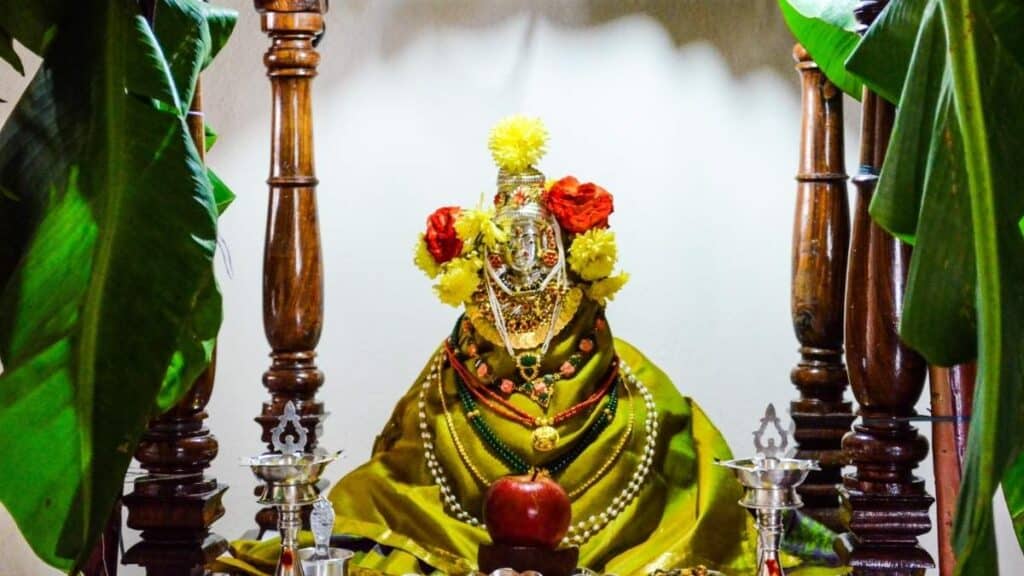
- Preparation of the Kalasham — a brass or silver pot filled with rice, betel leaves, turmeric sticks, bananas, and coins; topped with a turmeric-scrubbed coconut and decorated with mango leaves
- Welcome of the goddess — women sing songs of greeting and carry the kalasham into the puja room during the auspicious muhurat
- Lighting the lamp and performing Arati — shlokas and devotional songs are recited
- Naivedyam offerings — fruits, sweets, coconut, kolukattai, payasam, and vadai are offered
- Tying the Dorak — the yellow turmeric thread is distributed and tied around each woman’s right wrist as a symbol of blessings and protection
- Recitation of the Vrata Katha — the story of Charumati or the Shiva-Parvati version is read aloud
- Distribution of Vayana — cooked rice, chickpeas, fruits, and betel leaves are shared with all participating women
Key mantras recited include Sri Sukta, the Lakshmi Ashtottara Shatanamavali (108 names of Lakshmi), and the widely chanted “Om Shreem Mahalakshmiyei Namaha.”
How Varalakshmi Vratam Is Celebrated Across India
While the spirit of Varalakshmi Vratam is consistent, its expressions vary beautifully across South Indi
In Andhra Pradesh and Telangana, the observance is the most elaborate — married women fast through the day, dress in silk sarees, and perform full puja with gold jewelry and floral decorations. Neighbor-to-neighbor visits and the exchange of vayana are central traditions.
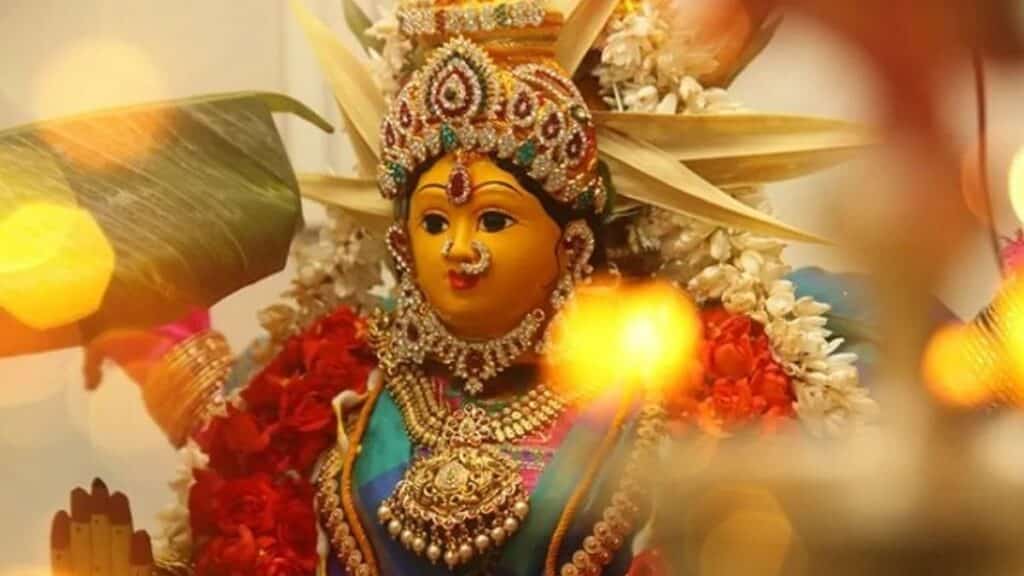
In Karnataka, the festival is called Varalakshmi Habba or Mahalakshmi Habba. Silver or gold goddess face masks are placed on the kalasham, and cultural programs are organized in Mysuru and Bengaluru alongside home pujas.
In Tamil Nadu, known as Varalakshmi Nonbu, the culinary traditions are especially elaborate — four varieties of kolukattai, payasam, and vadai are prepared as naivedyam. The food offerings and their presentation reflect a deep tradition of sacred hospitality.
In Maharashtra, the puja is observed particularly by families with South Indian connections, often combined with broader Shravana month observances.
Participation Across Religions in India
While Varalakshmi Vratam is a Hindu observance, its community spirit extends beyond religious boundaries. In neighborhoods across South India, the festival’s visible preparations — rangoli at doorways, fragrance of flowers and incense, sounds of devotional music — create a shared cultural atmosphere. Non-Hindu neighbors and domestic workers are traditionally included in the vayana distribution, receiving sweets, food, and gifts, making the observance an act of community generosity. This reflects the inclusive, plural spirit of South Indian festive culture.
How Chhath Puja Is Celebrated Outside India
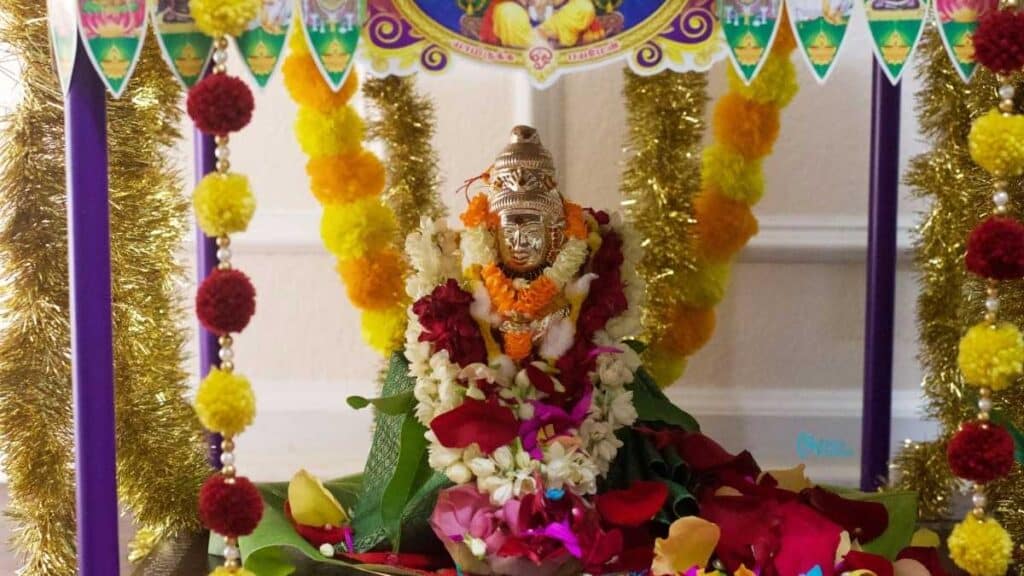
South Indian communities across the world carry Varalakshmi Vratam with remarkable devotion.
In the USA and Canada, Telugu and Tamil associations in Houston, Dallas, New Jersey, Toronto, and the Bay Area host community puja events. Many families observe the puja on Thursday evening due to the IST time difference.
In the UK, South Indian temples in London, Birmingham, and Leicester — including the Shri Venkateswara Temple — host Varalakshmi Puja programs attended by large community gatherings.
In the UAE, the large Telugu and Tamil population in Dubai and Abu Dhabi observes the festival at South Indian temples and at home with full rituals.
In Australia and New Zealand, since IST dates translate to Saturday locally, community observances in Sydney, Melbourne, Auckland, and Wellington see especially high attendance, with temple pujas and cultural events held over the weekend.
In Singapore and Germany, growing Indian communities observe the festival within cultural associations and at Hindu temples serving diaspora families.
Gifting Traditions
Gifting is woven into the heart of Varalakshmi Vratam through the tradition of vayana — an offering plate symbolizing abundance and community generosity.
Traditional gifts include a vayana plate with coconut, betel leaves, turmeric, kumkum, and fruits; bangles and blouse pieces for newly married women; and homemade sweets such as laddu and payasam. In modern practice, silk sarees, gold puja items, and curated dry fruit and sweet hampers are popular.
In diaspora communities, ready-made Varalakshmi Puja kits — containing turmeric thread, kumkum, betel leaves, and coconut — are increasingly available at Indian grocery stores in Houston, London, Sydney, and Singapore, making the tradition accessible for families abroad.
Varalakshmi Vratam Foods and Culinary Traditions
Food is central to Varalakshmi Vratam as both sacred offering and festive celebration.
Tamil Nadu traditions include four varieties of kolukattai (steamed rice dumplings with coconut-jaggery, sesame, or moong dal fillings), payasam (sweet milk pudding), and vadai (lentil fritters).
Andhra and Telangana naivedyam features cooked rice, chickpeas (senaga pappu), coconut, banana, and bobbatlu (sweet stuffed flatbread).
Karnataka preparations include obbattu (coconut-jaggery flatbread) and payasa (Karnataka-style kheer).
Across all traditions, fresh coconut, seasonal fruits, betel leaves, and panchamrit are universally offered. The puja is typically followed by a full traditional festive lunch shared among family and participating women.
Music, Art, and Cultural Expression
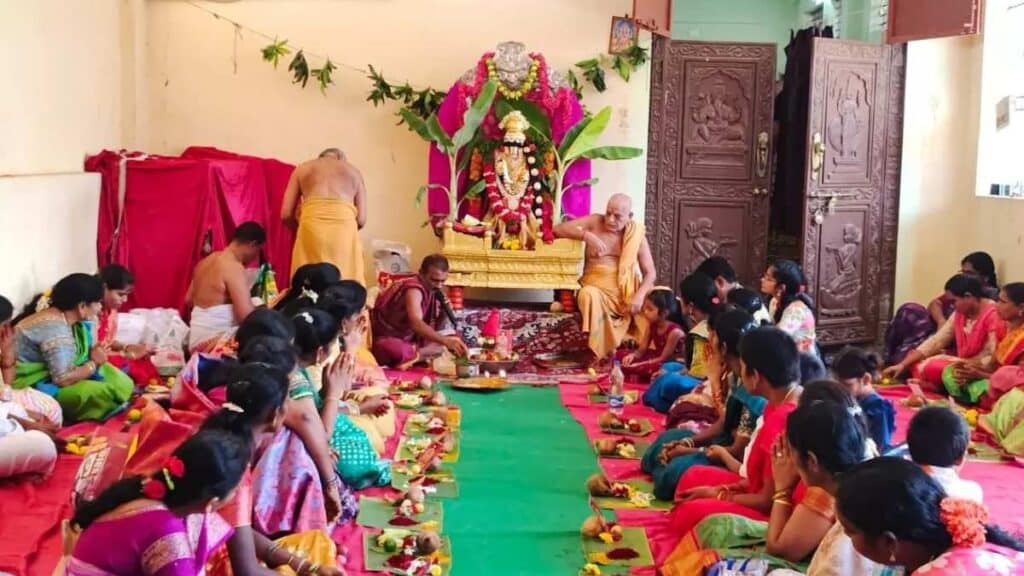
Varalakshmi Vratam is accompanied by a rich tradition of devotional music and visual art. Women sing songs of welcome to the goddess during the puja, and compositions by Muthuswami Dikshitar and Annamacharya are widely performed. Traditional Harikatha narrations of the Vrata Katha are an integral cultural expression of the festival.
The drawing of kolam (Tamil) or muggu (Telugu) — intricate rangoli patterns of lotus flowers, Lakshmi’s footprints, and geometric auspicious designs — at the entrance and puja room is a significant art form central to the celebration. The decoration of the kalasham itself, with flowers, silk, gold jewelry, kumkum, and sandalwood, is a living visual tradition passed down through generations.
Modern Observance and Evolving Practices
Varalakshmi Vratam continues to thrive in the modern world, adapting gracefully to contemporary life while preserving its essence.
Digital platforms — YouTube, Instagram, and WhatsApp groups — have made puja vidhi videos, recipe guides, and decoration ideas widely accessible, helping younger and diaspora generations participate meaningfully. Many families are shifting toward eco-friendly practices: clay kalashams, natural dyes for rangoli, and biodegradable decorations.
The festival’s traditionally exclusive framing as a married women’s observance is also evolving — many families now include unmarried daughters and men in the puja, reflecting a broader, more inclusive spirit.
How to wish someone on Varalakshmi Vratam:
- Telugu: Varalakshmi Vratam Subhakankshalu
- Kannada: Varalakshmi Vratam Hardika Shubhashayagalu
- Tamil: Varalakshmi Nonbu Valthukkal
- English: Wishing you a blessed Varalakshmi Puja — may Goddess Lakshmi bring prosperity and happiness to you and your family!
Cultural Reflection
In a fast-changing world, Varalakshmi Vratam endures because it speaks to something universal — the desire for abundance, the love between families, and the trust placed in the divine. For South Indian communities from Hyderabad to Houston, from Bengaluru to Brisbane, the festival is an anchor of identity and belonging.
More than a religious observance, it is a living tradition: a moment each year when the sacred enters the home, the community gathers, and gratitude is offered for all that is. Varalakshmi Vratam’s enduring relevance lies in its ability to hold tradition and transformation together — keeping the goddess, and the values she represents, close to the heart of every home that observes it.