


There’s something about the aroma of pakoras sizzling in hot oil that instantly transports you back home—whether that home is in Delhi, Mumbai, or now thousands of miles away in Toronto or New Jersey. Vegetable pakora, those golden, crispy fritters made with gram flour and mixed vegetables, aren’t just a snack for the Indian diaspora; they’re an emotion, a ritual, a way of recreating comfort when the weather turns gray or when unexpected guests show up at your door.
Quick Summary:
Vegetable pakora are crispy Indian fritters made by coating julienned vegetables in spiced gram flour (besan) and deep-frying until golden. The key to perfect pakoras is using minimal water, frying on medium heat, and choosing quick-cooking vegetables like cabbage, onions, carrots, and bell peppers for even cooking.
Table of Contents
What Are Vegetable Pakoras?
Vegetable pakoras (also spelled pakoda or pakura) are crispy fritters that hold a special place in Indian cuisine, particularly as a beloved rainy-day snack or tea-time companion.
Unlike the batter-based pakoras where you dip vegetable slices and fry them, vegetable pakoras use a dough-like consistency. You mix finely julienned vegetables with gram flour (besan), spices, and just enough moisture from the vegetables themselves to form a sticky mixture. Small portions of this dough are then flattened slightly and deep-fried until they turn golden and wonderfully crunchy.
Key characteristics of perfect pakoras:
- Asymmetrical, rustic shape (never uniform or patty-like)
- Light and crispy texture, never dense or heavy
- Golden-brown exterior with well-cooked vegetables inside
- Aromatic blend of spices, especially carom seeds (ajwain)
- Best enjoyed piping hot with masala chai
Why Gram Flour (Besan) Makes All the Difference
If you’re new to making pakoras, understanding your flour is crucial. Gram flour—labeled as “besan,” “chana dal flour,” or “gram flour from kala chana”—is not the same as chickpea flour (which comes from white chickpeas or garbanzo beans).
Gram flour is made from skinned and split black chickpeas (kala chana), also known as chana dal. This specific flour gives pakoras their distinctive nutty flavor and creates that signature crispy texture we all crave.
Important notes about gram flour:
- Always taste your besan before using it—old flour turns bitter
- Gram flour has a short shelf life (a few months after processing)
- Store in an airtight container in a cool, dry place
- Available at any Indian grocery store and most Asian markets
- In a pinch, chickpea flour works but won’t deliver the same authentic taste
For those living in North America or Europe, it’s worth seeking out fresh gram flour from your local Indian grocery. The difference in flavor between fresh and stale besan is dramatic, and it’s the foundation of genuinely delicious pakoras.
Essential Ingredients for Vegetable Pakora
Making pakoras doesn’t require exotic ingredients, which is why they’re such a practical snack for diaspora families. Here’s what you need:
For the base:
- ½ cup gram flour (besan) – the star ingredient
- ¼ cup rice flour or 2-3 tablespoons cornstarch – for extra crispiness
- ½ teaspoon carom seeds (ajwain) – aids digestion and adds flavor
- ½ teaspoon salt (adjust to taste)
For the vegetables (2.5-3 cups total):
- 1 cup shredded cabbage
- 1 medium onion, thinly sliced
- 1 medium carrot, julienned
- ¼ cup bell pepper (capsicum), julienned
- 4-5 French beans, julienned (remove the beans inside to prevent bursting)
- Optional: chopped spinach, methi, or other leafy greens
For flavor and heat:
- 2-3 green chilies, finely chopped (or ½-1 teaspoon red chili flakes)
- 1 teaspoon ginger-garlic paste or crushed ginger
- 2 tablespoons chopped mint, coriander, or dill leaves
- ¼-½ teaspoon garam masala (optional but recommended)
For frying:
- Vegetable oil or any neutral oil with high smoke point
The rice flour serves an important purpose—it prevents pakoras from absorbing excess oil and creates an extra-crispy exterior. If you don’t have rice flour, cornstarch works as a substitute. Some street vendors use cornstarch exclusively for that commercial-level crunch.
Step-by-Step: How to Make Perfect Vegetable Pakora
Preparing the Vegetables
Start by washing all your vegetables thoroughly. This is especially important if you’re using vegetables that have been sitting in your fridge for a few days.
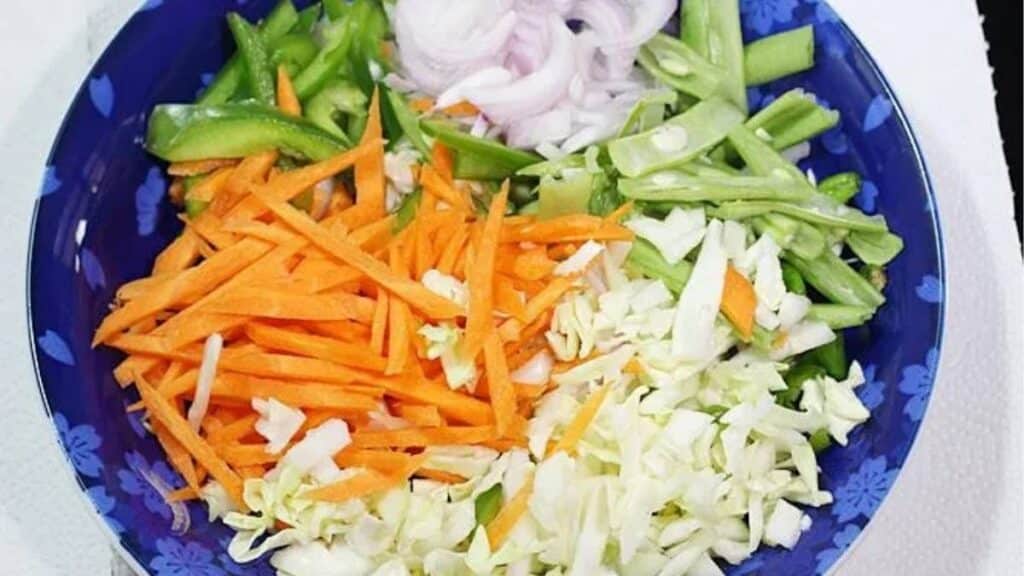
Cut everything into thin, uniform strips about 2 inches long. The key word here is “thin”—thick vegetable pieces won’t cook through by the time the exterior gets crispy. Your onions should be thinly sliced, cabbage finely shredded, and carrots, beans, and peppers julienned into matchstick-sized pieces.
Pro tip for French beans: Cut them lengthwise and remove the seeds inside. Those seeds can burst during frying, creating oil splatter and potential burns.
Creating the Pakora Mixture
Add all your prepared vegetables to a large mixing bowl. Toss in the chopped green chilies, ginger-garlic paste, mint or coriander leaves, garam masala, and salt.
Here’s where the magic happens: Mix everything together and gently squeeze the vegetables with your hands. You’re not crushing them—just applying enough pressure to release their natural moisture. The mixture should start smelling absolutely wonderful at this point, a fragrant blend of spices, herbs, and fresh vegetables.
Let this mixture sit for 10 minutes. During this time, the salt will draw out more moisture from the vegetables, which will help bind everything together without adding water.
After 10 minutes, add the gram flour, rice flour (or cornstarch), and carom seeds. Mix thoroughly until everything comes together into a sticky, dough-like consistency.
Critical mistake to avoid: Don’t add water unless absolutely necessary. The moisture from the vegetables should be sufficient. If your mixture is too dry, sprinkle just a tablespoon or two of water—not more. Excess water creates soggy pakoras that absorb oil like a sponge.
Do a taste test at this stage. Add more salt, garam masala, or green chilies if needed. Remember, these seasonings will mellow slightly during frying, so the raw mixture should taste well-seasoned.
Frying to Golden Perfection
Heat oil in a deep pan or kadai over medium heat. You need enough oil for the pakoras to float freely—about 2-3 inches deep.
Testing the oil temperature is crucial: Drop a small pinch of the dough into the oil. It should sizzle immediately and rise to the surface without browning right away. If it sinks and sits at the bottom, the oil isn’t hot enough. If it browns instantly, the oil is too hot.
Once your oil is at the right temperature, take small portions of the mixture (about 1-1.5 tablespoons). Gently flatten each portion between your fingers—you’re not making perfect patties, just slightly flattened, rustic shapes. Carefully slide these into the hot oil.
Important frying tips:
- Don’t overcrowd the pan—fry in batches of 4-6 pakoras
- Don’t touch or stir the pakoras for the first 1-2 minutes
- Once they firm up slightly, gently stir them for even cooking
- Maintain medium heat throughout—not low, not high
- Fry until golden brown and crispy, about 4-5 minutes per batch
Remove the pakoras using a slotted spoon and transfer them to a wire rack, steel colander, or paper towel-lined plate. A wire rack is best because it allows air circulation, keeping the pakoras crispy.
Before adding the next batch, give the oil a moment to return to the proper temperature. This ensures every batch turns out equally crispy.
Why Your Pakoras Might Not Be Crispy
Living abroad often means dealing with different ingredients and cooking conditions than what you grew up with. Here are common issues and solutions:
Problem: Pakoras turn out soggy and oil-soaked Solution: You added too much water to the mixture. Remember, the vegetables release moisture—let that be your primary liquid. Also check your oil temperature; frying at too low heat causes excessive oil absorption.
Problem: Pakoras are crispy outside but raw inside Solution: Your oil is too hot, or you’re dropping large lumps of dough. Flatten the portions to about 1-1.5 inches, and reduce the heat slightly.
Problem: Pakoras fall apart in the oil Solution: The mixture lacks binding. Add another tablespoon or two of gram flour and mix well before frying the next batch.
Problem: Pakoras taste bitter Solution: Your gram flour is old. Always taste your besan before using it. Old flour develops a bitter aftertaste that ruins the entire batch.
Problem: Pakoras are too hard or dense Solution: You added too much flour or not enough vegetables. The ratio should favor vegetables over flour—the flour is just a binder, not the main ingredient.
Problem: Vegetables aren’t cooked through Solution: You used vegetables that require longer cooking time (like potatoes or sweet potatoes) or cut them too thick. Stick to quick-cooking vegetables and ensure they’re julienned thinly.
The Best Vegetables for Pakoras
While the classic vegetable pakora recipe uses a mix of cabbage, onions, carrots, and bell peppers, you have plenty of flexibility based on what’s available in your kitchen.
Quick-cooking vegetables (perfect for pakoras):
- Onions (yellow or red)
- Cabbage (green or purple)
- Bell peppers (any color)
- Carrots
- French beans
- Spinach
- Methi (fenugreek leaves)
- Cauliflower (small florets)
- Zucchini
- Fresh corn kernels
Vegetables to avoid or handle carefully:
- Potatoes (require parboiling first as they take longer to cook)
- Sweet potatoes (same issue as regular potatoes)
- Thick-cut broccoli stems (florets work fine if small)
- Eggplant (releases a lot of moisture, can make mixture watery)
Some diaspora families get creative with what’s readily available in Western supermarkets. Coleslaw mix works brilliantly—it’s pre-shredded cabbage and carrots, saving you prep time. Frozen mixed vegetables can work in a pinch if you thaw and drain them thoroughly, though fresh vegetables always yield better results.
Serving Suggestions: More Than Just Chai
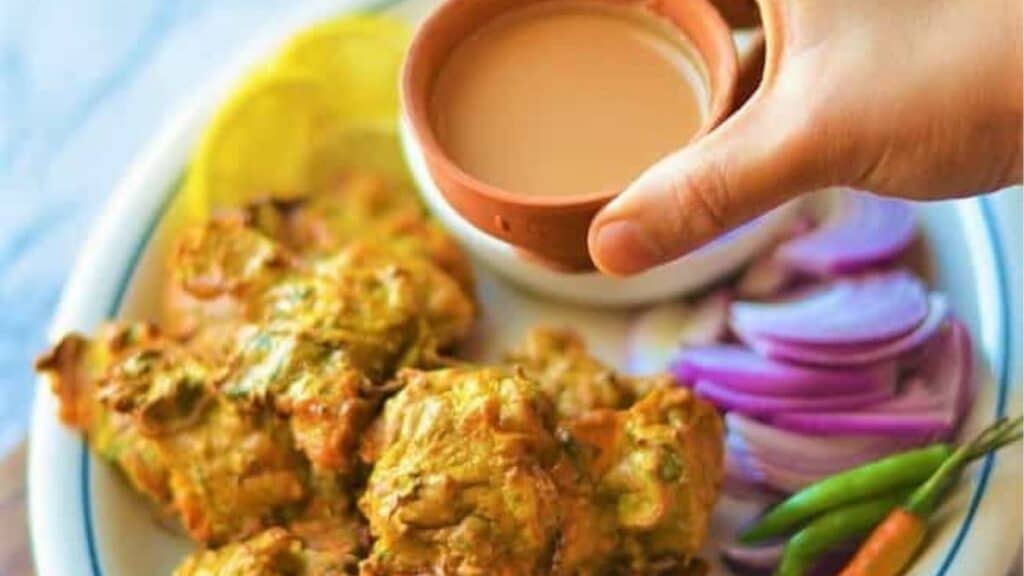
While chai and pakora is the quintessential combination—so deeply embedded in Indian culture that it’s almost a cliché—there are many ways to enjoy these crispy fritters.
Classic pairings:
- Masala chai or ginger milk tea (the traditional favorite)
- Green chutney (cilantro-mint chutney)
- Pudina chutney (mint chutney)
- Tamarind chutney (for sweet-tangy contrast)
- Schezwan sauce (a modern fusion favorite)
Modern serving ideas for diaspora tables:
- As an appetizer at dinner parties (serve with multiple chutneys)
- Alongside soup on cold winter days
- In a wrap with chutney and yogurt sauce
- As a side with dal-chawal for extra texture
- Crumbled over salad for added crunch
For families raising kids abroad, pakoras can be a gateway food—something that bridges their Indian heritage with familiar “fritter” or “nugget” concepts. They’re interactive to make (kids love helping mix the vegetables) and fun to eat.
How to Keep Pakoras Crispy
One of the biggest challenges when making pakoras for a crowd or ahead of time is maintaining that just-fried crispiness. Nobody wants soggy pakoras.
Immediate serving tips:
- Transfer fried pakoras to a wire rack instead of paper towels
- Keep the serving plate uncovered (no lid or aluminum foil)
- Serve within 15-20 minutes of frying for peak crispiness
Keeping pakoras warm and crispy for longer:
- Preheat your oven to the lowest setting (around 200°F/93°C)
- Place a wire rack on a baking sheet
- Arrange pakoras on the rack in a single layer
- Keep in the warm oven until serving time
Reheating leftover pakoras:
- Air fryer method: 350°F/175°C for 3-4 minutes (best method)
- Oven method: 400°F/200°C for 5-7 minutes
- Stovetop method: Re-fry briefly in hot oil (works but adds more oil)
- Microwave: Don’t do this—they’ll turn rubbery
The air fryer has become a blessing for diaspora families who love pakoras but want to minimize oil. While you can’t make pakoras from scratch in an air fryer (they need deep frying for proper cooking), reheating them in an air fryer brings back almost all of the original crispiness.
Variations: Beyond Basic Vegetable Pakora
Once you master the basic vegetable pakora recipe, the world opens up to countless variations.
Regional variations:
- Onion pakoda: Made exclusively with thinly sliced onions (super popular in North India)
- Palak pakoda: Spinach leaves in chickpea batter
- Gobi pakoda: Cauliflower florets (parboiled first)
- Bread pakoda: Bread slices stuffed with potato filling and fried
- Paneer pakoda: Cubes of paneer in spiced batter
Fusion adaptations for diaspora cooking:
- Add shredded cheese for a Western twist
- Mix in chopped jalapeños instead of green chilies
- Use Italian herbs (oregano, basil) instead of traditional Indian herbs
- Add corn and black beans for a Tex-Mex inspired version
- Include finely chopped kale or chard (very North American)
The Cultural Significance of Chai-Pakora
For Indians living abroad, the ritual of chai-pakora carries emotional weight that goes beyond simple snacking. It’s about recreating a sensory experience that connects you to home, family, and a pace of life that might feel distant in your current surroundings.
Back home, pakoras are deeply associated with the monsoon season. The first rain brings an almost universal craving for hot pakoras and tea. Streets fill with pakora vendors, offices buzz with chai breaks, and homes fill with the aroma of frying batter. This cultural moment is so significant that “chai-pakora” has become shorthand for casual social gatherings, comfort, and hospitality.
In the diaspora, making pakoras takes on additional meaning. It becomes a way to teach your children about their heritage, a comfort food when you’re homesick, a gesture of hospitality when Indian friends visit, and sometimes, a small act of cultural preservation in a place where nobody else might understand why hot, crispy fritters on a rainy Saturday feel so essential.
Can I make pakoras ahead of time?
You can prepare the vegetable-flour mixture up to 4-6 hours in advance and refrigerate it.
What oil should I use for frying pakoras?
Any neutral oil with a high smoke point works: vegetable oil, canola oil, sunflower oil, or peanut oil.
Can I use a different flour if I don’t have besan?
In an emergency, you can use chickpea flour (though it tastes different) or wheat flour (texture will be different).
