


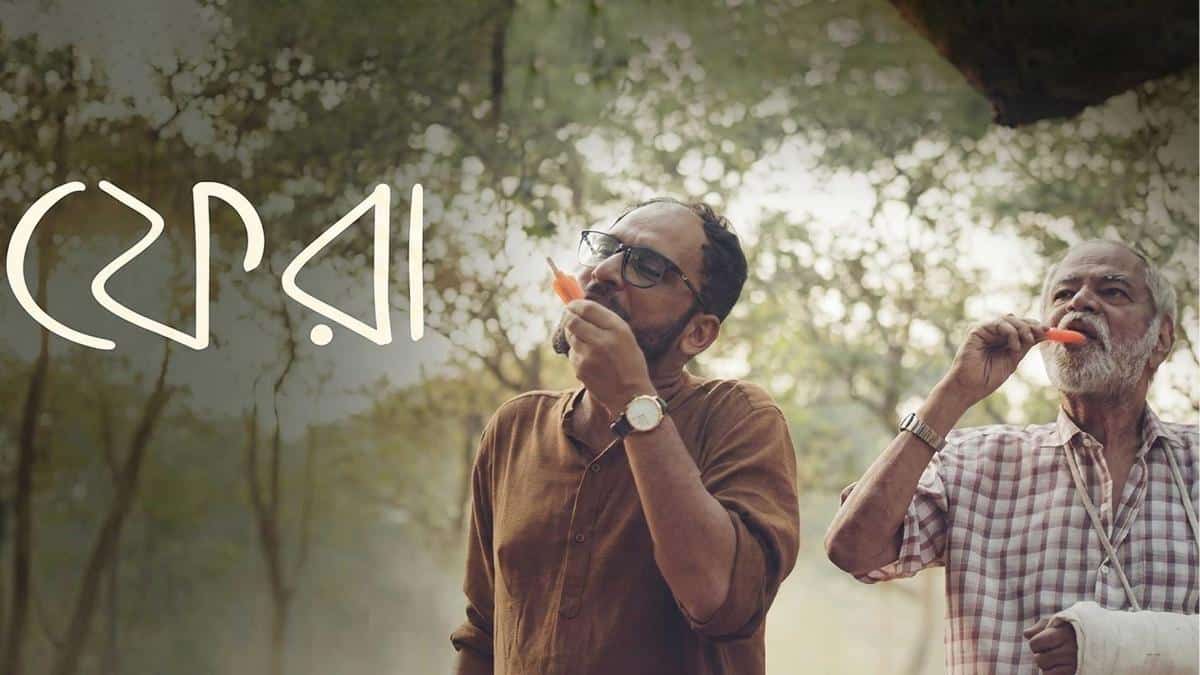
Pritha Chakraborty’s Phera is the kind of Bengali cinema that reminds you why stories about ordinary people, told with extraordinary sincerity, never go out of style. Marking the Bengali film debut of the incomparable Sanjay Mishra, this emotionally layered drama about distance — geographical, emotional, and generational — between a father and son is one of 2026’s most affecting theatrical releases. It doesn’t shout. It doesn’t need to. Phera simply pulls up a chair beside you and holds a mirror to your own life.
Phera is a restrained, deeply human Bengali drama about a strained father-son relationship forced into confrontation when an accident brings them back together. Anchored by powerhouse performances from Sanjay Mishra and Ritwick Chakraborty, and supported by a warm, precise ensemble, this is quiet cinema at its most powerful. A must-watch for lovers of slice-of-life storytelling.
Cast & Crew
| Category | Details |
|---|---|
| Film Title | Phera |
| Director | Pritha Chakraborty |
| Producer | Pradip Kumar Nandy (Nandy Movies) |
| Music Director | Nilanjan Ghosal |
| Language | Bengali |
| Release Date | May 1, 2026 |
| Genre | Drama |
| Certificate | UA13+ |
| Lead Cast | Sanjay Mishra, Ritwick Chakraborty, Sohini Sarkar |
| Supporting Cast | Priyanka Sarkar, Subrat Dutta, Pradeep Bhattacharya |
Plot Summary
Phera tells the story of Pannalal Chatterjee (Sanjay Mishra), a warm, well-loved figure in the small town of Kalindipur, Jhargram — a man rich in community respect but light on financial achievement. His son Palash (Ritwick Chakraborty), now pushing forty and living in Mumbai, has spent most of his adult life running — from his roots, from his father’s perceived failures, and from the fear of ending up just like him. The two men exist on opposite ends of a long, unspoken silence.
Also Read: Sandigdham Review: A Gripping Mystery Thriller That Slowly Gets Under Your Skin
When Pannalal gets injured, circumstances conspire to bring father and son under the same roof again. What follows is not a dramatic reconciliation or a loud reckoning — it is something far more truthful: two people slowly, reluctantly, learning to see each other. Along the way, Palash’s landlady Snigdha (Sohini Sarkar) and his colleague Ananda weave their own threads of quiet loneliness into the narrative, enriching the film’s central meditation on what we call home and who we leave behind to find it.
Performances
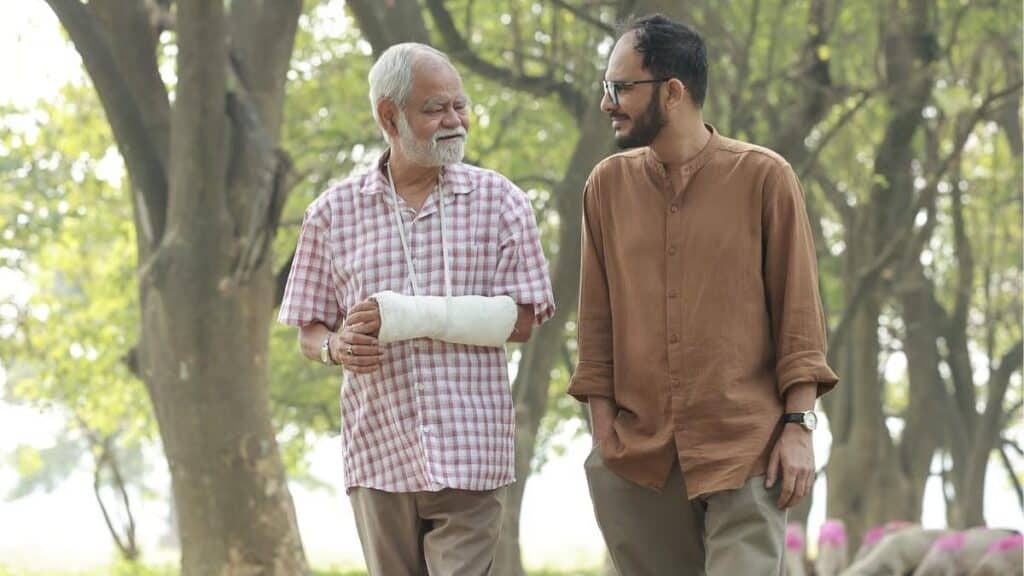
Sanjay Mishra delivers what can only be called a masterclass in underacting. As Pannalal, he inhabits the role so completely that you forget you’re watching a performance. His morning rituals, his small-town pride, his unspoken love for a son who barely looks at him — Mishra plays all of it with a naturalness that is rare and precious. This is a landmark Bengali debut.
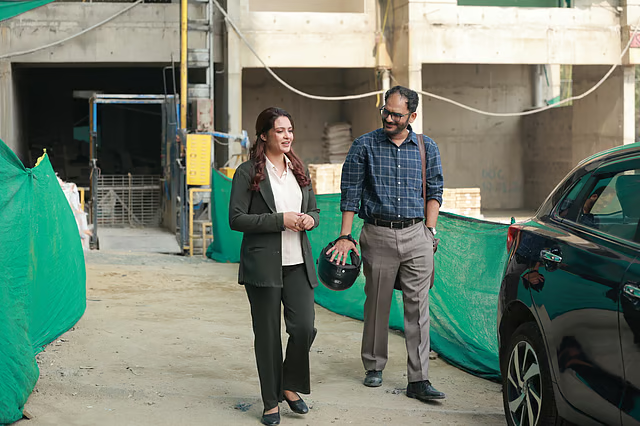
Ritwick Chakraborty matches him beat for beat. Palash is not an easy character to make sympathetic — selfish, avoidant, and emotionally unavailable — but Ritwick brings such layered humanity to the role that you understand him even when you want to shake him. His silences speak louder than any dialogue.
Sohini Sarkar shines as Snigdha, the landlady whose warmth towards father figures makes her connection with Pannalal one of the film’s most heartwarming threads. She brings a gentle depth to a character that could easily have remained peripheral.
Priyanka Sarkar makes her presence felt in every scene she occupies, bringing texture and emotional truth to a supporting role that is vital to the film’s emotional architecture.
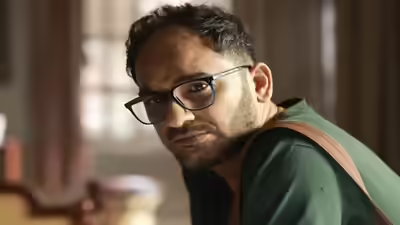
Subrat Dutta is reliably excellent, lending authenticity and warmth to the world of Kalindipur and grounding the film’s more nostalgic passages with his assured screen presence.
Pradeep Bhattacharya rounds out the ensemble with a lived-in, believable performance, contributing meaningfully to the film’s portrait of small-town community and quiet friendship.
The entire supporting cast — including the actor playing Pannalal’s friend Bonku and the man Palash encounters in Mumbai — ensures that no character, however brief their appearance, feels wasted or decorative.
Technical Craft
Pritha Chakraborty’s direction is her greatest strength here. She keeps the film intimate without making it claustrophobic, and finds poetry in the everyday — a morning gargle, a soaked shirt, a banana eaten before breakfast for health reasons. These specifically Bengali, specifically small-town details function as more than quirks; they are the film’s emotional vocabulary.
The music by Nilanjan Ghosal (with compositions co-crafted by Debraj Bhattacharya) is understated and soulful, perfectly matched to the film’s unhurried rhythm. The song Bhalobasar Jomi, sung by Debraj Bhattacharya, is a genuine standout — tender and lingering.
Also Read: The Great Grand Superhero Review: Jackie Shroff’s Desi Superhero Saga Is Pure Heart and Chaos
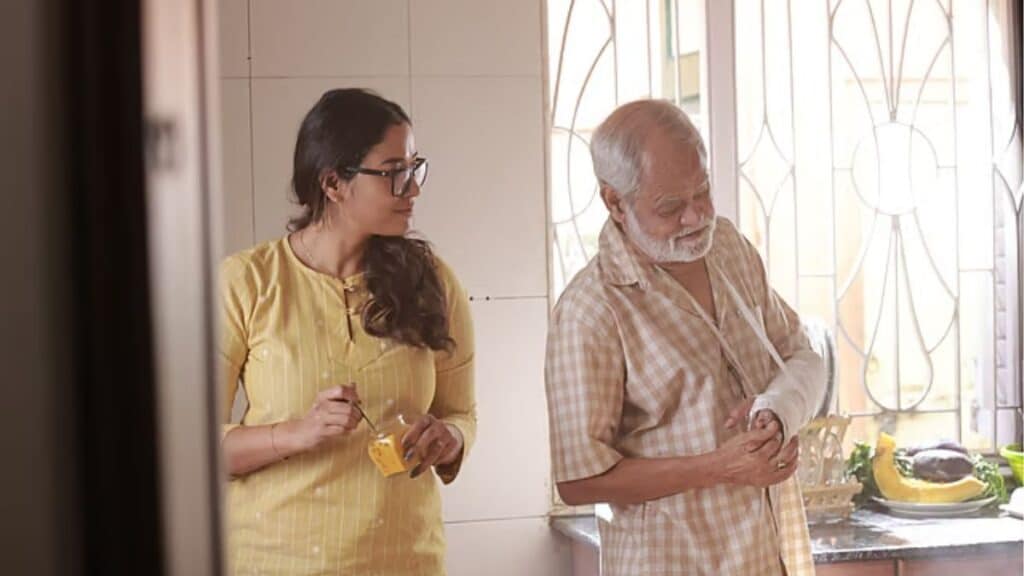
The production design faithfully renders two very distinct worlds: Pannalal’s warm, cluttered Jhargram and Palash’s impersonal Mumbai existence. The contrast is visual storytelling at its most effective.
Editing is restrained and confident, trusting the performances and the quieter moments to carry their full weight without unnecessary embellishment.
Strengths and Weaknesses
Strengths
- Extraordinary lead performances from both Sanjay Mishra and Ritwick Chakraborty
- Authentic, deeply observed Bengali cultural details that resonate across generations
- A screenplay that asks meaningful questions without forcing tidy answers
- Sohini Sarkar and Sanjay Mishra’s onscreen chemistry is unexpectedly moving
- The theme of loneliness running through every character adds rare emotional depth
- Pritha Chakraborty’s assured, unhurried direction keeps the film feeling genuinely real
Weaknesses
- The deliberately slow pace may test viewers expecting conventional narrative momentum
- Some supporting characters, while well-played, could have benefited from slightly more screen time to fully develop their arcs
Final Verdict: ⭐⭐⭐⭐½ (4.5/5)
Phera is the rare film that makes you feel seen rather than entertained — and in doing so, achieves something far more lasting. Pritha Chakraborty has crafted a deeply Bengali, deeply human story that transcends its regional setting to speak to anyone who has ever left home, blamed a parent, or wondered whether the life they chose was worth what they gave up. Sanjay Mishra’s Bengali debut is an event, and Ritwick Chakraborty reminds us once again why he is among the finest actors working in Indian cinema today. Don’t miss it.
What is the age rating of Phera?
Phera carries a UA13+ certificate, meaning children under 13 are advised to watch it with parental guidance.
Can we watch Phera with kids?
Phera is a mature, slow-burn family drama with no violence or objectionable content, but its themes of estrangement, adult regret, and quiet loneliness are best appreciated by teenagers and adults.
Is Phera based on a true story?
No, Phera is not based on a true story.

1 Comment
Hi Rahul,excellent writeup but with few misinformation.Polash is based in Kolkata where Panna lal comes to visit him to ask for money for their decaying house in Kalindipur ,Jhargram. Ananda is Polash’s colleague in Kolkata.